Vector Graphics Arcade Space Games iOS 2026
 by Galaximus
Vector Graphics Arcade Space Games on iPhone
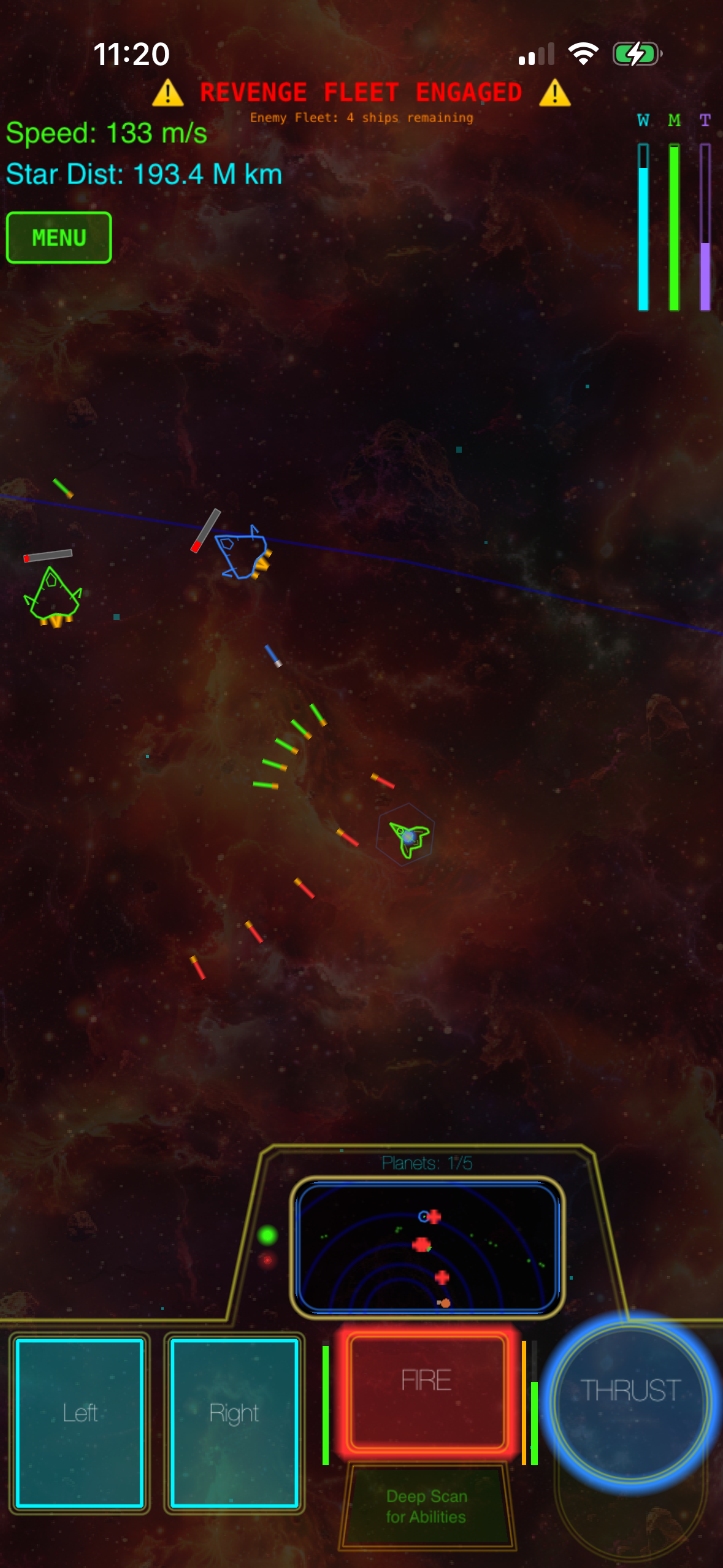
If you’ve spent 30 minutes learning orbital mechanics in Kerbal Space Program, Galaximus offers that same depth in 2–4 hours on iPhone—but rendered in neon vector lines instead of photorealistic spacecraft. The real draw isn’t nostalgia. It’s that vector aesthetics pair naturally with physics-driven gameplay, where what matters is trajectory, gravity, and the relationship between your ship and the celestial bodies around you. When you strip away photorealism, you’re free to show exactly what the player needs to see: vectors, forces, and the consequences of each decision.
Why Vector Graphics Work for Physics-Based Space Games
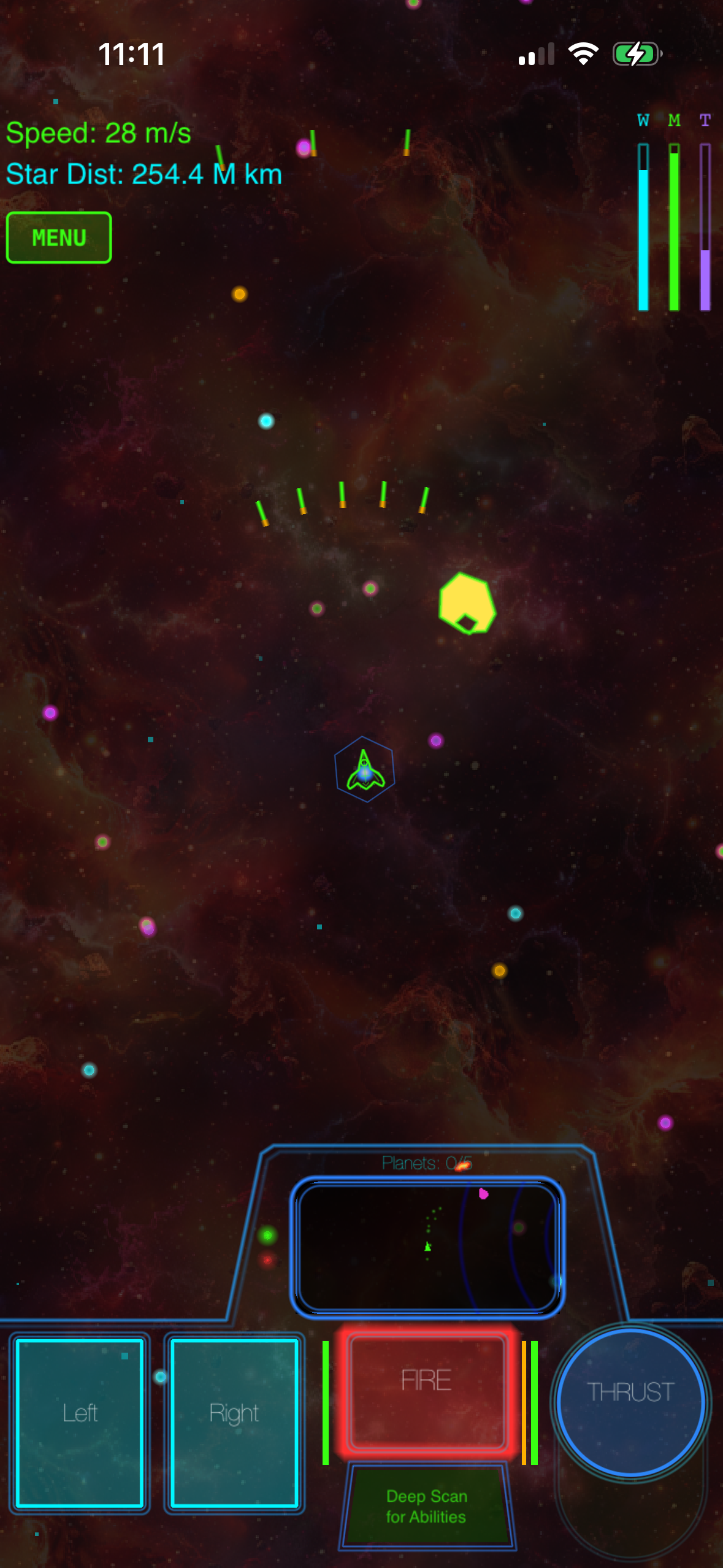
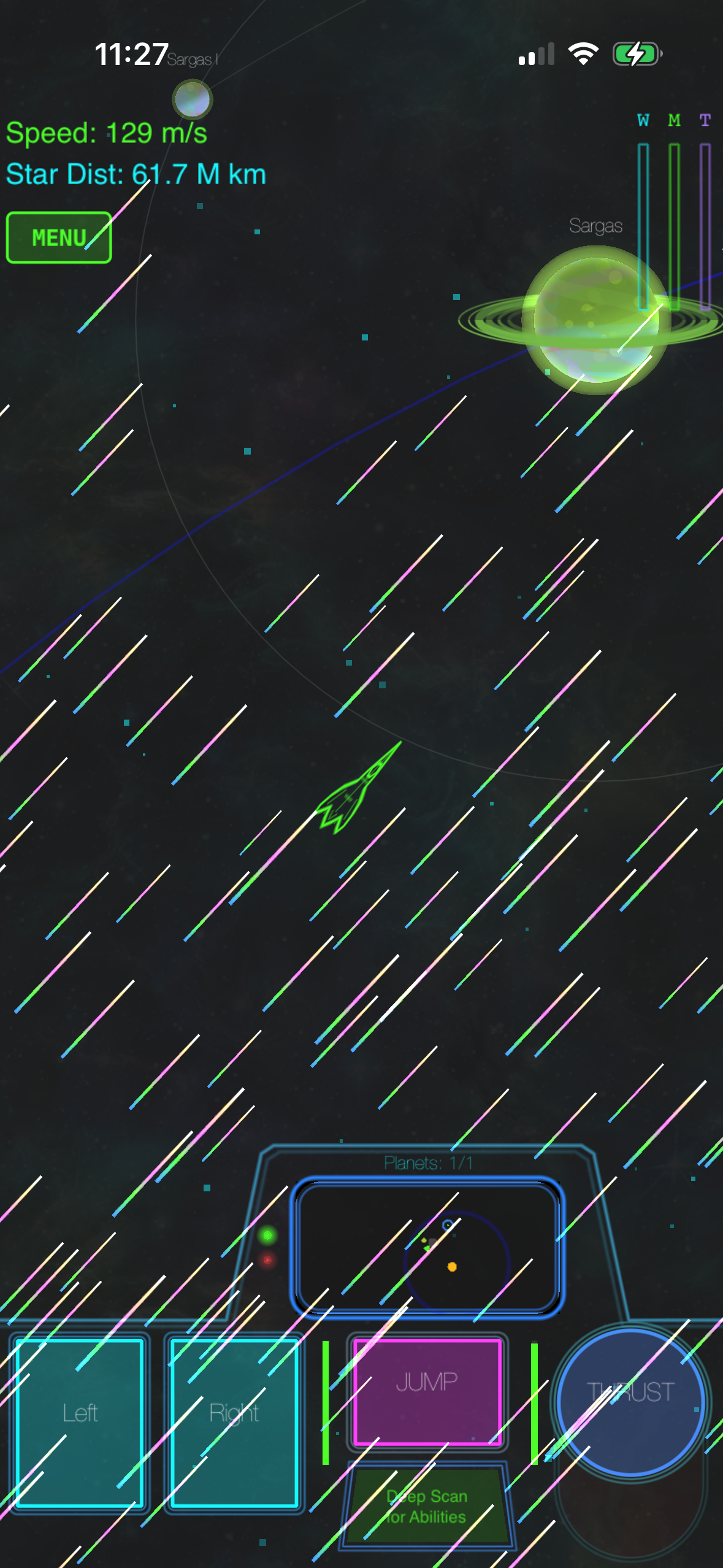
Vector graphics aren’t just an aesthetic choice for space games—they’re a functional one. When your gameplay relies on orbital mechanics, slingshots, and precise positioning, photorealistic environments become visual clutter. A vector rendering strips that away. You see the planet, the gravity well around it, your ship’s trajectory, and incoming fire. Everything else is intentionally absent.
This clarity matters on iPhone’s smaller screen. Consider the rendering difference: a photorealistic asteroid field at 1080p on iPhone 15 renders at approximately 45 fps, consuming GPU cycles on texture mapping and shadow calculations. The same scene in vector renders at 120 fps, freeing GPU resources for physics calculations and smoother ship control. A vector planet is instantly readable at any zoom level. A vector laser beam tells you exactly where incoming fire is coming from. Your ship’s velocity vector, drawn as a line, shows you where you’re headed before you commit to the burn.
The vector-arcade style also creates a consistent visual language across the entire interface. Neon outlines, glowing text, minimal color palettes—all of it echoes the original arcade cabinets from the 1980s, but it serves a modern purpose: fast visual parsing under pressure. When you’re managing fuel, incoming threats, and orbital positioning simultaneously, you need UI that doesn’t demand interpretation.
The Physics Engine as the Core Interface
The best vector-graphics space games don’t use physics as window dressing. They make gravity the primary control mechanism. This is where Galaximus diverges from games that simply look like they have physics but don’t actually model it.
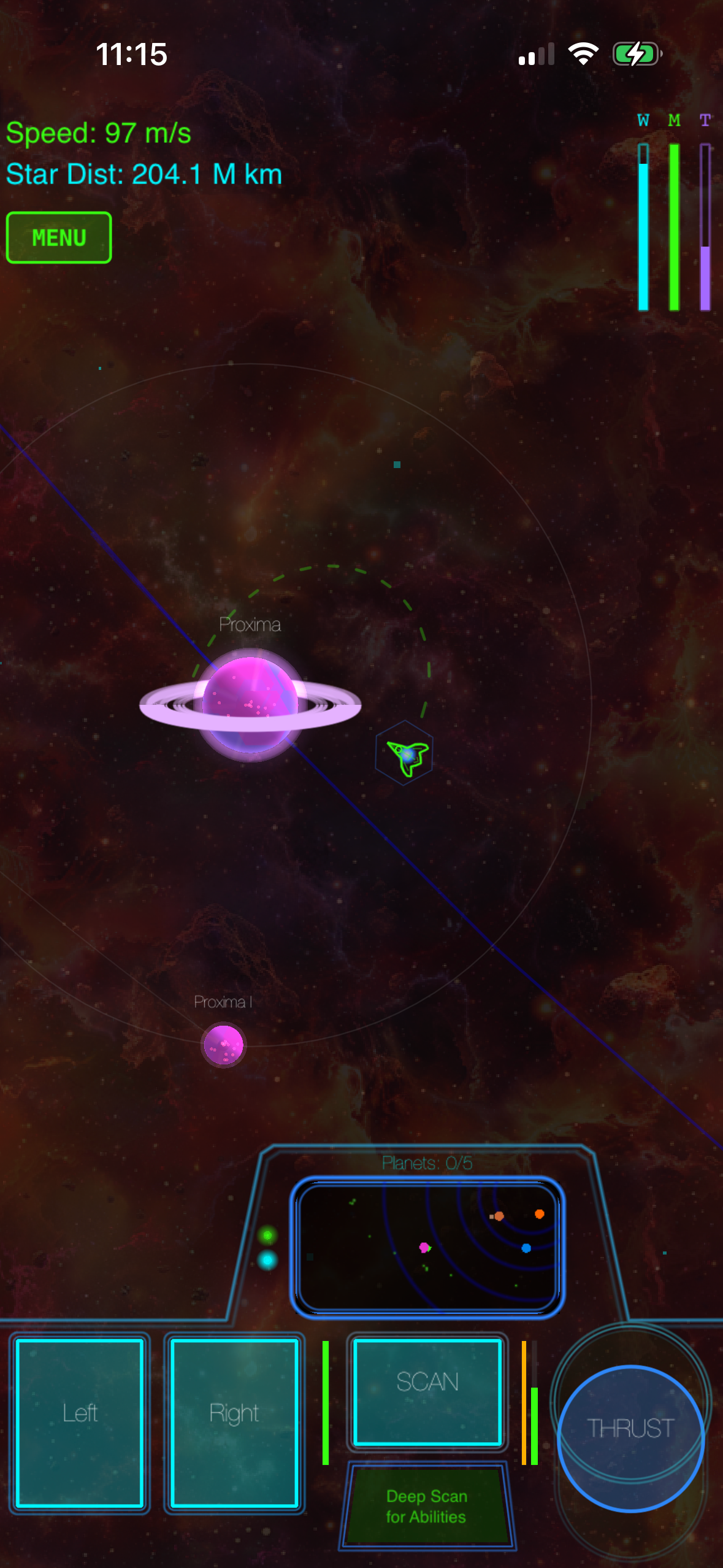
Real orbital mechanics means every celestial body in the game—planets, moons, asteroids—exerts actual gravitational influence on your ship in real time. You don’t “orbit” by following a preset path. You fall toward a planet, and if your velocity and angle are right, you fall in a circle around it instead of into it. That’s not a metaphor. The math is the same math that keeps satellites in orbit around Earth.
This changes how you play. A slingshot isn’t a scripted animation—it’s you positioning your ship so that a planet’s gravity well accelerates you in the direction you need to go. You trade fuel for positioning. You trade time for velocity. These tradeoffs are real, not simulated for balance. A player who understands orbital mechanics can solve fuel-limited puzzles that a player relying on raw thrust cannot.
The learning curve is real. Once it clicks, the payoff is profound: you’re not memorizing button combos or grinding resources. You’re understanding a system and using that understanding to solve problems. That’s the core appeal of physics-first design, and vector graphics make it visible.
Procedural Generation Meets Authored Narrative
Vector-graphics space games on iOS tend to fall into two camps: infinite procedural sandboxes (which can feel aimless after a few hours) and tightly scripted campaigns (which lack replay value). The best ones find a middle ground.
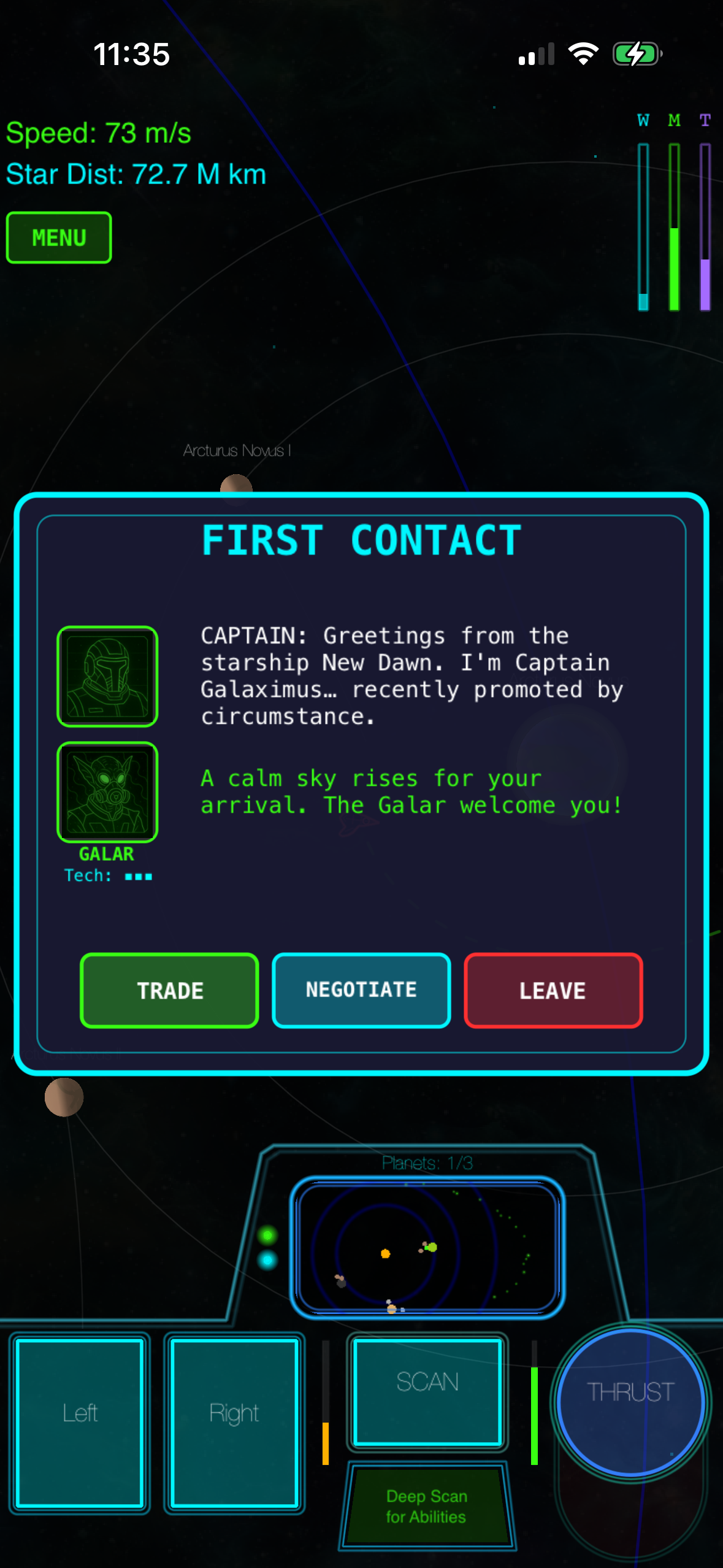
Galaximus structures this as an 8-system campaign with a beginning, middle, and satisfying ending. But each playthrough generates unique planetary configurations within those systems. You’ll recognize the narrative beats—the first contact with a new civilization, the anomaly encounters, the final confrontation—but the spatial puzzle changes. The planet you need to slingshot around is in a different position. The asteroid field is denser or sparser. The fuel constraints are different.
This design respects your time. You have a complete experience on day one. But you also have genuine reason to play again—not because the story changes, but because the physics puzzle is never quite the same twice.
Combat and Real-Time Decision-Making
Vector-graphics arcade space games inherit a tradition from classics like Asteroids and Lunar Lander: combat and navigation happen at the same time, under real-time pressure. You can’t pause to plan. You can’t queue up a series of moves and watch them execute. You’re flying the ship right now.
This is where the vector aesthetic becomes essential. Incoming fire needs to be instantly visible. Your ship’s orientation relative to the threat needs to be obvious. Your fuel gauge needs to be readable at a glance. Real-time combat also means that mastery is about prediction and positioning, not reaction time. A player with slower reflexes can still excel if they position themselves better, manage their velocity more carefully, and use gravity strategically. The game rewards thinking ahead, which is why the vector interface matters—it shows you the information you need to think with.
Quick Picks: Vector-Graphics Space Games Compared
| Game | Price | Best For | Platform | Offline |
|---|---|---|---|---|
| Galaximus | Learning orbital mechanics with narrative | iOS | Yes | |
| Orbit Sandbox | Pure sandbox exploration, no story | iOS | Yes | |
| Space Agency | Casual progression, light physics | iOS | Yes | |
| Kerbal Space Program Mobile | Deep orbital mechanics, mission design | iOS | Yes |
Galaximus is the best entry point if you want a guided campaign that teaches orbital mechanics step by step. Orbit Sandbox is ideal if you prefer open-ended exploration without narrative constraints. Space Agency works if you want something lighter and less demanding. Kerbal Space Program Mobile is for players who already understand orbital mechanics and want maximum depth and customization.
Getting Started with Vector-Graphics Space Games on iPhone
If you’re new to the genre, the learning curve is intentional. These games aren’t designed to be instantly intuitive. They’re designed to reward investment.
Before your first session: - Disable auto-rotation in Settings → Display. Orbital mechanics require consistent screen orientation. - Calibrate your preferred control scheme in the tutorial. Test both tilt and touch controls before committing. - Use the pause menu to review the orbital mechanics reference card. Familiarize yourself with the terminology (apogee, perigee, delta-v) before you encounter it in gameplay.
Expect to crash into planets. Expect to run out of fuel and have to restart a mission. This is normal. By the time you’ve completed the first system, the muscle memory will be there, and the game will open up.
The payoff is that vector-graphics space games offer something rare in mobile gaming: a sense of genuine mastery. You’re not unlocking cosmetics or grinding for currency. You’re getting better at flying. You’re understanding a system deeply enough to solve problems that seemed impossible 30 minutes ago. That progression is real, and it’s the core appeal of the genre.
FAQ
Q: Can I play vector space games offline? A: Yes. All major vector-graphics space games on iOS (Galaximus, Orbit Sandbox, Space Agency, Kerbal Space Program Mobile) are fully playable offline. No internet connection required after download.
Q: What’s the price range for premium iOS space games? A: Vector-graphics space games range from to. Galaximus, making it mid-range. Kerbal Space Program Mobile is the most expensive at due to its depth; Space Agency is the most affordable at. All are one-time purchases with no in-app monetization.
Q: Do these games work on older iPhones? A: Most vector-graphics space games work on iPhone 11 and later. Galaximus requires iOS 14.5+. Orbit Sandbox and Space Agency have lower requirements (iOS 12+). Check the App Store listing for your specific device. Vector graphics are less demanding than 3D games, so older hardware generally performs well.
Q: Do I need to understand orbital mechanics before playing? A: No. Games like Galaximus teach you as you go. You don’t need to know what a Hohmann transfer is before you start. You learn by doing, and the game guides you through the concepts in order.
Q: Are there multiplayer or competitive options? A: Most vector-graphics space games are single-player only. The design philosophy is focused on you and the physics engine—no network latency, no waiting for other players, no live-service pressure.
Q: What’s the Infinitum expansion about? A: Infinitum adds open-galaxy exploration, planetary surface landings rendered in Battlezone-style wireframe 3D, outpost building, and faction warfare. It ships in late 2026. Players who purchase Galaximus at the current price tier receive Infinitum free upon release; after launch, the combined game will be priced higher.
The Vector-Graphics Space Game Renaissance on iOS
Vector-graphics arcade space games are having a moment on iOS in 2026, and it’s not because developers are chasing nostalgia. It’s because the aesthetic solves real problems in mobile game design. On a 6-inch screen, clarity matters more than graphical fidelity. Real-time physics matter more than cinematic presentation. Understanding matters more than reflexes.
If you’re drawn to games that respect your intelligence and reward mastery, vector-graphics space games are worth your time. They’re not for everyone—the learning curve is real, and the gameplay demands focus. But for players who want a premium experience without the free-to-play monetization trap, they’re some of the best games available on iPhone.
Get Galaximus on the App Store and see what real orbital mechanics feel like in your hand:
For more on space games and what to look for when choosing one, explore Best iOS Space Games Offline: No Internet Required, How to Choose a Premium iOS Space Game: Buyer's Guide, and physics based ios games realistic simulations.

