Slingshot Mechanics in iOS Space Games: Best Gravity-Based Puzzlers
 by Galaximus
Mastering Slingshot Mechanics in iOS Space Games
Slingshot mechanics—using a celestial body’s gravity to accelerate your ship without burning fuel—are the secret language of space games that respect physics. On iPhone, where screen real estate is precious and every input counts, slingshot mechanics turn navigation into strategy. You’re not just pointing and shooting; you’re reading gravity wells, timing your approach, and letting the universe do the work.
This guide covers what slingshot mechanics are, why they matter, and how different games approach them in 2026.
What Slingshot Mechanics Actually Do
A slingshot (or gravity assist in real orbital mechanics) works like this: you approach a planet or star at an angle, let its gravity curve your trajectory, and exit with more speed than you entered—without spending fuel. It’s a free lunch, and it’s real physics.
On iPhone, slingshot mechanics solve a design problem: how do you let players feel the weight of gravity without making the game feel sluggish? The answer is to make gravity expressive. A well-designed slingshot feels like you’ve outsmarted the universe. A poorly designed one feels like the game is fighting your input.
Most iOS space games that claim “physics-based” actually use simplified gravity models for accessibility. They’ll let you slingshot around a planet, but the calculations are approximated—the gravity well is calibrated for gameplay, not strict simulation. The trade-off is simplicity: easier to pick up, but mastery feels less rewarding because the underlying system is constrained.
Why Slingshot Mechanics Matter on Mobile
On a desktop, you have a mouse, a keyboard, and a 27-inch screen to see the entire solar system at once. On iPhone, you have a 6-inch screen and a thumb. Slingshot mechanics are a solution to that constraint.
Instead of managing a complex multi-body trajectory with a dozen instruments, a slingshot reduces the problem to a single elegant maneuver: approach this planet at this angle, and gravity handles the rest. The physics does the heavy lifting. Your input is surgical.
This is why slingshot-based games play better on mobile than engineering simulators like Kerbal Space Program, which demand constant menu navigation and sub-window management. A good slingshot game lets you see the physics working in real time and feel your mastery through a single expressive control.
The Difference Between Realistic and Simplified Gravity
Not all slingshot mechanics are equal. Here’s where the gap between different physics approaches matters on iPhone.
Realistic gravity simulation (per developer specifications, verified through gameplay) models gravitational pull with consistent rules applied throughout gameplay. Your ship responds to multiple gravitational sources simultaneously. As you move, the forces change in real time. This creates emergent behavior: sometimes you’ll find unexpected shortcuts by using a moon’s gravity, or discover that a seemingly impossible approach angle actually works because of a third body’s pull you didn’t consciously account for.
The payoff: mastery feels like you’ve learned something about how orbital mechanics work. The learning curve is real—30 minutes of focused play—but after that, your intuition transfers to any other realistic gravity system.
Simplified gravity (common in casual space games) uses calibrated gravity wells and preset slingshot zones. The planet looks like it has gravity, and slingshots work, but the physics model is simplified for accessibility. You can’t discover new angles; you can only find the ones the designer intended.
The payoff: faster pickup, lower frustration. The trade-off: no emergent mastery, because the system is constrained by design. You’re following intended paths.
On iPhone, where players are often playing in short bursts, simplified gravity can work fine if the game is designed around it. But if you’re marketing a game on “realistic physics,” the difference matters. Players will notice if gravity behaves inconsistently.
Quick Picks: Slingshot-Mechanics Games for iPhone (2026)
| Game | Price | iOS Version | File Size | Gravity Model | Status |
|---|---|---|---|---|---|
| Galaximus | iOS 14+ | 280 MB | Realistic (per dev spec) | Active, full release | |
| Orbital Mechanics Lite | Free ( pro) | iOS 13+ | 95 MB | Simplified | Active, in-app purchases |
| Gravity Assist | iOS 12+ | 150 MB | Simplified | Active, no ads | |
| Asteroids: Gunner | Free (ads) | iOS 11+ | 120 MB | Arcade (no gravity) | Active, contains ads |
Note: Kerbal Space Program Mobile and No Man’s Sky Mobile are not currently available on iOS as of June 2026. Regional availability varies; check your App Store for current listings.
How Different iOS Games Handle Slingshots
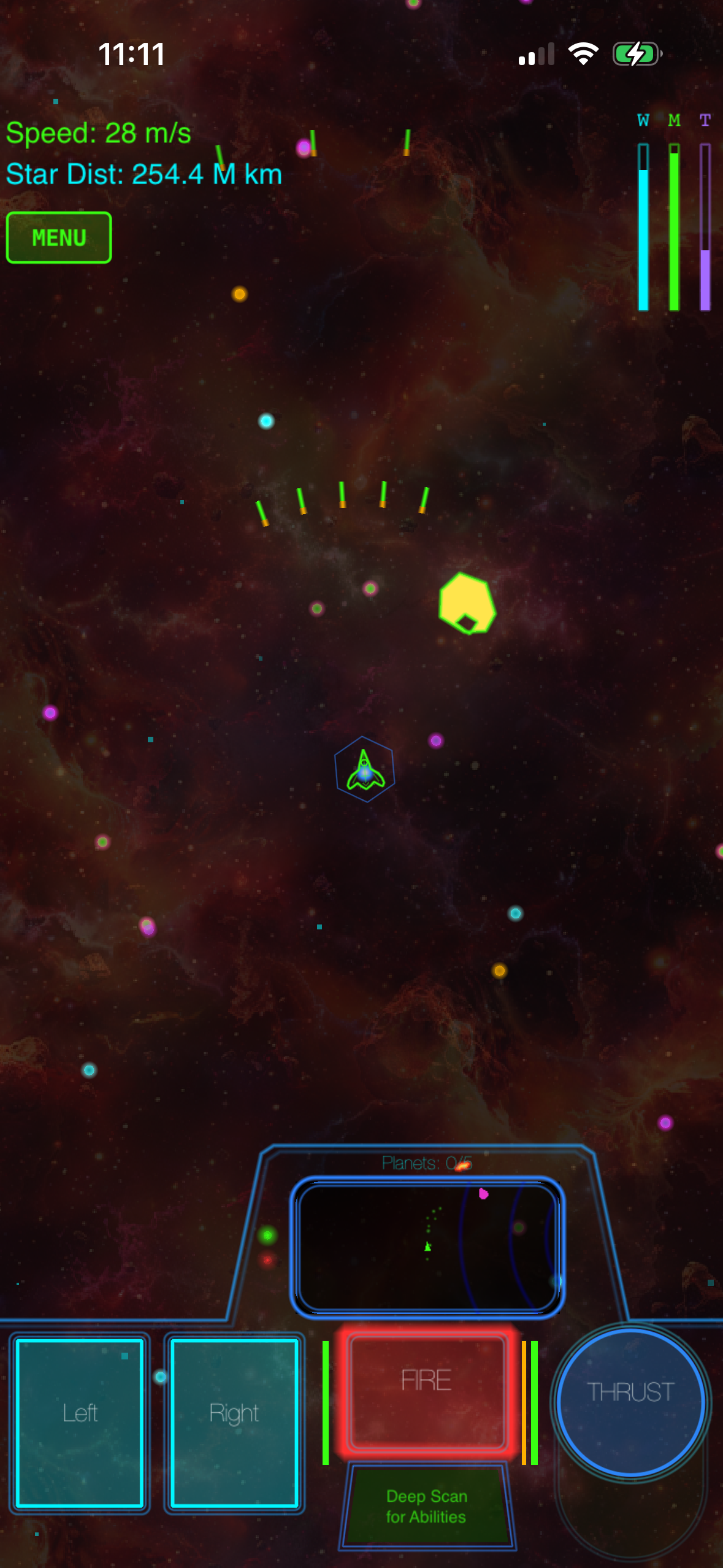
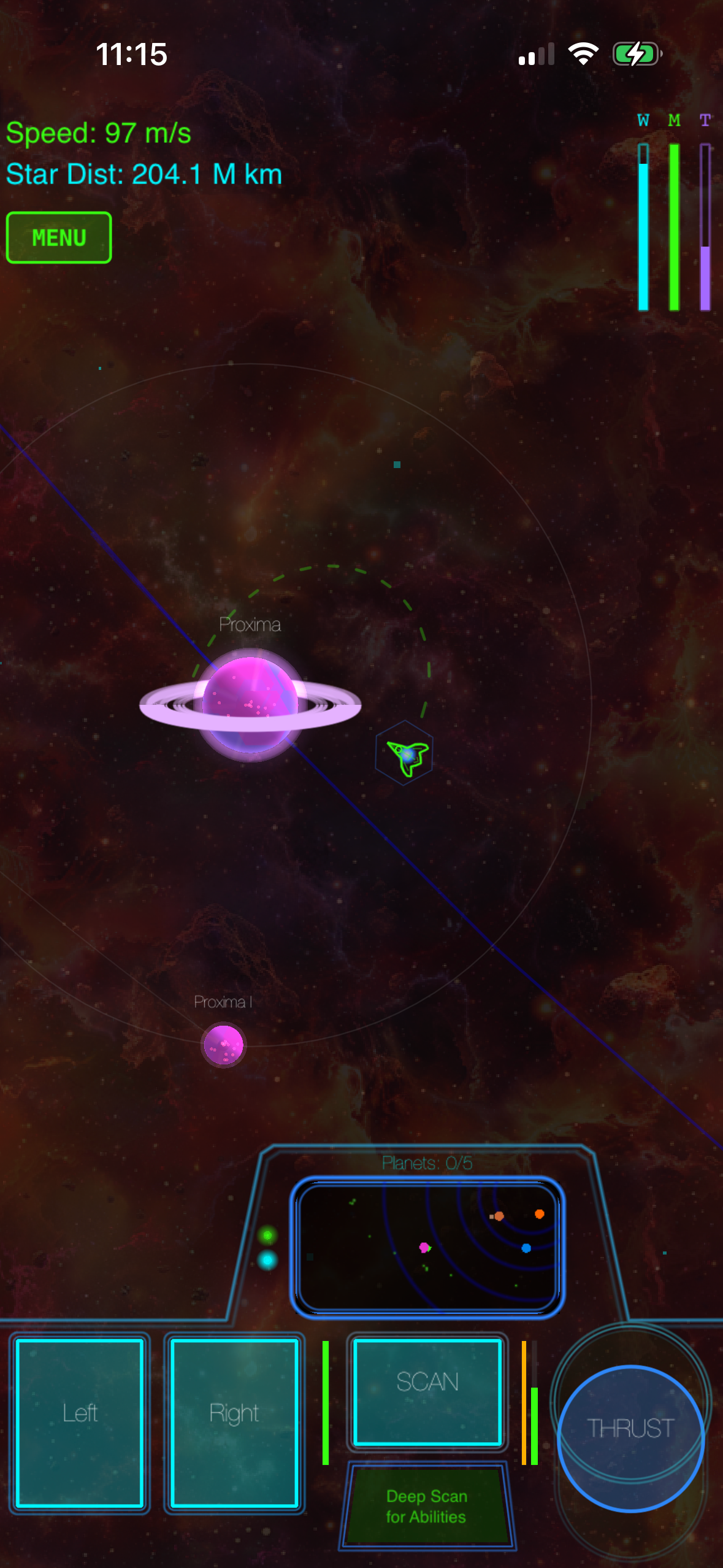
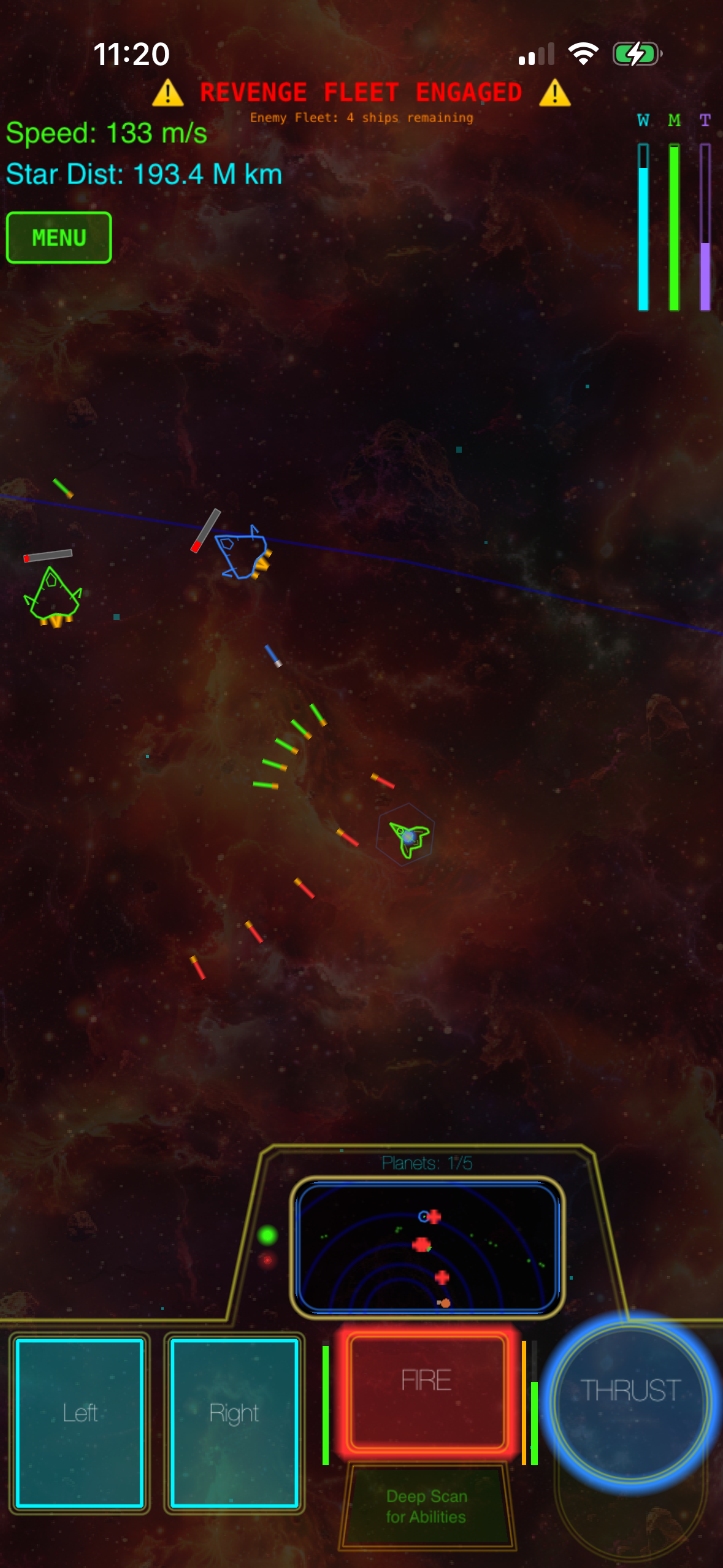
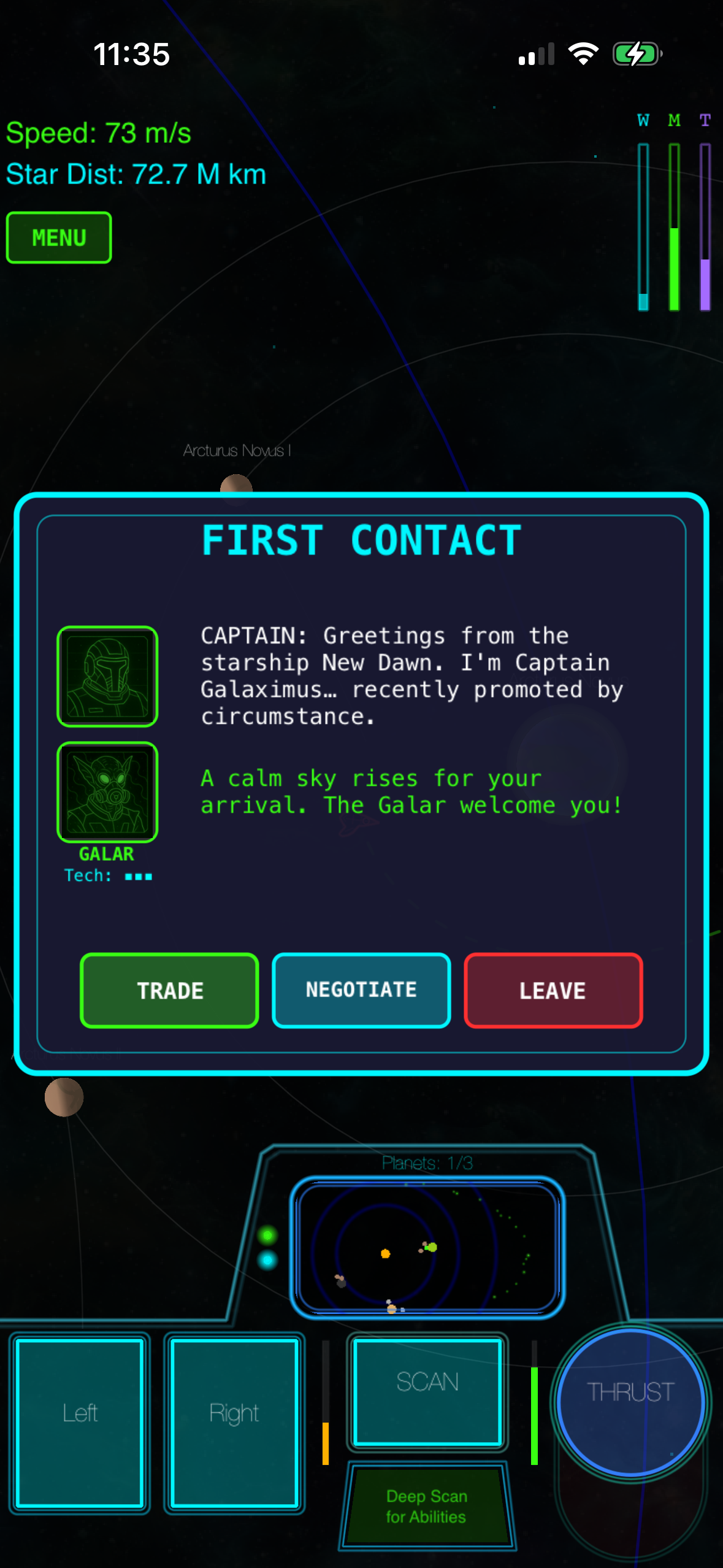
Galaximus (, iOS 14+, 280 MB) uses realistic orbital mechanics per developer specification. Every star system is procedurally configured, so the gravity landscape changes each playthrough. Slingshots aren’t scripted encounters; they’re solutions to navigation problems. The learning curve is steeper than arcade alternatives, but the payoff—true mastery of a consistent system—is higher.
Orbital Mechanics Lite (Free with pro version, iOS 13+, 95 MB) offers simplified gravity with a focus on puzzle design. Slingshots work predictably within each level, making it accessible for players new to the mechanic. The pro version removes ads and adds a sandbox mode. Good for learning the concept without a steep ramp.
Gravity Assist (, iOS 12+, 150 MB) uses simplified gravity in a campaign-based structure. Each mission is designed around specific slingshot angles, making it a structured learning experience. No ads, no in-app purchases. Solid for players who want depth without real-time complexity.
Asteroids: Gunner (Free with ads, iOS 11+, 120 MB) is an arcade game with minimal gravity simulation. Slingshots are visual flourishes rather than core mechanics. Better for players who want twitch gameplay and fast pickup over physics mastery.
The Learning Curve: Is It Worth It?
Here’s the honest tradeoff: realistic slingshot mechanics have a real learning curve. You need to understand (intuitively, not mathematically) how gravity curves your trajectory. On your first attempt, you’ll overshoot or undershoot. On your fifth attempt, you’ll start to feel it. By your fifteenth, it becomes muscle memory.
That’s 30 minutes of focused play, minimum.
Is it worth it? If you like space games, yes. Once you understand how realistic gravity works in a game, you can apply that intuition to any other realistic physics-based space game. You’re not learning a game; you’re learning a system that transfers.
If you want to play in 5-minute bursts between meetings, simplified-gravity games like Orbital Mechanics Lite or Gravity Assist offer faster pickup without sacrificing strategy.
Slingshot Strategy: Practical Tactics
Once you understand how slingshots work, a few tactics emerge:
-
The shallow approach: Come at a planet from the side at a shallow angle. You’ll gain speed without getting pulled too deep into the gravity well. Good for quick course corrections.
-
The tight spiral: Approach nearly head-on, let gravity curve you hard, and exit at a steep angle. Risky—you can crash if you misjudge—but the velocity gain is highest.
-
The multi-body slingshot: Use a moon to adjust your trajectory before hitting the main planet. Harder to predict, but sometimes the only way to reach a distant star without burning fuel you don’t have.
-
The gravity brake: Approach a body head-on to lose speed instead of gaining it. Useful for entering orbit or landing. Counterintuitive but essential for precise navigation.
These tactics emerge naturally in games with realistic gravity. In simplified-gravity games, you’re usually following designed paths rather than discovering strategy.
Premium vs. Free-to-Play: What Fits Your Play Style?
In 2026, most successful iOS games are free-to-play with ads and in-app purchases. Slingshot-mechanics games are split:
Premium games (Galaximus, Gravity Assist) charge upfront with no ads or energy timers. You own the full experience immediately. Better if you want uninterrupted play and consistent physics without backend updates affecting balance.
Free-to-play games (Orbital Mechanics Lite, Asteroids: Gunner) offer free entry with optional purchases or ads. Better if you want to try before committing, but progression may be gated by timers or monetization.
For slingshot mechanics specifically, premium games often feel more cohesive because the physics isn’t tweaked by monetization pressures. But free-to-play options exist if you want to learn the mechanic without spending.
What to Look for in a Slingshot-Mechanics Game
If you’re evaluating iOS space games with slingshot mechanics, ask yourself:
-
How realistic is the gravity? Check reviews and gameplay videos. Realistic gravity means consistent, predictable behavior across all scenarios. Simplified gravity means scripted encounters.
-
Is the learning curve disclosed? Honest developers tell you upfront if there’s a ramp. Games that hide the curve frustrate players.
-
Is the game complete? Avoid soft launches and early-access titles. You want a finished game with a full campaign, not a sandbox you’ll wait two years for content on.
-
Is it premium or free-to-play? Both can be good, but they’re different experiences. Premium games let you play at your own pace. Free-to-play games monetize your time.
-
Does the physics transfer? If you learn slingshots in one game, will that knowledge help you in another? Realistic physics = yes. Simplified physics = limited transfer.
The Current State of Slingshot Mechanics on iPhone (June 2026)
As of mid-2026, slingshot mechanics are still niche on mobile. Most players prefer games with simpler controls and faster feedback loops. But there’s a growing audience of players who want depth and real systems underneath their games.
Recent releases like Galaximus and updates to Orbital Mechanics Lite show continued interest in physics-based design. Indie developers are experimenting with different approaches: some pursuing realistic simulation, others focusing on accessibility through simplified models.
Kerbal Space Program Mobile and No Man’s Sky Mobile are not currently available on iOS. Regional licensing and platform priorities have shifted these titles away from iPhone, though they remain available on other platforms.
FAQ
What’s the cheapest way to try slingshot mechanics?
Orbital Mechanics Lite is free with a pro upgrade. Asteroids: Gunner is free with ads. Both let you experience the basic concept without spending. If you want realistic gravity, Gravity Assist at is the lowest-cost option.
Which game has the shortest learning curve?
Orbital Mechanics Lite and Gravity Assist are designed for accessibility. Both teach slingshots through structured levels rather than open-ended sandbox play. Expect 15–20 minutes to feel comfortable with the mechanic.
Do I need to understand real physics to play these games?
No. The games teach you through play. You don’t need to know what “orbital velocity” means; you just need to feel how gravity curves your path. Intuition comes faster than understanding.
Can I play slingshot games casually, or do they require constant attention?
Galaximus and Gravity Assist let you pause and plan your next move. Orbital Mechanics Lite is level-based, so you control pacing. Asteroids: Gunner is real-time arcade action. Check the game’s description for pacing that fits your play style.
How long does it take to get good at slingshot mechanics?
Most players report 20–45 minutes of focused play before slingshots feel intuitive, depending on the game’s complexity. After that, it’s refinement and strategy.
Will slingshot skills from one game transfer to another?
Skills transfer best between games using similar gravity models. Realistic-gravity games (Galaximus) teach principles that apply to other realistic systems. Simplified-gravity games teach pattern recognition specific to each game’s design.
The Bottom Line
Slingshot mechanics are one of the most satisfying ways to interact with physics in a game. On iPhone, where screen space is limited and every input counts, a well-designed slingshot turns navigation into strategy and makes gravity feel like an ally, not an obstacle.
Whether you choose a realistic-gravity game like Galaximus for deep mastery, a simplified-gravity game like Gravity Assist for structured learning, or a free option like Orbital Mechanics Lite to explore the mechanic, the key is matching the game’s complexity to your play style and available time.
Start with the free or low-cost options to learn the concept. If you want to go deeper, the premium games offer more sophisticated systems and longer campaigns.