Physics Sandbox Space Games iPhone: Build & Experiment in 2026
 by Galaximus
Physics Sandbox Space Games for iPhone: Build & Experiment
Physics sandbox space games on iPhone treat gravity as the primary interface, not window dressing. You manipulate orbital mechanics, plan transfers, and experiment with real celestial forces. Mastery comes from understanding how gravity actually works, then using that understanding to outmaneuver obstacles, navigate star systems, and solve encounters that reward patient positioning over reflexes.
What Makes Physics Sandbox Space Games Different
Most space games fake gravity for accessibility—asteroids drift in straight lines, planets sit static. Physics sandbox games do the opposite. Every object’s gravity affects every other object in real time. A planet doesn’t just sit there; it pulls your ship toward it. An asteroid tumbling through a gravity well accelerates as it falls. Your fuel becomes finite, but gravity becomes free—and mastery is learning to use it.
This creates a fundamentally different play experience:
- Gravity as engine. A slingshot maneuver—diving toward a planet to steal its momentum—costs almost nothing and rewards planning. Fuel becomes a constraint on when you act, not if you can reach a target.
- Failure teaches physics. When you overshoot an orbit or miss a gravity well, you feel why it happened. The system isn’t punishing you arbitrarily; it’s showing you how orbital velocity works.
- Replayability through configuration. Procedurally generated star systems mean each playthrough presents unique gravity puzzles. The same planet arrangement never appears twice.
The Learning Curve Is Real—And Worth It
Physics sandbox games have a steeper entry cost than casual space games. You need to internalize a few core concepts: orbital velocity (the speed at which an object stays in orbit rather than falling or escaping), escape velocity (the speed needed to break free of a gravity well), and the relationship between distance and gravitational pull. Most games teach these through play—your first few attempts will fail, and those failures show you the mechanic in action.
The payoff is genuine mastery. After 30 minutes of focused play, you’ll recognize a gravity well’s pull on your trajectory and adjust before you need to. After an hour, you’ll spot slingshot opportunities and plan transfers with confidence.
That said, these games aren’t for everyone. If you prefer pick-up-and-play arcade sessions with zero learning overhead, traditional space shooters will feel more immediately rewarding.
Core Mechanics: Slingshots, Orbits, and Anomalies
Slingshots and Gravity Assists
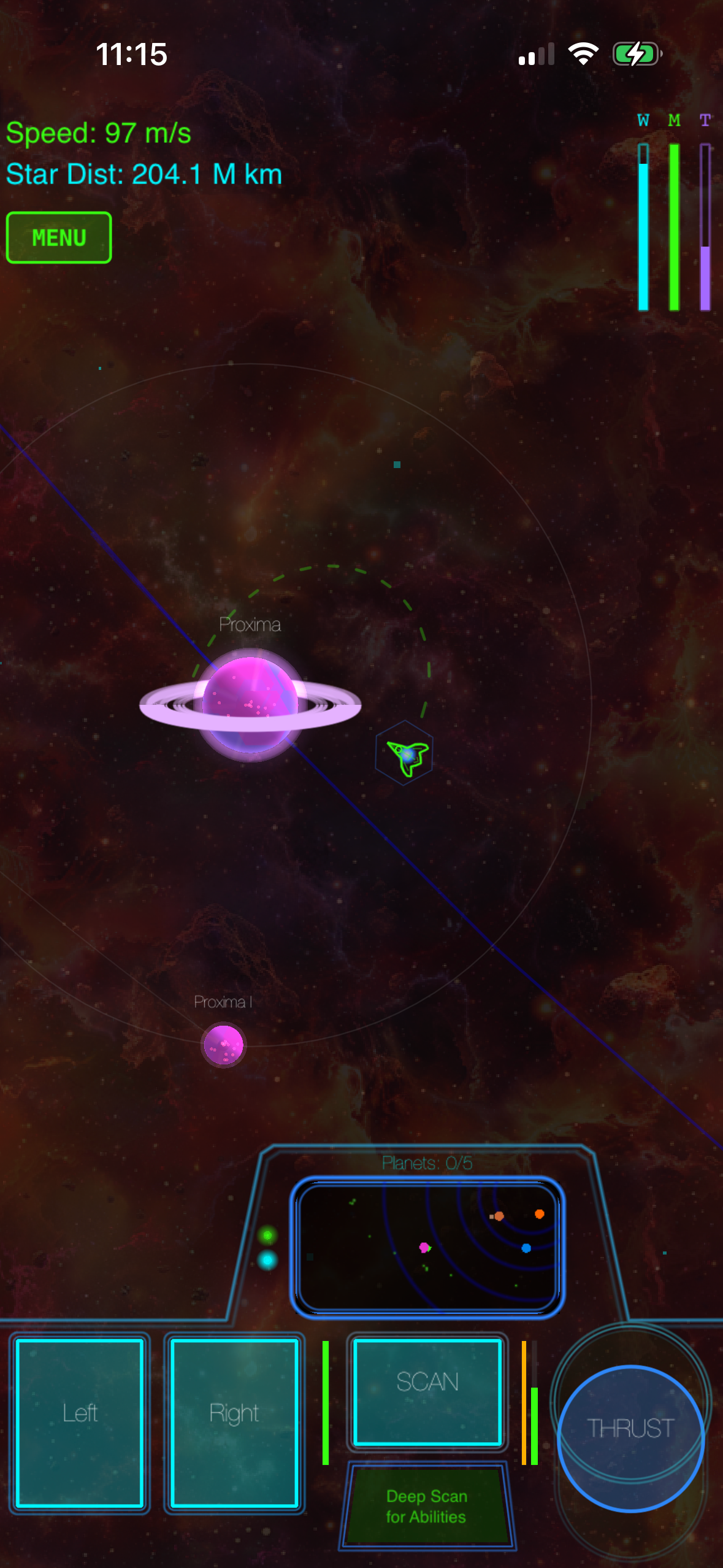
A slingshot maneuver uses a planet’s gravity to accelerate your ship for free. You dive toward a planet, let its gravity pull you in, then fire thrusters at the right moment to escape with more speed than you arrived with. It’s elegant, it’s real physics, and it’s the foundation of fuel-efficient spaceflight.
In practice: you approach a planet, watch your speed increase as gravity pulls you in, and time your burn to exit at maximum velocity. Nail it and you’ve gained speed without spending fuel. Miss it and you’ll either crash into the planet or waste fuel fighting the gravity well.
Orbital Mechanics and Procedural Configuration
Real orbital mechanics means planets orbit suns, moons orbit planets, and everything moves according to actual gravitational laws. A procedurally generated star system means the configuration of planets, their orbital periods, and their positions shift each playthrough. You can’t memorize a route; you have to read the current system and adapt.
Anomalies and Encounters
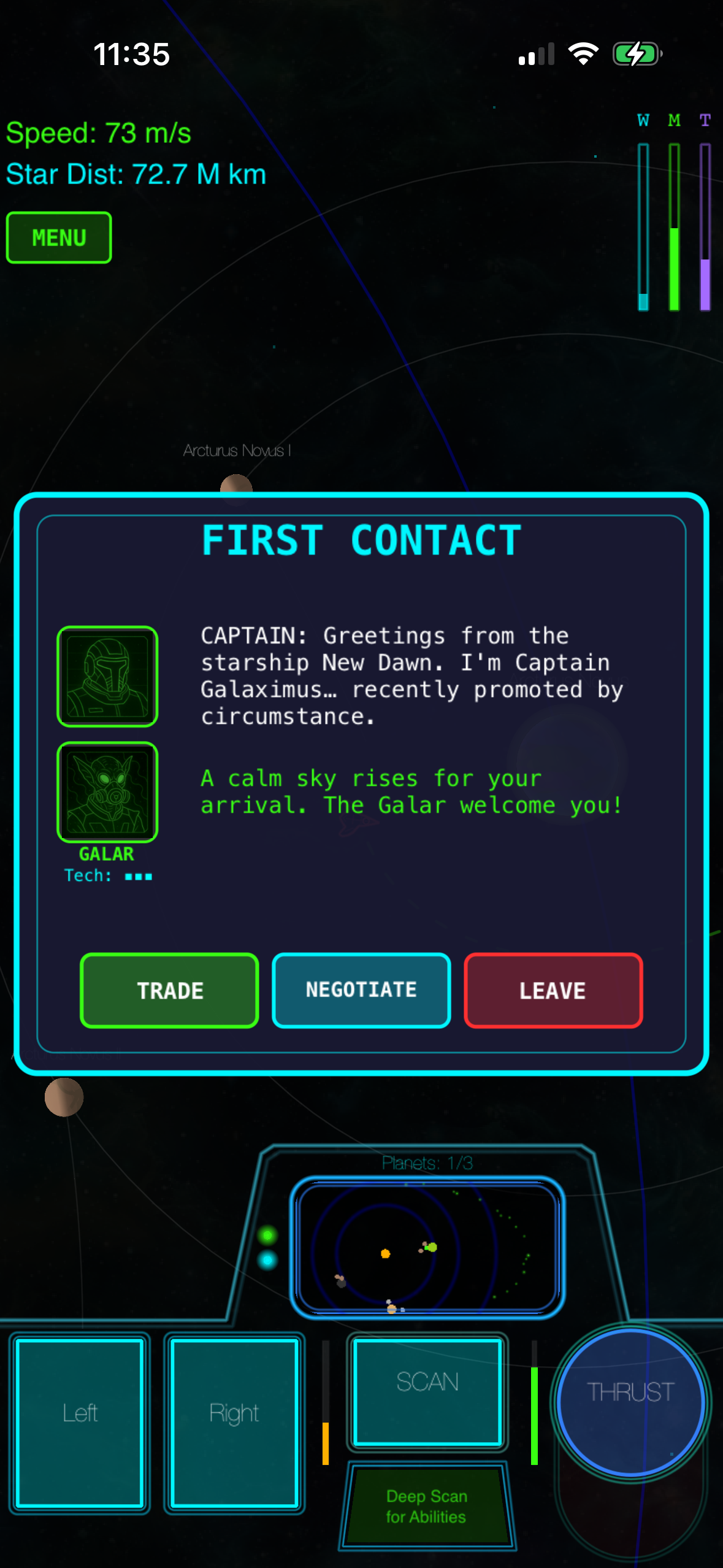
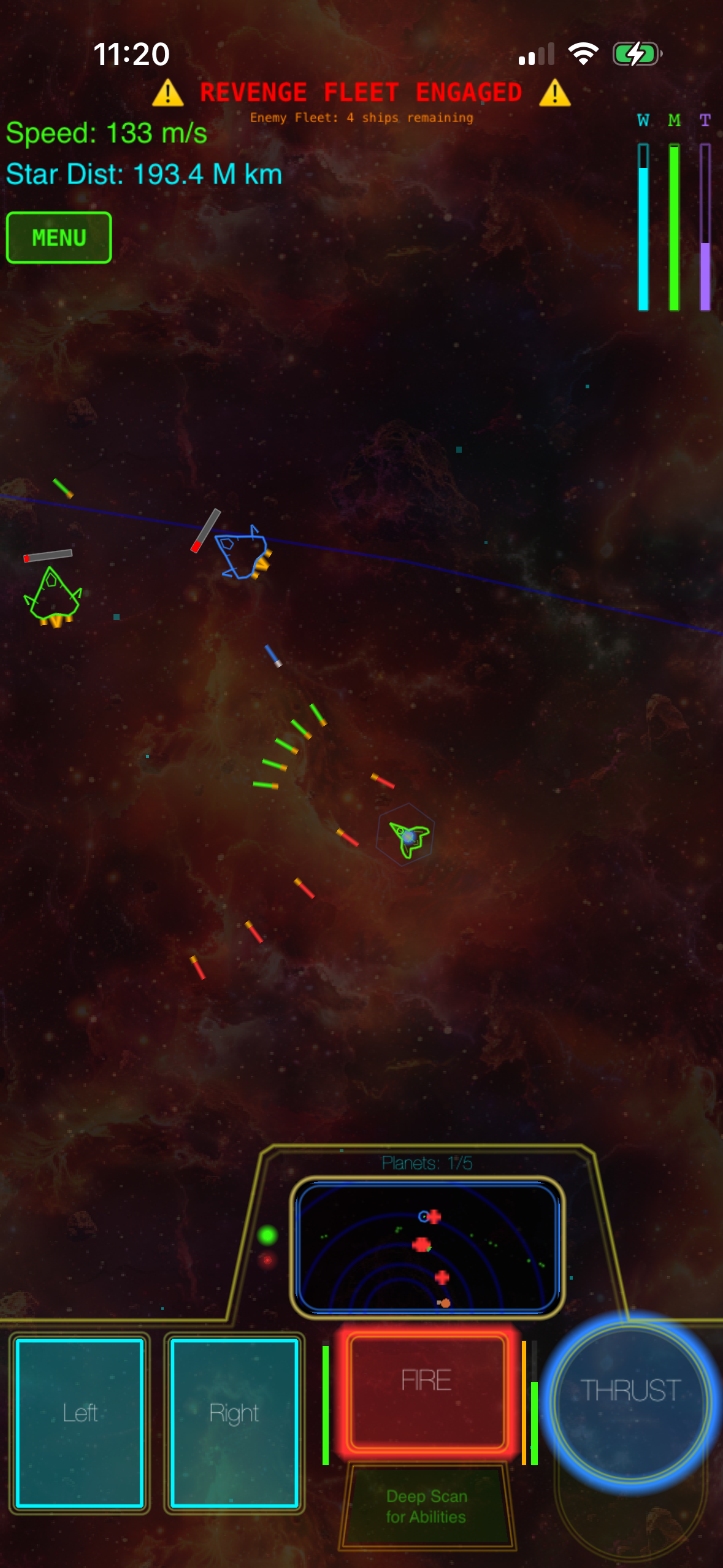
Scattered through star systems are anomalies—self-contained encounters that range from derelict ships to spacetime rifts to distress beacons. Each is a mini-experience with its own logic. Some are combat encounters; others are negotiation or puzzle-solving.
Design Philosophy: Arcade Sensibility with Real Physics
Physics sandbox space games occupy a narrow design space. They’re not engineering simulators like Kerbal Space Program, where you assemble rockets and calculate delta-v budgets. They’re not procedural-generation games like No Man’s Sky, where exploration and discovery are the primary loop. They’re arcade-action games where real physics is the interface you learn to master.
This means:
- Expressive controls. The ship responds immediately to input. You’re flying, and the physics shapes how you fly.
- Immediate feedback. When gravity pulls you off course, you see it happen and can correct. The system is transparent.
- Authored narrative within procedural systems. The campaign has a beginning, middle, and end. Each playthrough is unique in configuration but shaped by design.
Why Premium Model Matters for Physics Sandbox Games
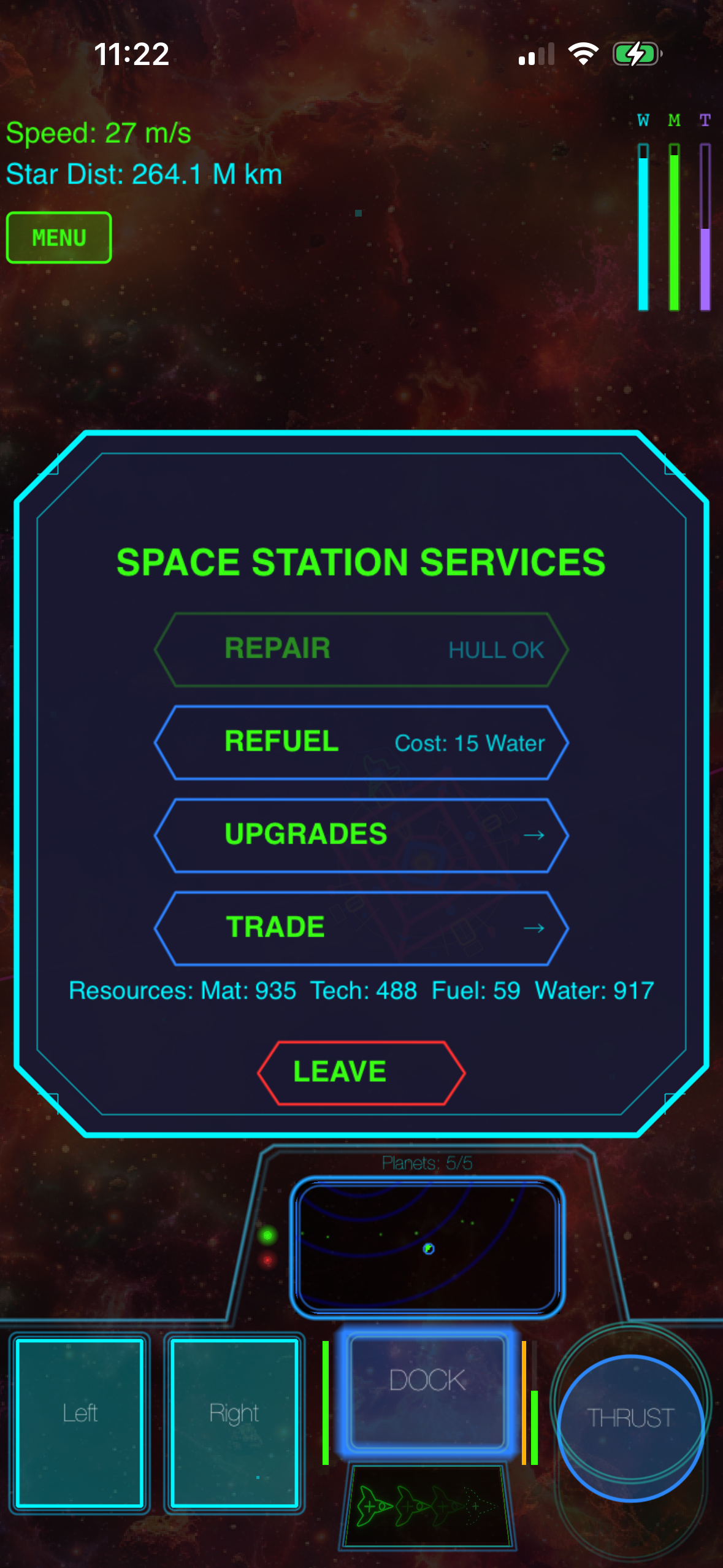
Physics sandbox games on iPhone are almost exclusively premium purchases—you pay once, own forever, and receive no ads, no energy timers, no battle pass, no in-app purchases. This matters.
Free-to-play games are designed around engagement metrics and monetization funnels. They gate progression behind timers and offer shortcuts for real money. These systems fundamentally conflict with physics-based gameplay, which rewards experimentation and failure. If you’re punished for failing (energy consumed, timer running), you’re less likely to try risky maneuvers. If you can buy your way past a challenge, the learning loop breaks.
Premium games let you fail freely, experiment without penalty, and learn at your own pace. That design freedom is why physics sandbox games are almost always premium-only.
Comparison: Physics Sandbox Space Games for iPhone
Kerbal Space Program
Kerbal Space Program is deeper on rocketry. You assemble vehicles from component parts, calculate delta-v budgets, and solve engineering problems. It appeals to players who want to think like an engineer.
Gameplay on iPhone: Desktop version is available; mobile ports exist but are less polished. Heavy UI, steep learning curve on vehicle assembly.
Best for: Players who want to design and test rockets, learn orbital mechanics through engineering.
No Man’s Sky
No Man’s Sky excels at procedural planet exploration at scale. You land on planets, walk around, gather resources, and discover alien species. The sense of discovery is massive.
Gameplay on iPhone: Not natively available on iOS. Requires cloud streaming or desktop play.
Best for: Players who want walking exploration and resource gathering alongside space travel.
Asteroids and Lunar Lander Descendants (e.g., Thrust, Gravitas)
Classic arcade space games are simpler mechanically and faster to pick up. You can play a meaningful session in 5 minutes with no learning curve.
Gameplay on iPhone: Thrust and Gravitas are direct descendants available on App Store. Simple controls, immediate feedback, minimal learning overhead.
Best for: Players who want quick arcade sessions without learning a complex system.
Galaximus
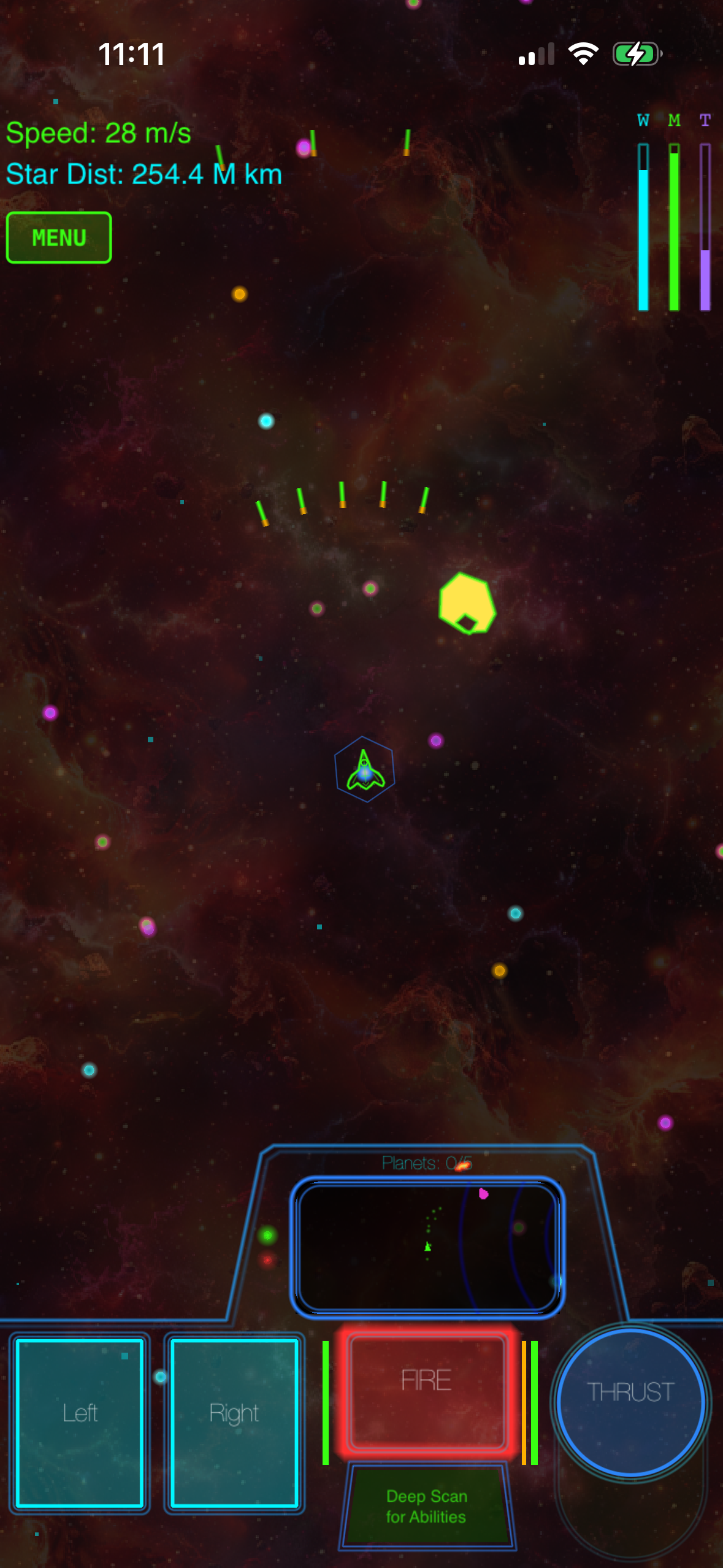
Galaximus bridges arcade accessibility and real orbital mechanics. You fly a single ship through procedurally configured star systems, using gravity as your primary tool. The campaign spans 8 systems with narrative arc and anomaly encounters.
Gameplay on iPhone: Native iOS app. Real-time gravity simulation, expressive flight controls, immediate feedback. Campaign takes 8–12 hours; procedural configuration means each playthrough is different.
Best for: Players who want to learn orbital mechanics through play, prefer a complete campaign over sandbox, and value mastery of a single system.
Pricing: One-time purchase at launch tier (price shown in App Store). Galaximus Infinitum expansion (open-galaxy sandbox, planetary surface exploration, outposts, faction warfare) ships late 2026 and is included free for launch-tier buyers.
Getting Started: What to Expect in Your First Hour
Minutes 0–10: Tutorial and First Failure
You’ll learn the control scheme and basic navigation. You’ll probably overshoot an orbit or miss a gravity well. That’s intentional. The game is showing you how gravity works by letting you feel it.
Minutes 10–30: Recognizing Patterns
You’ll start to predict how gravity will pull your ship. You’ll notice planets pulling you in as you approach. You’ll recognize when a slingshot is possible. The physics will start to feel intuitive.
Minutes 30–60: Genuine Mastery
You’ll spot opportunities—a planet positioned perfectly for a gravity assist, an asteroid field you can navigate by reading the gravity wells. You’ll plan routes instead of reacting.
FAQ
What’s the difference between orbital velocity and escape velocity?
Orbital velocity is the speed at which an object circles a body without falling or escaping—it stays in a stable orbit. Escape velocity is the speed needed to break free of a gravity well entirely and never return. In a physics sandbox game, understanding the difference lets you plan efficient routes: use orbital velocity to stay near a planet for a slingshot, use escape velocity to break free when you’re ready to move to the next system.
Can I play offline?
Yes. Physics sandbox games on iPhone are single-player, offline-capable experiences. No internet required.
How long is the campaign?
Most players complete the 8-system campaign in 8–12 hours on their first playthrough. Procedural configuration means each playthrough is different, so replay value is built in.
Do I need to understand physics to play?
No. You learn physics through play. The game teaches you by showing you consequences. After an hour, you’ll understand orbital velocity and gravity wells at a practical level, even if you’ve never studied physics formally.
Are these games too hard?
They have a real learning curve, but not a punishing one. Failure is information, not punishment. You’re not losing progress or spending resources when you crash—you’re learning how the system works.
Can I play casually, or do they require long sessions?
Both. You can play a single encounter in 10 minutes or spend an hour navigating a star system. The game doesn’t force you into long sessions, but it rewards them with deeper progression.
The Physics Sandbox Space Game Renaissance
Physics sandbox space games represent a specific design philosophy: real mechanics, transparent feedback, and learning through play. They’re not for everyone—the learning curve is real, and they reward patience over twitch reflexes. But for players who want to understand how gravity works and use that understanding to navigate star systems, they offer a depth that casual space games can’t match.
Galaximus embodies that philosophy. We built it because we wanted a space game where gravity actually matters, where mastery is achievable without becoming an engineer, and where the experience is complete from day one.
Get Galaximus on the App Store: Get it on the App Store