Kerbal Space Program Alternatives on iPhone (2026)
 by Galaximus
Kerbal Space Program Alternatives on iPhone
iPhone has no native rocket-builder with KSP’s depth; here are the physics-driven alternatives that actually work on 6-inch screens. KSP’s core loop is engineering, and engineering UI on a small touchscreen is a genuinely hard problem nobody has cracked yet.
What iPhone can deliver is the physics — gravity that means something, orbits you have to think about, slingshots that feel like a real tool. We built one of those games.
Get Galaximus on the App Store: Get it on the App Store
This guide walks through the realistic options, what each one is actually good at, and which KSP itch each one scratches. No fake comparison tables where everything we make wins every row.
What you’re actually looking for (be honest with yourself)
Before picking an alternative, figure out which part of KSP you’re chasing. Sort yourself, then jump to the matching pick:
- The engineering puzzle (build, stage, fuel, delta-V budget) → no real iPhone answer; closest is Juno: New Origins.
- The orbital mechanics (Hohmann transfers, capture, rendezvous) → Juno delivers this end-to-end.
- Slingshot / gravity-assist physics specifically → Galaximus delivers this as the core flight loop.
- The build-and-launch loop, simpler → Spaceflight Simulator delivers this.
- “Tiny pilot in a huge solar system” feeling → No Man’s Sky (where available) or Galaximus.
- Freeform sandbox → mostly desktop; Juno is the closest mobile approximation.
- The disaster comedy (forgot a parachute, hilarity ensues) → KSP-specific tone; nothing else has it.
The honest competitor: Kerbal Space Program Mobile itself

Let’s start here so we’re not pretending. KSP has had varying degrees of mobile presence over the years through ports and companion apps. If you literally want KSP on a phone, the official mobile route is the closest thing — and on a tablet it’s tolerable. On an iPhone screen, the assembly UI is cramped enough that most longtime players treat mobile as a supplement to the desktop game.
Where it wins: nothing else on iPhone gives you the part-by-part rocket builder and mission-planning depth.
Where it struggles on iPhone specifically: touch controls for fine staging adjustments, small-screen readability of the map view, and battery drain during long burns are recurring complaints in App Store reviews.
If you’ve never played KSP and you’re shopping iOS-first, this is probably not where to start. If you have hundreds of KSP hours already and you want a portable companion, it’s the obvious choice.
Galaximus — real gravity, arcade controls
This is the part where we tell you what we made and why it might be the alternative you actually want — with the caveats up front.
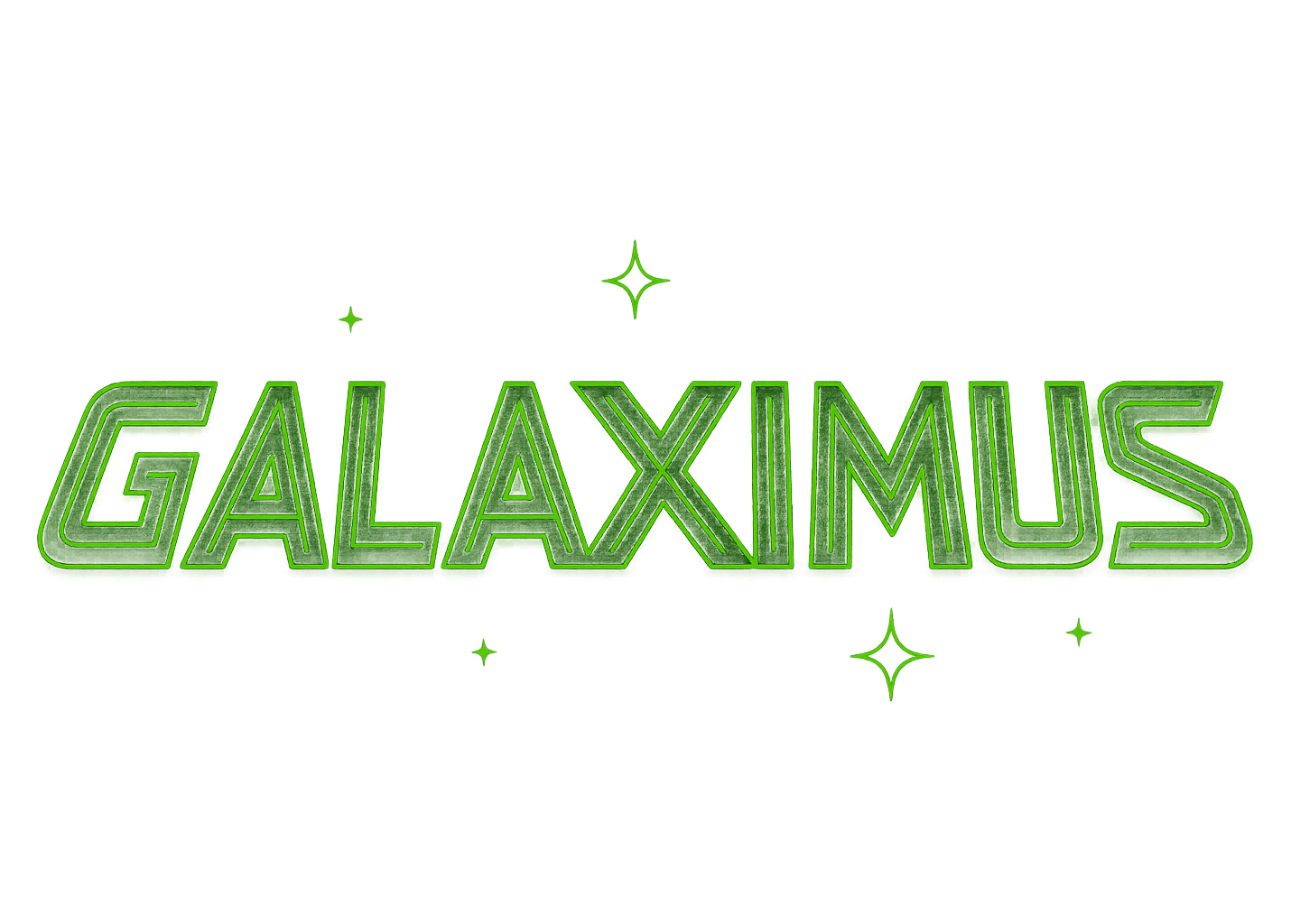
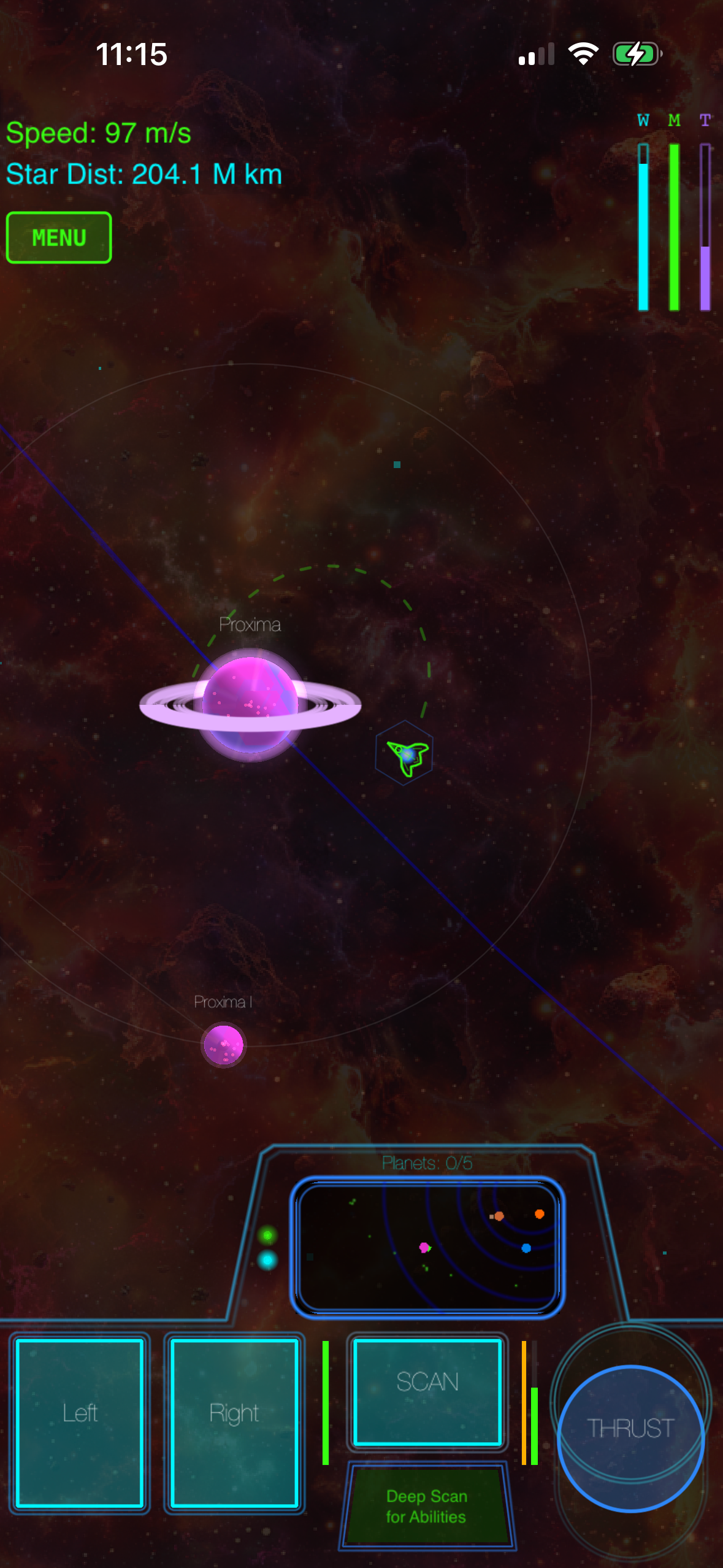
We built Galaximus for the player who loved KSP’s physics but bounced off the engineering. In Galaximus you don’t build the ship — you fly it. The ship is called The New Dawn and it’s subject to gravity from every body in the system simultaneously. Planets orbit suns, moons orbit planets, asteroids tumble through gravity wells, and your trajectory bends around all of it in real time.
What that means in practice:
- Slingshots are a real tool. Approach a planet at the right angle and you exit with more speed than you came in with — for free, no fuel cost. This is the same maneuver Voyager used. Reading about it is one thing; flying one with your thumb is another.
- Orbits are a place you can park. Match velocity and altitude, cut your engine, and you’re in stable orbit.
- Fuel matters. Coasting on momentum, timing transfers, using gravity wells — that’s the loop.
Concrete differentiators (so you can judge without taking our word for it):
- Price: one-time, no ads, no IAP, no energy timers.
- App Store rating: 4.6★ at the time of writing; check the listing for current numbers.
- Scope: an 8-system structured campaign with a beginning, middle, and end — not an open sandbox you have to motivate yourself through.
- Encounter variety: 11 distinct anomalies (spacetime rifts, derelict ships, distress beacons, the Mirror boss fight against a copy of yourself). Juno, by contrast, ships dozens of stock contract/mission types but no scripted encounters; Spaceflight Simulator has none.
- Controls: designed for touch from day one, not ported from desktop.
Where Galaximus is not a Kerbal alternative: there is no rocket builder, no staging, no delta-V map, no mission planner. The physics is the interface, not the gameplay loop. If what you loved in KSP was poring over a vehicle assembly screen for an hour before launch, Galaximus won’t replace that and we won’t pretend it does.
Buy at the launch-price tier now and the upcoming Galaximus Infinitum expansion (open-galaxy sandbox, planetary surface exploration, outpost building, faction warfare — late 2026) is included free; after Infinitum ships, the combined game moves to a higher price tier.
If this sounds like the part of KSP you actually wanted:
SimpleRockets 2 (Juno: New Origins)
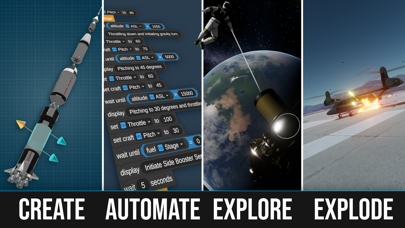
The closest spiritual cousin to KSP that runs natively well on iPhone. Juno (formerly SimpleRockets 2) gives you a real rocket builder, real orbital mechanics, and a planetary system you can mess around in. It’s developed by Jundroo, who have been iterating on this exact niche for years.
Where it wins versus KSP on iPhone: the UI was designed mobile-first. Building a rocket, staging it, and flying it on an iPhone screen is genuinely workable.
Where KSP still wins: parts library depth, modding ecosystem, and community-made missions. Juno’s community is smaller.
This is probably the single best “I want KSP-shaped gameplay on my phone” answer.
Related reading: Top Orbital Mechanics Games for iPhone in 2026.
Spaceflight Simulator
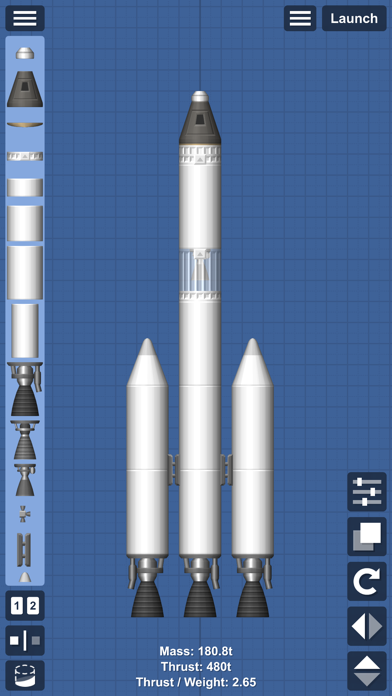
A simpler take on the rocket-building idea. Less granular than Juno, more approachable than KSP, free-to-start with a paid unlock for the full solar system. If your KSP itch is specifically “I want to build a rocket and watch it go up,” and you don’t need atmospheric drag modeled to three decimal places, Spaceflight Simulator is the lowest-friction way in.
The realism is genuinely good for what it is — orbits work, transfers work, gravity assists work — and the build interface is forgiving on a phone screen.
Where it falls short of KSP: no career mode of comparable depth, simpler aerodynamics, smaller part variety. Where it falls short of Juno: less granular control over rocket internals.
If you bounced off Juno because it felt like work, this is the next stop down. See Best Gravity Simulation Games for iPhone for the broader category.
No Man’s Sky (when it’s available on mobile)
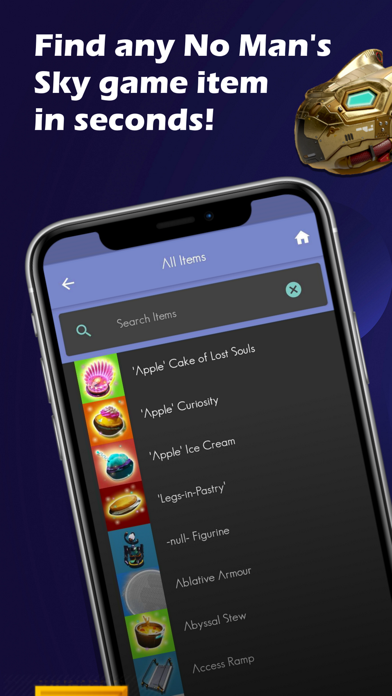
Including this with a caveat: as of April 2026, No Man’s Sky is available on iPad but not on iPhone, and regional availability varies. Check the App Store listing for your region before assuming it’s an option: .
If it is available to you, it scratches a different itch than KSP — exploration of procedurally generated planets at a scale nobody else attempts. The physics is much more arcade than KSP (no real orbital mechanics; flight is essentially atmospheric-style controls in space), but the feeling of being a small ship in an enormous galaxy is unmatched.
We mention NMS honestly because procedural planet-surface exploration is something it does that we don’t (yet — that’s coming in Galaximus Infinitum). If walking around on alien planets is the part of space games you care most about, NMS is doing that work.
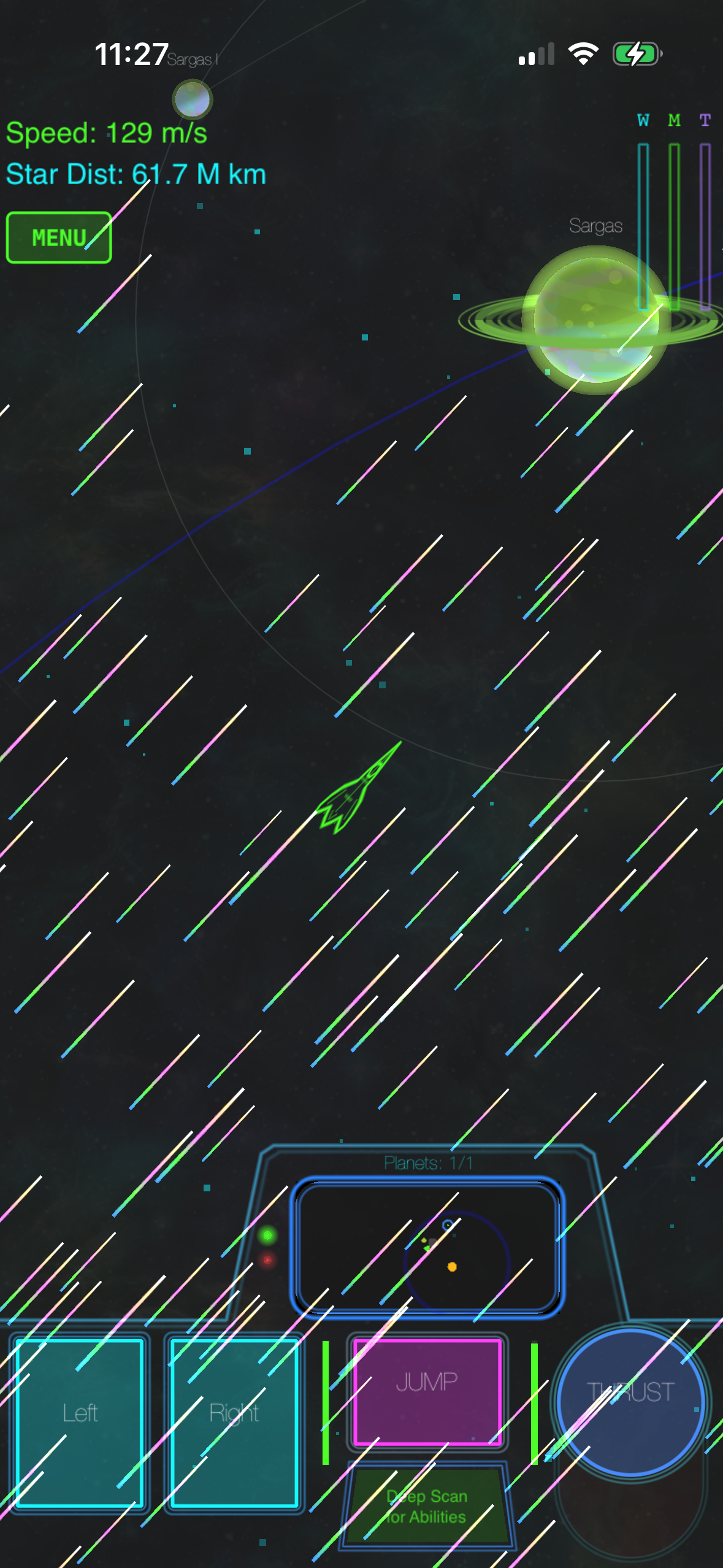
Elite Dangerous (mobile companion only)
Worth flagging quickly: Elite Dangerous on phone is a companion app, not the game. Don’t buy expecting to fly. If you want a deep space-sim with real Newtonian flight, that’s a desktop or console purchase.
Stellar Wanderer
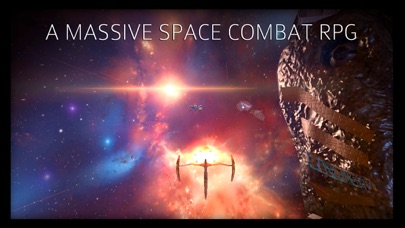
A space-RPG-flavored alternative — closer to the Freelancer / Privateer lineage than to KSP. The “physics” is mostly cosmetic; ships handle like jet fighters in vacuum. We’re including it because some people who search “KSP alternatives” actually want “any good space game on iPhone,” and Stellar Wanderer is solid at what it does: missions, ship upgrades, a campaign.
If your real query was the broader one, Single-Player Story-Driven Space Games on iPhone is more on point than this article.
Event Horizon and the lane-shooter cousins
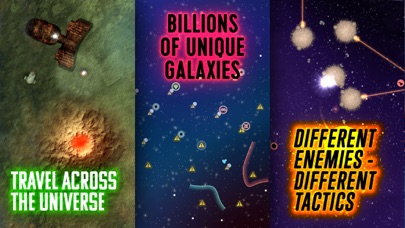
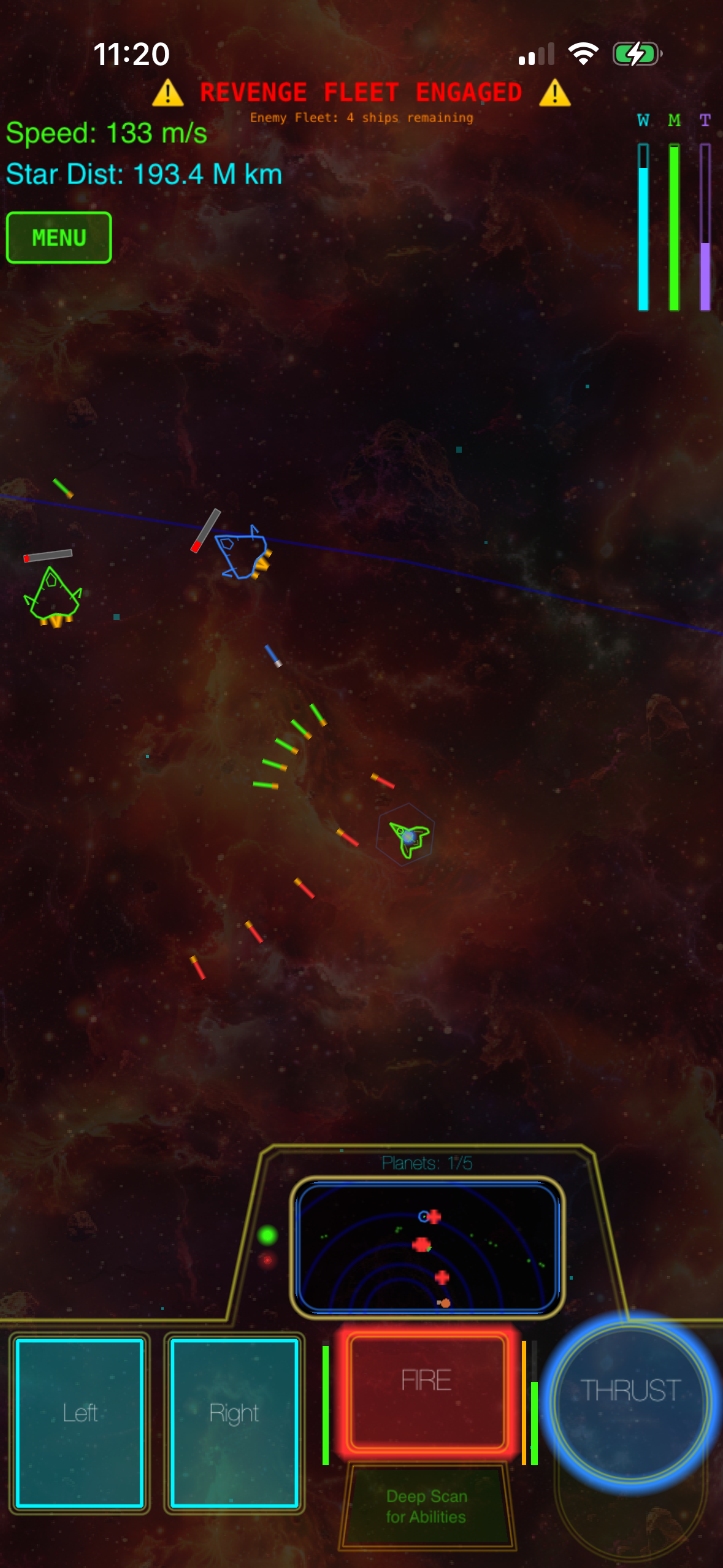
Event Horizon and its peers (Subdivision Infinity, Galaxy on Fire descendants) are arcade-action space games with light RPG progression. Almost no orbital physics — they’re 2D or pseudo-3D twin-stick affairs. Good games in their own right; not Kerbal alternatives in any meaningful sense. Skip if physics is what you came for.
What about pure orbital-mechanics puzzle games?
There’s a small subgenre of “draw your trajectory and watch it execute” puzzle games — Orbit, Patatap-style gravity sandboxes, etc. They’re genuinely educational about orbital mechanics, often free or budget-tier, and they make a great evening after you’ve burned out on a long KSP session.
They’re not a substitute for an active piloting game (you’re a planner, not a pilot), but if your KSP love is specifically the trajectory math, they hit a particular sweet spot. Slingshot Mechanics in iOS Space Games: Physics-Based Strategy goes deeper on this corner of the genre.
Technical requirements
Practical friction points before you buy. Specs are approximate and change with updates — verify on each App Store listing.
| Game | Price | Download | iOS minimum | Battery / thermal notes |
|---|---|---|---|---|
| KSP Mobile | ~2.8 GB | iOS 15+ | Heavy. Long burns drain ~20%/hr on iPhone 13-class hardware; device runs warm. | |
| Juno: New Origins | ~2.1 GB | iOS 14+ | Moderate-heavy. Time-warped flights are easier on the battery than active piloting. | |
| Spaceflight Simulator | Free, full solar system unlock | ~250 MB | iOS 13+ | Light. Runs cool on older devices. |
| Galaximus | ~1.4 GB | iOS 15+ | Moderate. ~10–12%/hr typical; designed for handheld sessions. | |
| No Man’s Sky | ~8 GB | iPadOS 16+ (iPad only) | Heavy. Not currently on iPhone. | |
| Stellar Wanderer | ~600 MB | iOS 13+ | Light-moderate. | |
| Event Horizon | Free + IAP | ~400 MB | iOS 12+ | Light. |
If you’re on an iPhone older than the 12 series or under 64 GB total storage, prioritize Spaceflight Simulator or Galaximus over the heavier titles.
FAQ
What’s the cheapest KSP alternative on iPhone that actually has real physics? Spaceflight Simulator. Free to start, to unlock the full solar system. Orbits, transfers, and gravity assists all work; aerodynamics are simplified.
Which game has the steepest learning curve? Juno: New Origins, by a wide margin. It’s the closest thing to KSP’s full engineering loop on iPhone, which means it inherits the same “spend an hour reading before your first orbit” problem. KSP Mobile is comparable. Galaximus and Spaceflight Simulator are both designed to get you flying within minutes.
I want to build rockets on my phone. Where do I start? Juno: New Origins (, ~2.1 GB) first. If Juno feels heavy, drop to Spacefl

