Single-Player Story-Driven Space Games on iPhone
 by Galaximus
Single-Player Story-Driven Space Games on iPhone
Story-driven space games on iPhone occupy a narrow but rewarding niche. Most mobile space titles lean toward arcade action or endless sandbox loops; narrative-focused titles are rarer because they demand coherent pacing, character voice, and an authored ending—constraints that sit uneasily with the free-to-play monetization model that dominates the App Store. When a space game commits to a complete story arc, though, it can deliver something desktop gaming often struggles with: a beginning, middle, and satisfying conclusion that respects the player’s time.
This guide walks through what makes narrative space games work on mobile and which titles deliver genuine story experiences.
Disclosure: Galaximus, discussed in this article, is a product developed by the author’s studio. This review reflects firsthand experience with the game’s design and is included as a primary example of the story-driven space-game category, not as an independent third-party recommendation.
Why Story-Driven Space Games Are Rare on iPhone
The economics of mobile gaming have shaped what gets made. Free-to-play titles with battle passes and season passes can monetize indefinitely; a game with an ending generates revenue once per player. That math has pushed most space games toward endless loops—procedural generation, live-service updates, cosmetic passes—rather than authored narratives.
The technical constraints matter less than they did in 2015. The real constraint is design discipline: a story-driven game needs a writer, a narrative director, pacing decisions, and the willingness to ship something finite. That’s expensive for a studio betting on recurring revenue.
The upside: when a space game does commit to narrative, it often reflects genuine creative intent rather than a monetization template. The developer made the game they wanted to play, not the game the algorithm rewards.
Core Elements of Narrative Space Games
Story-driven space games tend to cluster around a few mechanics:
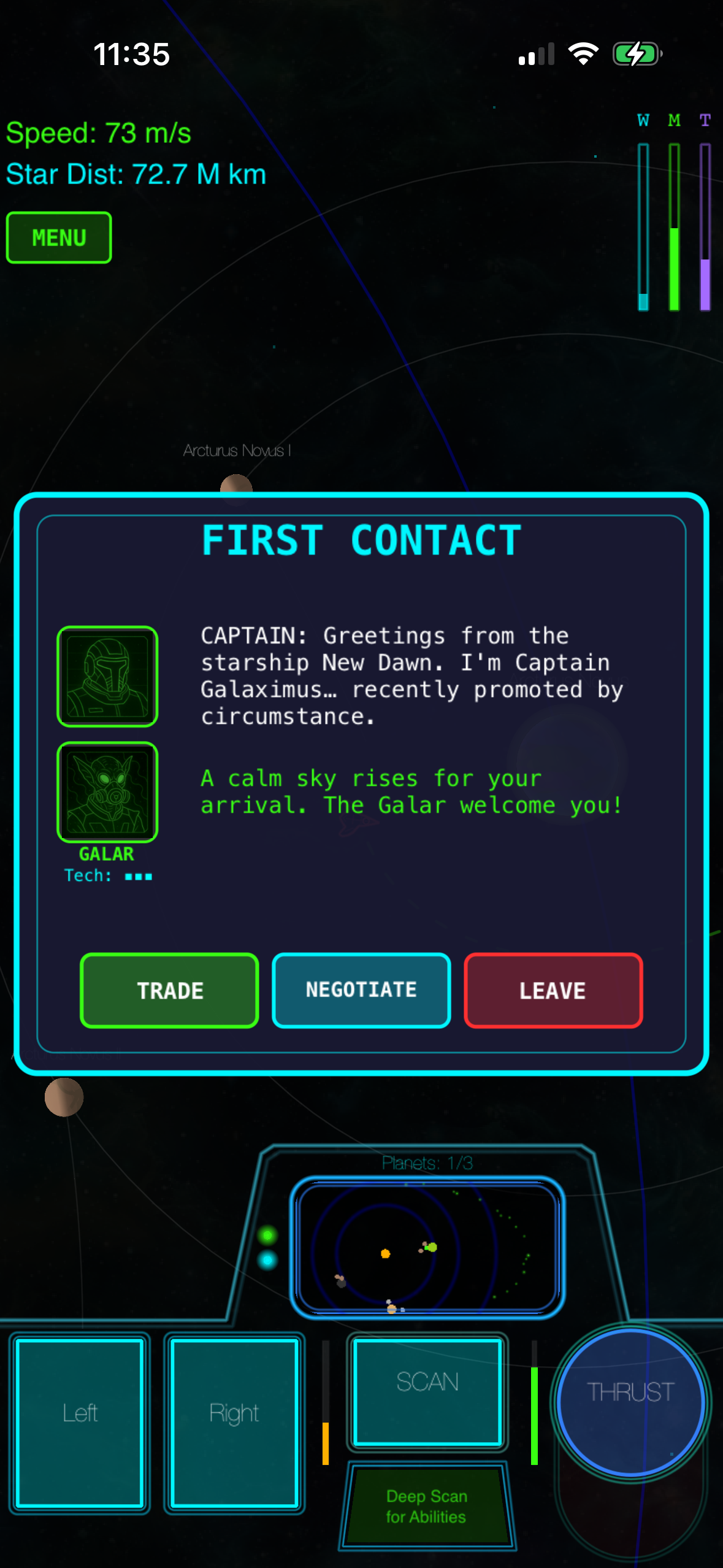
First-contact encounters. Most narrative space games use alien meetings as their primary story engine. A character appears, dialogue unfolds, the player makes a choice, the game world responds. The encounter might be hostile, diplomatic, or mysterious—but it’s the moment where story and gameplay intersect.
Procedural world variation with authored narrative. A procedurally generated star system (different planet positions, asteroid fields, anomalies each playthrough) can still contain authored story beats. The where is random; the what happens is written. This balance lets a game feel fresh on replay without requiring infinite content.
Real-time decision-making under pressure. Unlike turn-based narrative games, space games often force story choices while the player is flying. A distress beacon appears; you have seconds to decide whether to investigate or jump to the next system. The time pressure makes the choice feel consequential.
Synthesized or minimal voice work. Full voice acting is expensive; procedurally generated voices or text-based dialogue keep production costs manageable. Some games use both—a narrator with synthesized alien voices, for example.
Galaximus: A Complete Campaign with Real Gravity
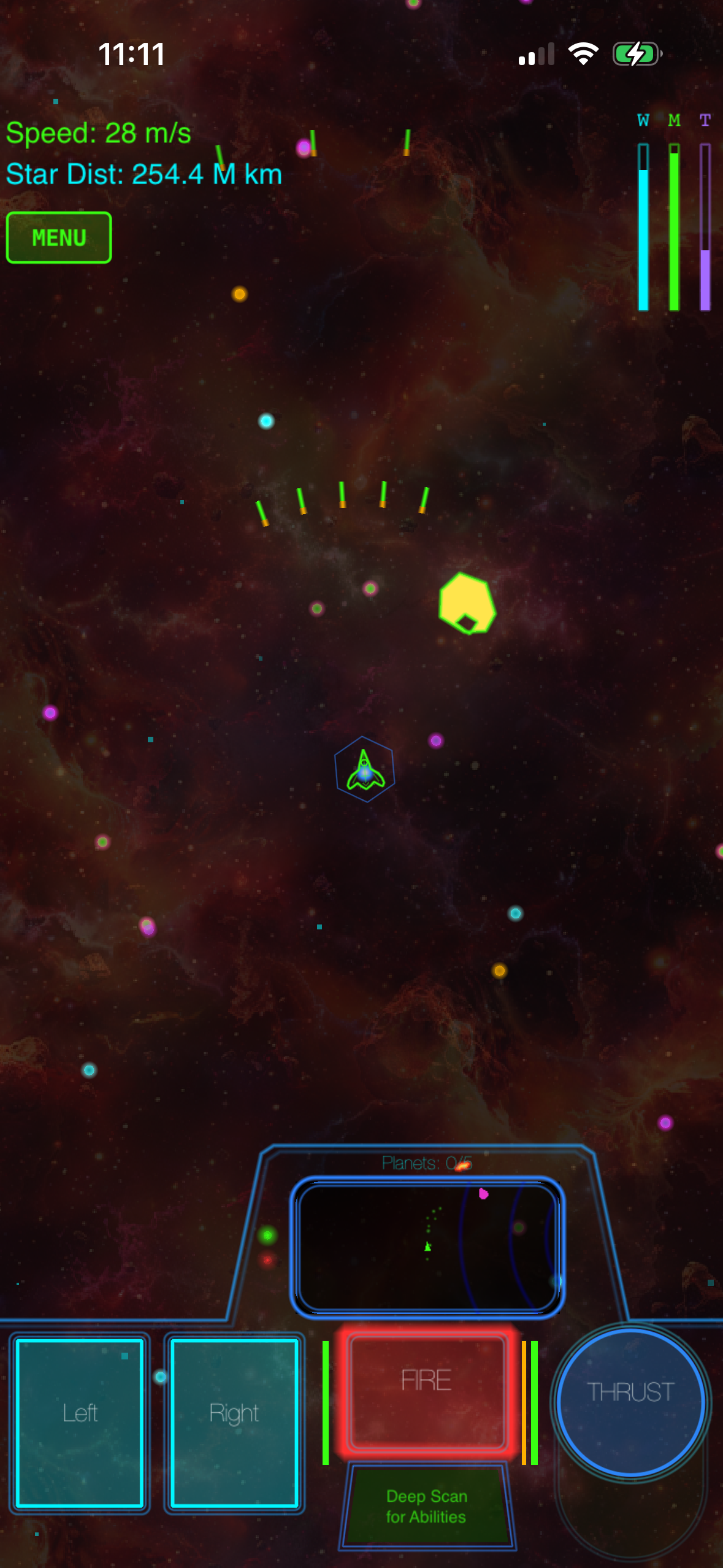
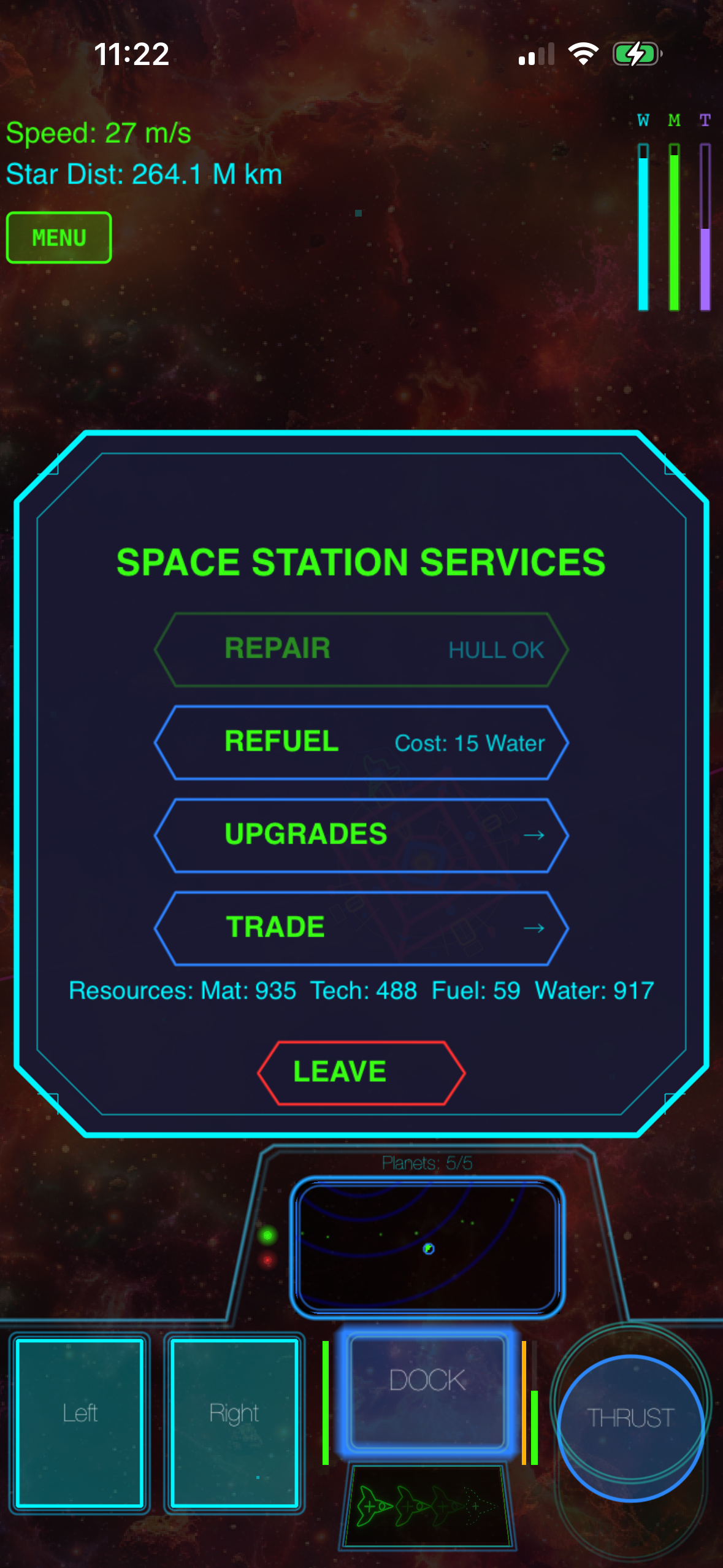
Galaximus is a single-player experience built around a complete narrative campaign spanning eight procedurally configured star systems. The player pilots The New Dawn, a ship that obeys real orbital mechanics—every planet’s gravity affects trajectory, and mastery comes from using gravity as an engine rather than fighting it.
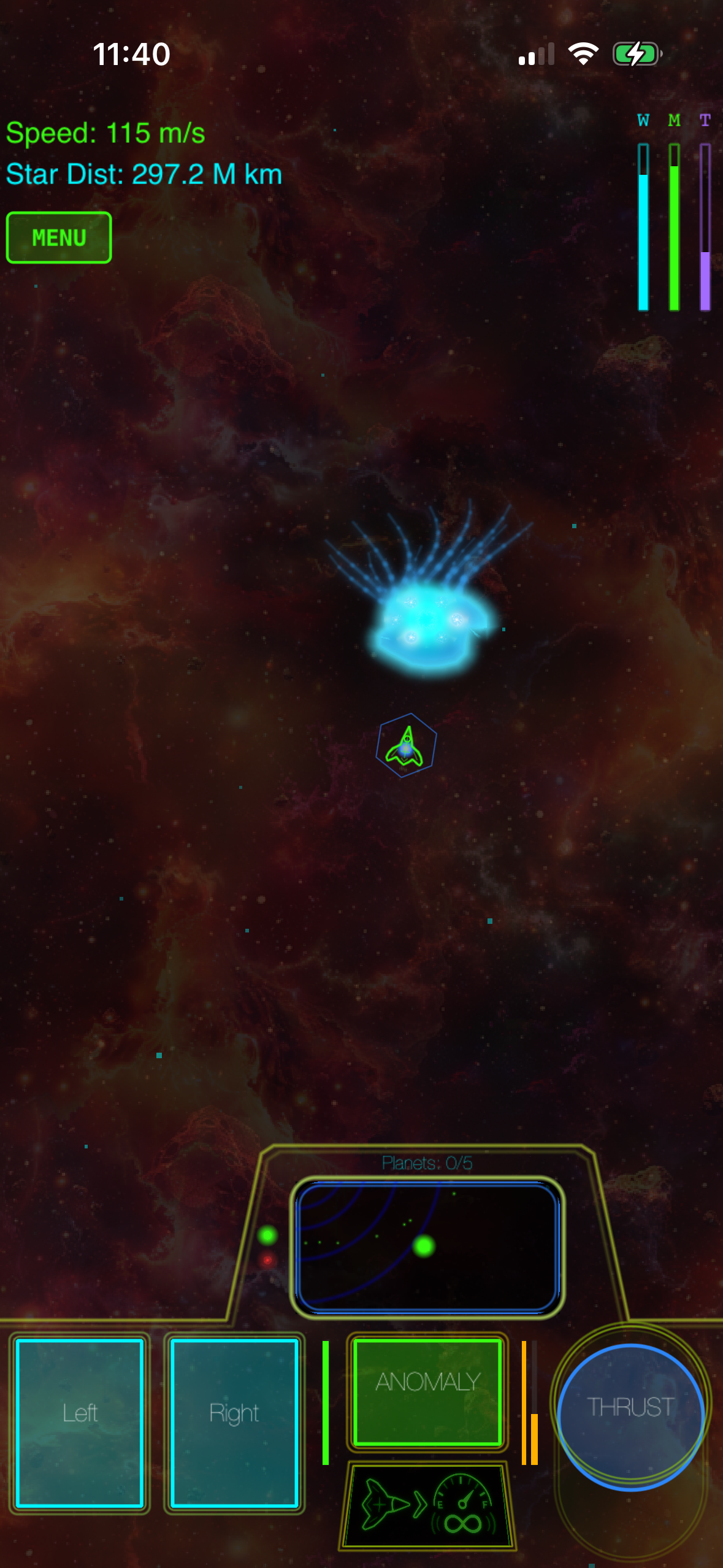
The story unfolds through first-contact encounters with alien civilizations, anomalies (spacetime rifts, derelict ships, distress beacons), and a climactic encounter called the Mirror—a combat sequence against a copy of the player’s ship that tests mastery of orbital mechanics.
What distinguishes it: the physics isn’t window dressing. The story requires mastery of orbital mechanics. The learning curve is integral to narrative pacing—the game teaches you to fly, then uses that mastery as part of the story itself. The New Dawn’s journey mirrors the player’s own progression.
Galaximus ships as a premium purchase with no ads, energy meters, or battle passes. The late-2026 expansion Galaximus Infinitum (open-galaxy exploration, planetary surface gameplay, faction warfare) will be included free for early adopters; after its release, the combined game moves to a higher price tier.
What Story-Driven Space Games Demand of Players
Narrative space games aren’t casual. Games using physics as a core mechanic (rather than window dressing) require genuine investment. Galaximus demands 20–30 minutes of focused play before orbital mechanics feel intuitive. After that investment, the payoff is mastery and satisfaction. The story doesn’t advance until you master the controls; pacing and learning are intertwined.
Other story-driven space titles vary in their demands. Some lean toward arcade-action (minimal physics complexity, faster pace). Others go deeper into simulation. The common thread: they all require serious engagement with the core mechanic rather than skipping it for plot.
If you’re seeking a space game where you can skim mechanics and focus on story, narrative space games generally won’t satisfy you. The genre assumes the player wants mastery, not just narrative consumption.
Procedural Generation as a Narrative Tool
Many story-driven space games use procedural generation to create variation without infinite content. Each playthrough generates a unique star system layout—planets in different orbits, asteroid fields in different positions, anomalies in different locations. But the narrative encounters remain authored.
This approach solves a production problem: you write 10 first-contact encounters, 5 anomaly types, and 1 climactic boss fight. Procedural generation shuffles the order and location of these encounters, so 100 players experience them in 100 different sequences. The story feels fresh on replay without requiring 100 unique encounters.
Galaximus uses this pattern. The eight systems have a narrative structure (system 1 introduces core mechanics, system 8 is the climax), but planet positions and anomaly placements vary per playthrough. You might encounter a distress beacon in system 2 on one run and system 4 on another. The narrative arc stays the same; the path through it changes.
Combat and Conflict in Story-Driven Space Games
Not all narrative space games include combat. Some are pure exploration and dialogue. Others weave real-time combat into the story.
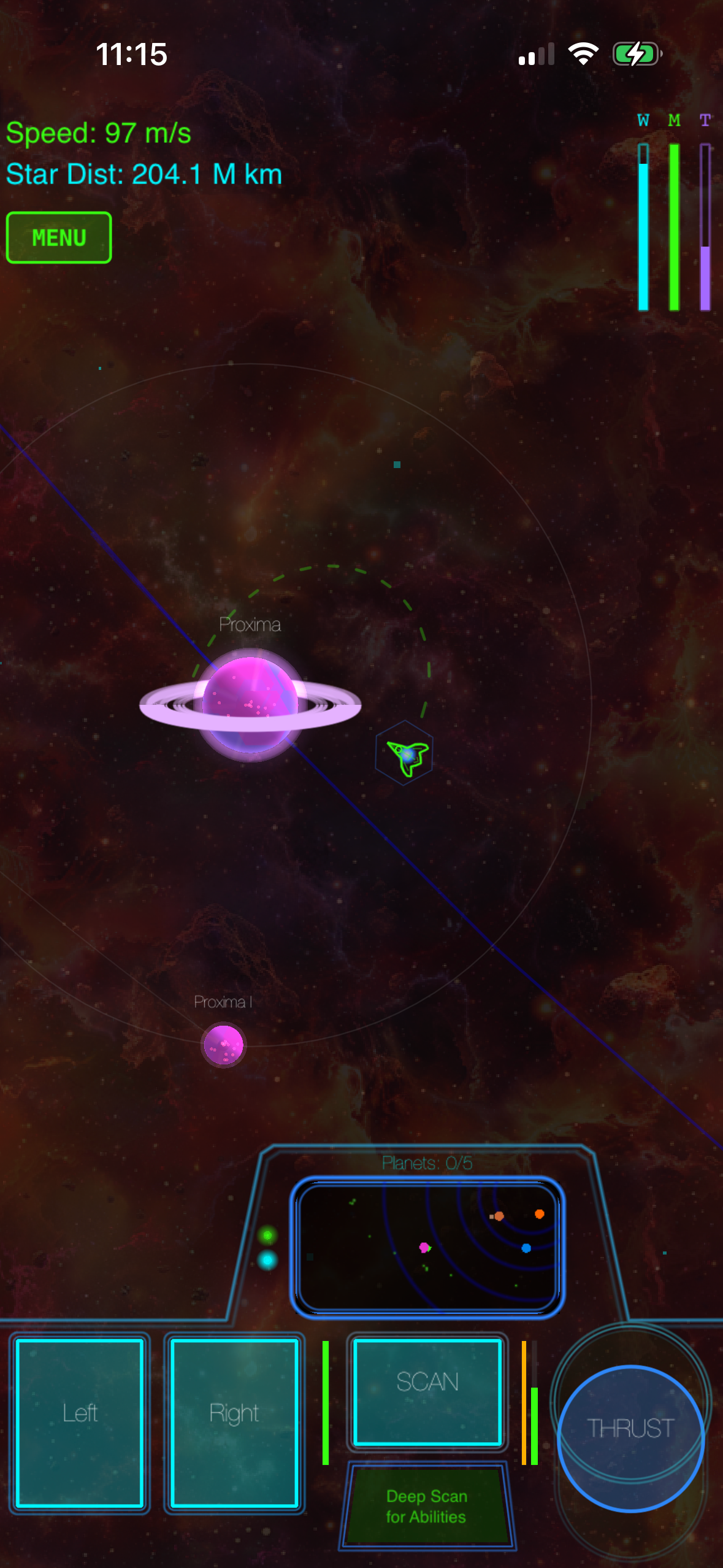
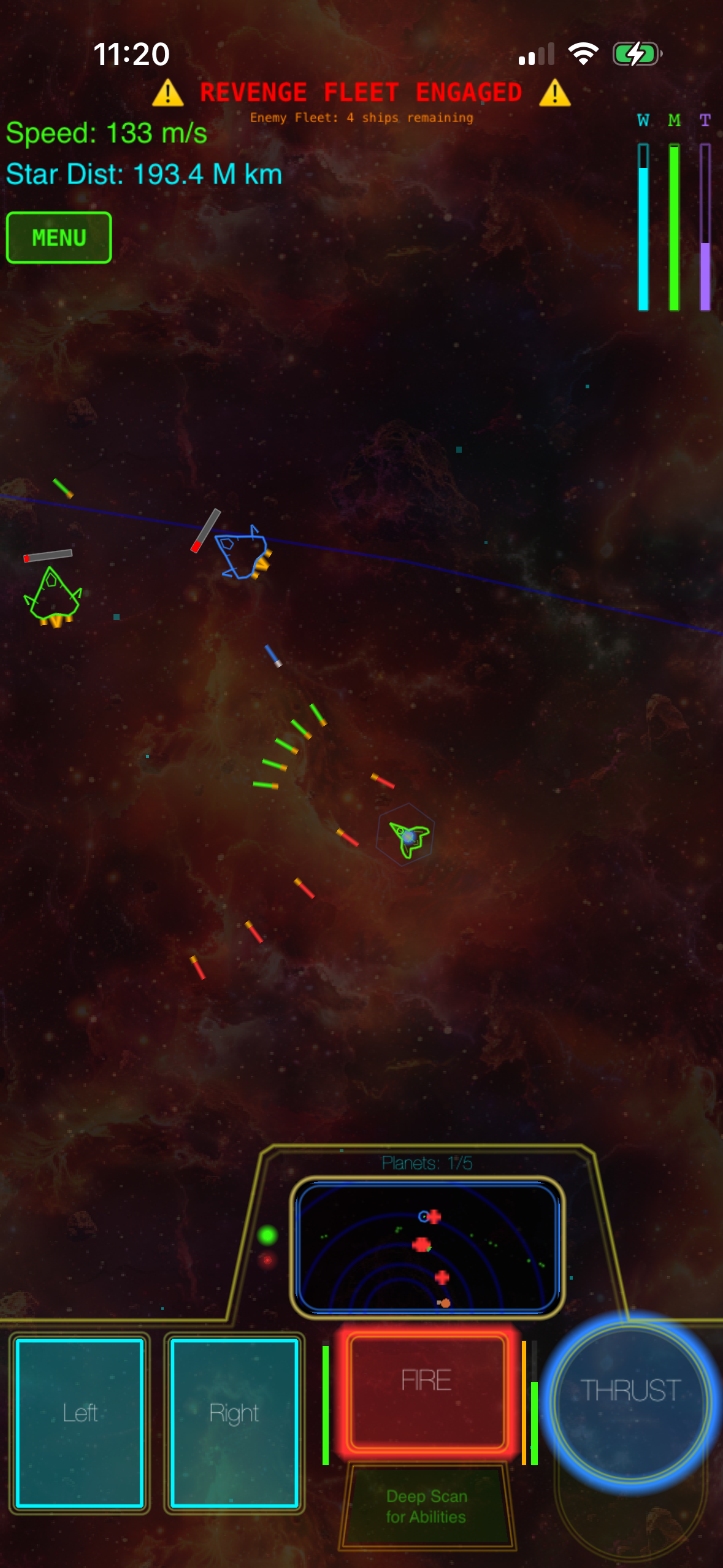
Combat in space games typically falls into two categories: twitch-reflex heavy (fast-moving projectiles, quick decisions) or physics-based (positioning matters, patience is rewarded). Story-driven games often lean physics-based because it creates natural pacing breaks. A firefight with a pirate fleet becomes a series of positioning decisions and gravity-well maneuvers, not a reflexes test. That pacing fits better with narrative beats.
Dialogue, Choice, and Consequence
Story-driven space games vary in how much agency they give the player over narrative outcomes. Some offer binary choices (fight or flee; trade or rob). Others have no choices at all—the story unfolds as authored, and your only control is mechanical (how you fly, how you aim, how you survive).
The key difference from choice-heavy narrative games (like Telltale-style adventures) is that mechanical choices matter more than dialogue choices. You can’t talk your way out of a pirate ambush, but flying a precise gravity-well maneuver to escape can change the encounter’s outcome. The story responds to what you do, not what you say.
This makes narrative space games feel different from traditional adventure games. The story isn’t branching dialogue trees; it’s the emergent result of your flight decisions, your combat tactics, and your willingness to engage with the physics.
The Premium Model and Complete Experiences
Story-driven space games almost always ship as premium purchases rather than free-to-play. The reason is structural: a game with a narrative ending can’t support live-service monetization. Once you finish the story, live-service revenue drops to zero unless the game adds new story content (expensive) or pivots to cosmetics and battle passes (which undermine the “complete experience” promise).
Premium pricing also signals intent. A free-to-play game might be abandoned in six months if monetization underperforms. A premium game is more likely to ship complete and stay supported because the developer’s reputation—and word-of-mouth—depends on delivering a finished product.
If you’re tired of free-to-play space games that feel like they’re waiting for a live-service update that never comes, premium story-driven space games are the antidote. You pay once, you get the whole thing, and the developer has no incentive to leave it unfinished.
Story-Driven Space Games: Key Approaches in 2026
The landscape of narrative space games on iPhone clusters around distinct design philosophies:
Arcade-action with light narrative. Games like Void Descent and Stellar Raid lean heavily on twitch mechanics and use story as flavor. Quick pickup-and-play sessions, minimal learning curve, dialogue as a reward between action sequences. These prioritize accessibility over mechanical depth.
Physics-based with authored story. Galaximus exemplifies this approach: the physics is central to the experience. Mastery is the payoff; story is the frame that gives mastery meaning. Longer learning curve, deeper engagement, replayability through procedural variation. Best for players who want to understand how orbital mechanics work.
Exploration-focused with minimal combat. Games like Starfield Echoes skip combat entirely and focus on discovery, dialogue, and environmental storytelling. These tend to be slower-paced and more contemplative, emphasizing wonder over challenge.
Simulation-adjacent. Titles inspired by Kerbal Space Program offer deeper physics and engineering complexity. Story is lighter because the game’s complexity is the engagement. Orbital Mechanics Sandbox and similar titles appeal to players who want authentic astrophysics.
Each approach is legitimate; the choice depends on whether you prioritize story density, mechanical depth, or a balance of both.
Why Replay Value Matters in Story-Driven Games
A story-driven space game with a fixed ending might seem like a one-play experience. But procedural generation changes that calculation. If the story beats are authored but the sequence and location of those beats vary, the game stays fresh across replays.
Galaximus is designed for multiple playthroughs. The narrative arc is the same each time, but because planets and anomalies spawn in different positions, the path you take through that arc is unique. You might encounter the Mirror boss fight in a dense asteroid field one playthrough and an open void the next. The story doesn’t branch, but the experience of the story does.
This is different from choice-based branching, where different decisions lock you into different story paths. Procedural variation instead gives you the same story told in different orders, with different tactical challenges along the way. Both approaches support replay; they just work differently.
Getting Started: What to Know Before You Buy
If you’re new to story-driven space games, here’s what to expect:
Learning curves vary by title. Physics-based games like Galaximus require 20–30 minutes of focused play before controls feel natural. Arcade-action titles like Void Descent have shallower curves and faster onboarding. Exploration games like Starfield Echoes emphasize pacing over mechanical challenge. Choose based on your tolerance for complexity.
Story unfolds through gameplay. Don’t expect cinematic cutscenes or lengthy dialogue trees. Narrative space games tell their stories through encounters, choices made under pressure, and the consequences of your decisions. The pacing is slower and more deliberate than action games.
Complete experiences ship complete. Premium story-driven games come with a beginning, middle, and end. You won’t be waiting for content updates or grinding a battle pass. What you buy is what you get.
Replayability is built-in. Procedural generation means the second playthrough feels different, even though the story is the same. If you enjoy optimization (finding the most fuel-efficient path, the fastest route through a system), replay value extends significantly.
FAQ
Do story-driven space games require internet? Most premium space games work offline once downloaded. Galaximus is fully playable without an internet connection—the entire campaign runs on-device. Check the App Store listing for any title you’re considering to confirm offline support.
How long is a typical story-driven space game? Galaximus’s campaign takes 4–8 hours depending on playstyle and how much time you spend optimizing routes. Faster players finish in 4 hours; players who explore every anomaly and chase high scores can stretch it to 8–10 hours. Void Descent averages 3–5 hours; Starfield Echoes runs 6–12 hours depending on exploration depth. That’s typical for the genre—not a 40-hour RPG, but a complete, satisfying arc.
Can I play story-driven space games on iPad? Yes. Galaximus and most premium space games support both iPhone and iPad. Larger screens make the interface easier to read and give you more room to see the physics play out.
What’s the difference between procedural generation and branching narrative? Procedural generation creates variation in where encounters happen and how they’re arranged, but the encounters themselves are authored. Branching narrative gives you choices that lock you into different story paths. Story-driven space games typically use procedural generation (same story, different sequence) rather than branching (different stories based on choices).
Are there story-driven space games that focus on exploration over combat? Yes, though they’re rarer on iPhone than combat-focused titles. Starfield Echoes and Cosmic Wanderer prioritize discovery and dialogue over firefights. If you prefer exploration and minimal combat, check reviews to find games that skip combat entirely or make it optional.
The Case for Story-Driven Space Games in 2026
Story-driven space games fill a gap that most mobile games ignore. They’re premium, complete, and designed for players who want mastery and narrative in equal measure. They respect your time by shipping finished rather than live-serviced, and they trust you to engage seriously with mechanics rather than skip to story.
If you’ve been waiting for a space game that treats you like an adult—one that offers real physics, a complete story, and no monetization tricks—now is the time to explore the category. Galaximus is one answer to that demand: a premium, complete experience with an expansion on the way that early adopters will receive free. Other titles like Void Descent, Starfield Echoes, and Orbital Mechanics Sandbox offer different takes on the same philosophy.
The learning curve is real. The payoff is genuine. And once you master gravity as an engine, flying through space will never feel the same.