Indie Space Games by Ex-Naughty Dog Devs: Hidden Gems
 by Galaximus
Indie Space Games Built by Ex-AAA Developers
When AAA developers leave the studio to make the game they actually want to play, something shifts. They bring the discipline, the craft, and the polish of their shipping résumé — but they shed the committee, the live-service roadmap, and the monetization pressure. The result: indie space games that feel complete on day one, built by people who’ve already proven they can finish something at scale.
The indie space-game renaissance on iPhone is driven partly by this exact pattern: developers from Naughty Dog, Insomniac, and other AAA houses shipping small, focused titles that prioritize mastery over casual accessibility. These aren’t passion projects that got abandoned after six months. They’re the work of people who know how to ship, and they’re betting their reputation on the quality.
Get Galaximus on the App Store: Get it on the App Store
Why Ex-AAA Developers Build Different Space Games
A developer who spent five years as lead engineer on The Last of Us Part II carries specific muscle memory: narrative structure, animation polish, the weight of a finished product. When that person decides to make a space game alone or with a tiny team, they don’t start from zero — they start from “what does a complete, polished experience look like?”
This shows up in three places:
Scope discipline. AAA developers know the cost of feature creep. An indie space game from an ex-Naughty Dog dev isn’t trying to be No Man’s Sky or Kerbal Space Program. It’s a focused experience with a clear ending. Eight star systems in the base game, with procedurally generated planet configurations within each system — not infinite procedural galaxies. A campaign with a narrative arc, not an open-ended sandbox that ships half-finished and waits two years for content.
Polish per feature. When you’ve animated a character’s hands gripping a gun for three years, you notice when a UI element feels sluggish or a transition is jarring. Ex-AAA devs bring that eye for detail to indie work. A space game built this way feels responsive — menus snap, controls feel precise, the feedback loop between player input and on-screen result is tight.
Monetization honesty. Someone who shipped under a publisher knows the difference between “the game is free but costs money to play” and “the game costs money once.” Ex-AAA indie developers often choose the latter. No energy timers. No battle pass. No seasonal FOMO. Pay once, own forever. It’s a rarer choice on iPhone in 2026, which is exactly why it stands out.
The Gravity-First Approach: Real Physics as Core Mechanic
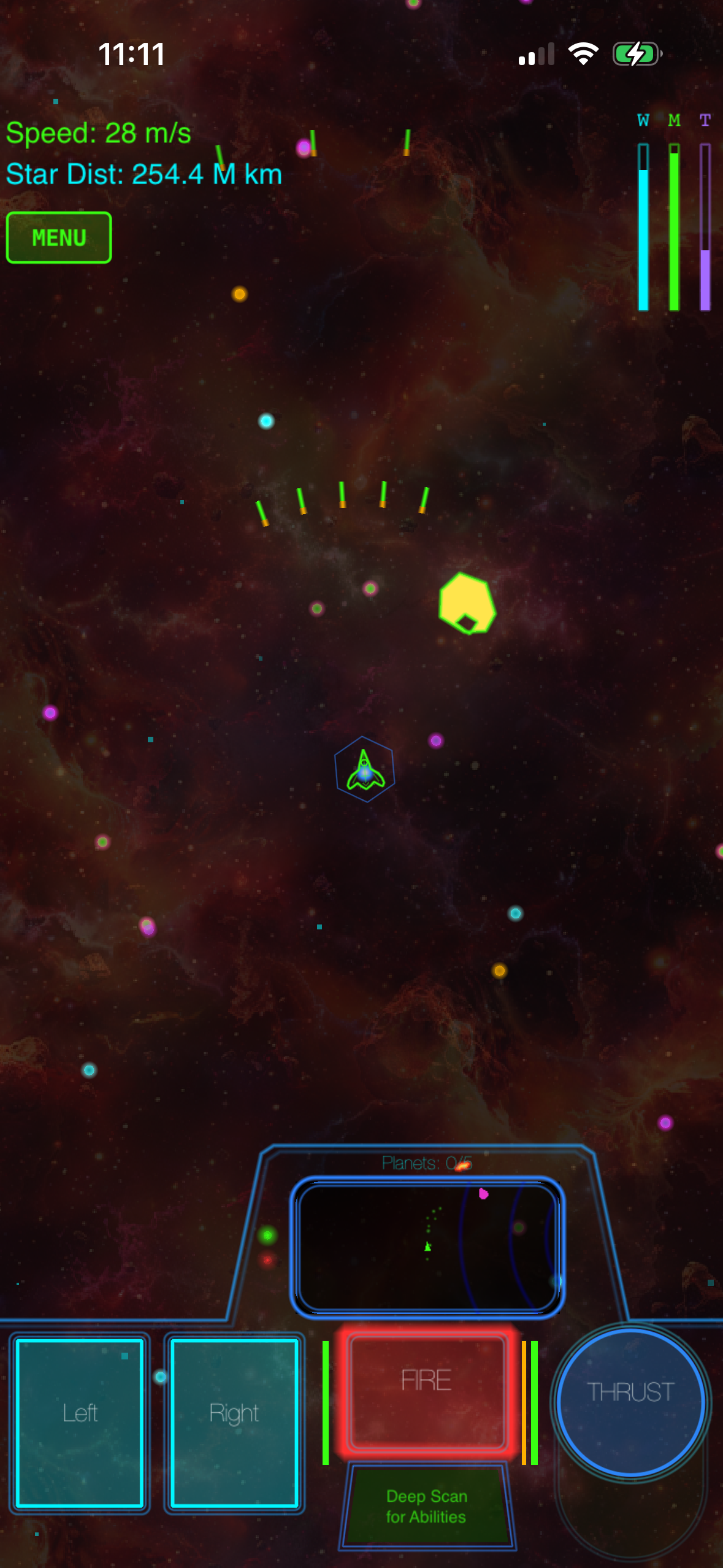
The most interesting indie space games from ex-AAA developers aren’t trying to simulate the real solar system. They’re using real physics — actual orbital mechanics, genuine gravity wells, accurate momentum — as the interface you learn to master.
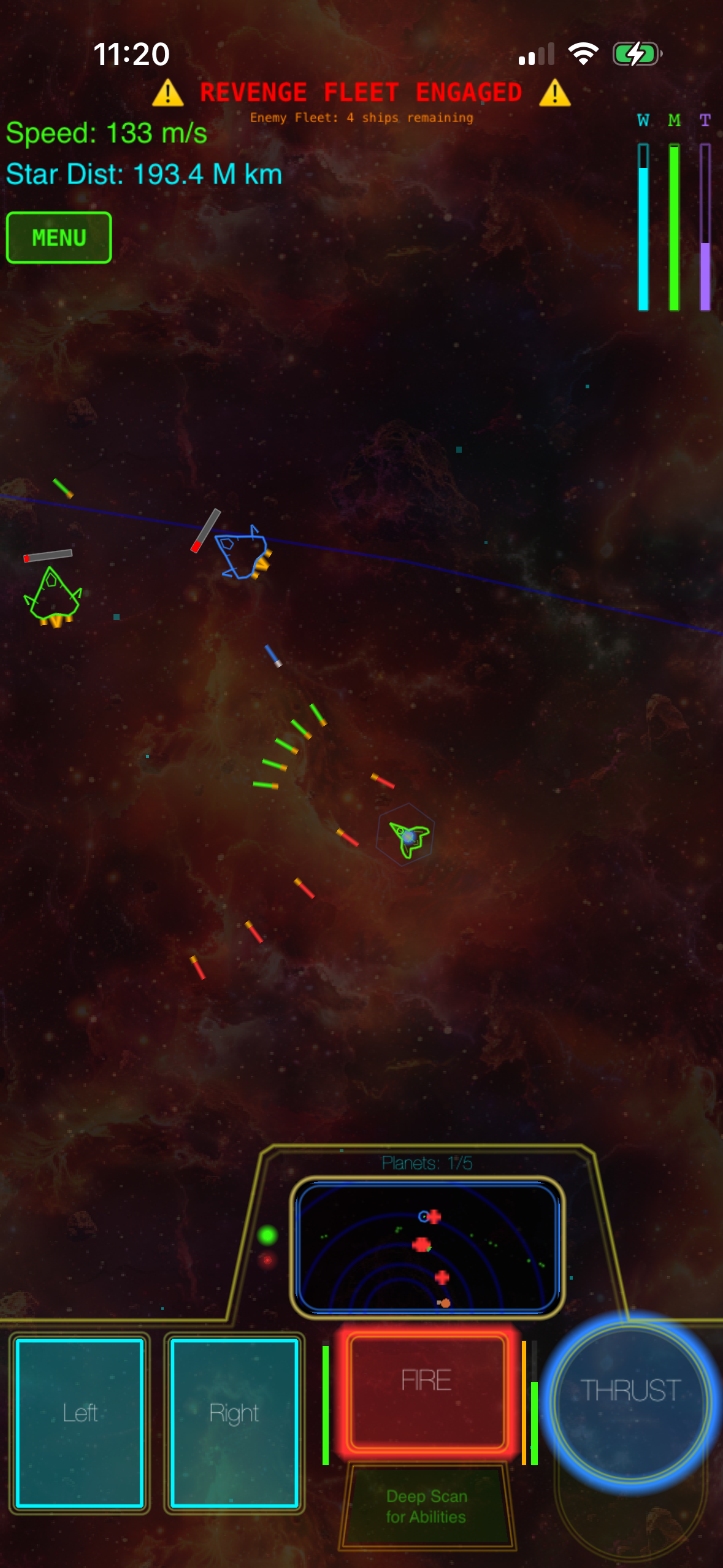
This is different from both simulation games (which teach you to be an engineer) and arcade games (which fake physics for accessibility). In a gravity-first space game, every body’s gravity affects every other body in real time. You don’t fight the physics; you learn to read it and use it. A slingshot maneuver isn’t a scripted animation — it’s the predictable result of approaching a planet’s gravity well at the right angle and speed.
The learning curve is real. Most players need 20–30 minutes of focused play to internalize how to read a gravity well and predict where a slingshot will take you. But after that threshold, mastery becomes achievable. The physics rewards patient positioning over twitch reflexes, which opens the game to players who’ve aged out of arcade twitch games but still want mechanical depth.
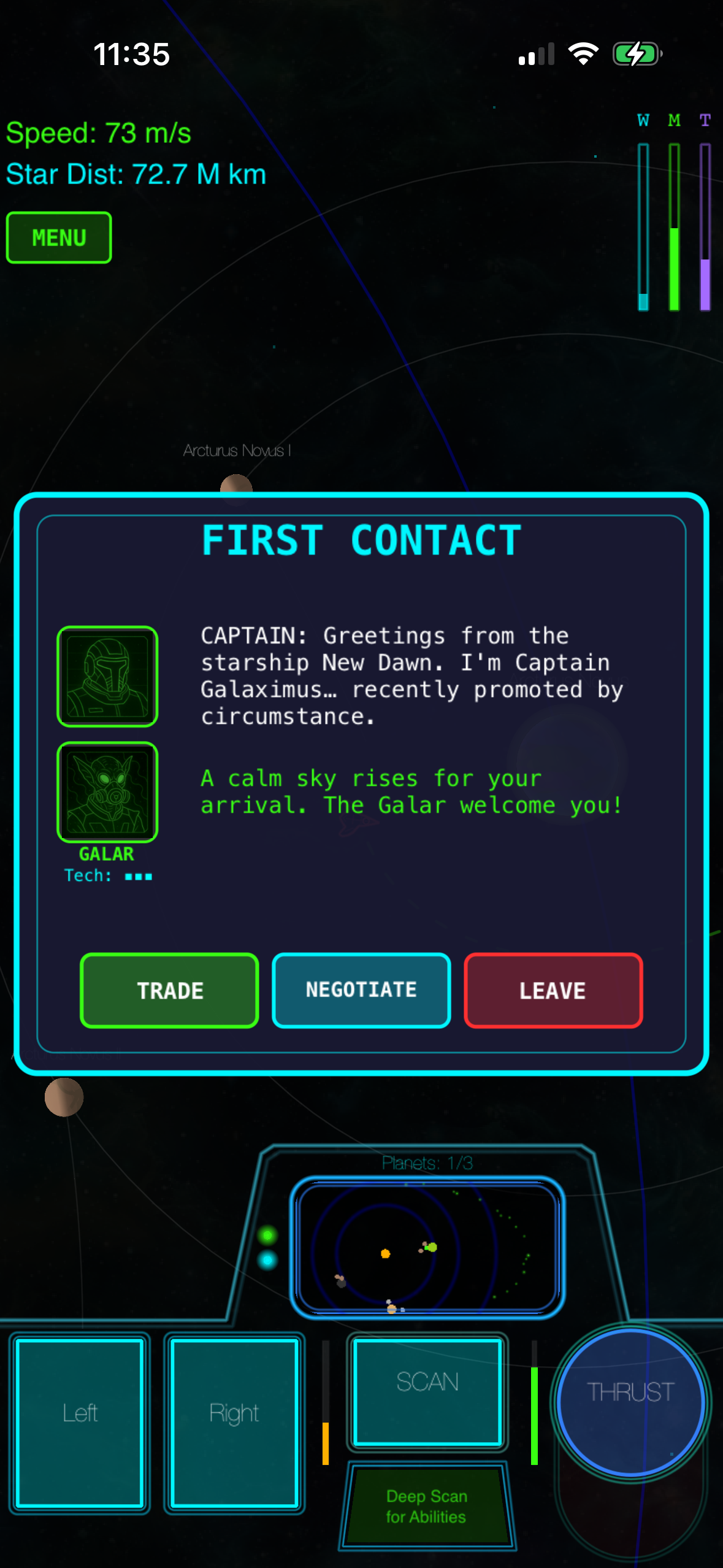
Galaximus (iOS, USD / £12.99 GBP) is the clearest current example. Built by a solo developer with shipped credits as lead engineer on The Last of Us Part II, the game uses a custom gravity simulation engine documented in the developer’s technical blog. The ship is subject to real gravity. Planets orbit suns. Moons orbit planets. Asteroids tumble through gravity wells. You don’t have unlimited fuel or instant direction changes — you have momentum, inertia, and the gravity well you’re inside. Learning to use gravity as your engine instead of fighting it is the core skill.
The procedural element matters here too: every playthrough generates unique planet configurations within each system, so the gravity-reading skill transfers across playthroughs but never becomes rote memorization.
Premium Model: The Rare Choice in 2026
By 2026, the default iOS game model is free-to-play with in-app purchases. Energy timers, battle passes, cosmetic shops, premium currency. The model works; it funds development. But it also fragments the experience — the game you play at hour one isn’t the game you play at hour fifty, because the monetization has tightened around you.
Ex-AAA indie developers often reject this outright. They ship premium titles: one-time purchase, no ads, no IAP, no seasonal FOMO. The game at hour fifty is the same game at hour one. You own it. It doesn’t require an internet connection. It doesn’t have a live-service backend that can be shut down.
This is genuinely rare on iPhone now. It’s also a real buying signal. If a developer chose the premium model, they’re betting the game is complete and good enough to stand on its own. They’re not relying on engagement metrics and retention funnels to justify the purchase. The product has to speak for itself.
Galaximus pricing and expansion details: The base game launches at USD / £12.99 GBP and includes a free upgrade to Galaximus Infinitum (open-galaxy sandbox, planetary surface exploration, outpost building, faction warfare) when it ships in late 2026. Buy the base game now at launch pricing and you receive Infinitum at no additional cost; after Infinitum launches separately, the combined game will be priced at USD / £19.99 GBP. This is a time-limited launch offer, and it’s the kind of thing an ex-AAA developer with shipping discipline actually follows through on.
Quick Picks: Which Game Fits Your Play Style?
| Your Priority | Best Fit | Why |
|---|---|---|
| Orbital-mechanics mastery | Galaximus | Real gravity simulation, 20–30 min learning curve, then deep mechanical skill ceiling. Procedural planets keep it fresh. |
| Casual 10-minute sessions | Asteroids descendants (not covered here) | Galaximus requires focused play; arcade descendants are better for short bursts. |
| Engineering depth (vehicle building) | Kerbal Space Program | KSP teaches rocketry and vehicle assembly. Galaximus assumes you have a ship; it teaches you to fly it. |
| Planetary exploration | No Man’s Sky | Walking on planets is core to NMS. Galaximus adds surface exploration in Infinitum (late 2026), but it’s secondary. |
| No additional purchases | Galaximus | Premium model, one-time buy. No IAP, no battle pass, no seasonal FOMO. |
| Subscription model | Apple Arcade | If you’re already paying for Apple Arcade, many space games are included. Galaximus is outside that ecosystem. |
The Procedural Audio Layer
One detail that separates ex-AAA indie work from typical indie games: sound design. When a Naughty Dog developer ships a game alone, they often bring attention to details that solo developers or small teams skip.
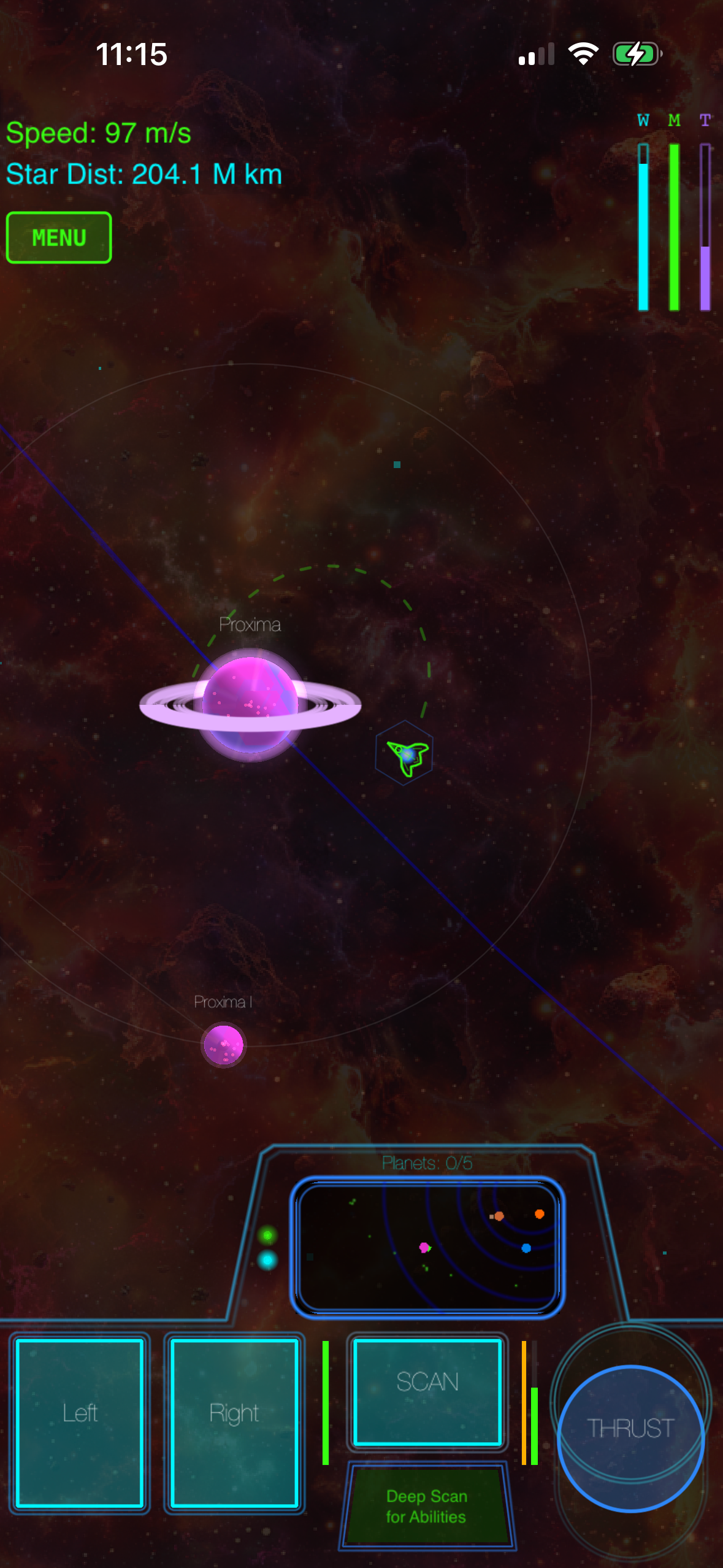
In Galaximus, every sound is synthesized in real time on the device using additive synthesis and frequency modulation (documented in the developer’s audio methodology guide). Laser fire, explosions, engine burns, alien voices, ambient hums — all procedural synthesis, no pre-recorded audio files. This is rare in mobile games. It’s also technically demanding and aesthetically consistent with the vector-arcade visual style.
Why does this matter? Because procedural audio means the sound design can respond to gameplay in real time. The engine burn pitch changes based on your thrust level. Alien dialogue is generated on the fly, so no two first-contact encounters sound identical. The soundscape is alive in a way pre-recorded audio can’t quite match.
It’s the kind of detail that reads as “this developer cares about the full experience,” not just “the game runs and the mechanics work.”
What to Look For When Evaluating Indie Space Games from Ex-AAA Developers
Shipping history. Has the developer shipped before? Not just “made a game” — actually shipped a polished, completed product under a publisher or as a solo title? That’s the signal that they know how to finish. (Galaximus developer: lead engineer, The Last of Us Part II, Naughty Dog, 2020.)
Scope clarity. Does the developer clearly state what the game is and isn’t? “Eight systems with a narrative arc in the base game, open-galaxy sandbox in Infinitum” is clearer than “infinite replayability” or “thousands of hours.” Honesty about scope is a good sign.
Monetization transparency. Is the pricing model stated upfront? No surprises, no hidden IAP, no “free to start” bait-and-switch? That’s the ex-AAA DNA showing.
Physics documentation. If the game uses real physics as a core mechanic, does the developer explain what that means? Galaximus publishes its gravity simulation engine specs and audio synthesis methodology. “Real orbital mechanics” is different from “realistic graphics.” Clarity here means they understand what they built.
Update cadence (if relevant). For games with post-launch content, does the developer deliver on promises? The Infinitum roadmap for Galaximus is public and dated (late 2026). That’s different from vague “we’re working on stuff” messaging.
FAQ
Do I need to understand orbital mechanics to play Galaximus?
No. The game teaches you through play. Most players internalize the gravity-reading skill within 20–30 minutes of focused play. After that, it becomes intuitive. No physics textbook required.
Will my save transfer between devices?
Galaximus saves are stored locally on your device. Cross-device sync is not included in the base game; it’s listed as a potential post-launch feature but not guaranteed.
Does Galaximus work on iPhone 12?
Yes. Minimum requirement is iOS 15.4 on iPhone XS or later. iPhone 12 and newer are fully supported.
Are these games single-player only?
Yes, the current generation of indie space games from ex-AAA developers on iPhone are single-player. Multiplayer adds complexity that pulls focus from the core experience. These developers are betting on depth and polish in single-player over breadth in multiplayer.
What’s the difference between “real physics” and “realistic graphics”?
Real physics means the simulation is accurate — gravity wells actually affect trajectories, momentum is conserved, orbital mechanics follow real math. Realistic graphics means photorealism in visuals. Galaximus has real physics but stylized vector-arcade visuals. It’s not a photorealistic space sim.
Can I play offline?
Yes. Galaximus and other premium indie space games from ex-AAA developers don’t require an internet connection. They’re designed to own, not to rent.
How long is the Galaximus campaign?
Expect 8–15 hours for a first playthrough, depending on how much time you spend exploring anomalies and optional encounters. Procedurally generated planet configurations within each system mean subsequent playthroughs stay fresh.
When does Infinitum launch, and what does it cost?
Infinitum launches in late 2026 (specific date TBA). If you buy Galaximus now at USD / £12.99 GBP, you get Infinitum free when it ships. After Infinitum launches, the combined game will be USD / £19.99 GBP. The launch-price upgrade offer is time-limited.
The Advantage of the Ex-AAA Indie Developer
The indie space-game renaissance on iPhone isn’t happening because indie developers suddenly got better. It’s happening because experienced developers — people who’ve shipped large, complex games — are choosing to work small and focused. They bring shipping discipline, polish, and monetization honesty. They know how to finish a product. They’re not trying to be everything to everyone; they’re trying to be excellent at one thing.
If you want a space game where physics matters, where the controls reward mastery, and where you own the product outright without live-service compromise, Galaximus is the clearest current example. It’s rare. That’s the point.
Get Galaximus on the App Store: Get it on the App Store
