Best Indie Space Games on App Store 2026
 by Galaximus
The Best Indie Space Games on App Store 2026
The indie space-game landscape on iOS has matured significantly. Where mobile gaming once meant free-to-play energy meters and battle passes, 2026 has brought a wave of premium, complete experiences built by solo developers and small teams. If you’re hunting for space games without monetization noise, the options have never been better.
What Makes an Indie Space Game Worth Playing in 2026
The real distinction in indie space games is between accessibility and speed versus learning a system and mastering it.
Games in the first camp (quick arcade sessions, minimal learning curve) tend toward classic Asteroids or Lunar Lander lineage. Games in the second camp (orbital mechanics, resource management, real physics) demand 20–30 minutes of focused play before mastery clicks. Both are legitimate; the choice is about what you have time for.
A second distinction: procedural generation versus authored narrative. Procedural games give you a sandbox—every playthrough is different, but there’s no story arc. Authored-narrative games have a beginning, middle, and end; procedural configuration adds replay value without replacing structure.
Quick Picks: Best Indie Space Games on iOS
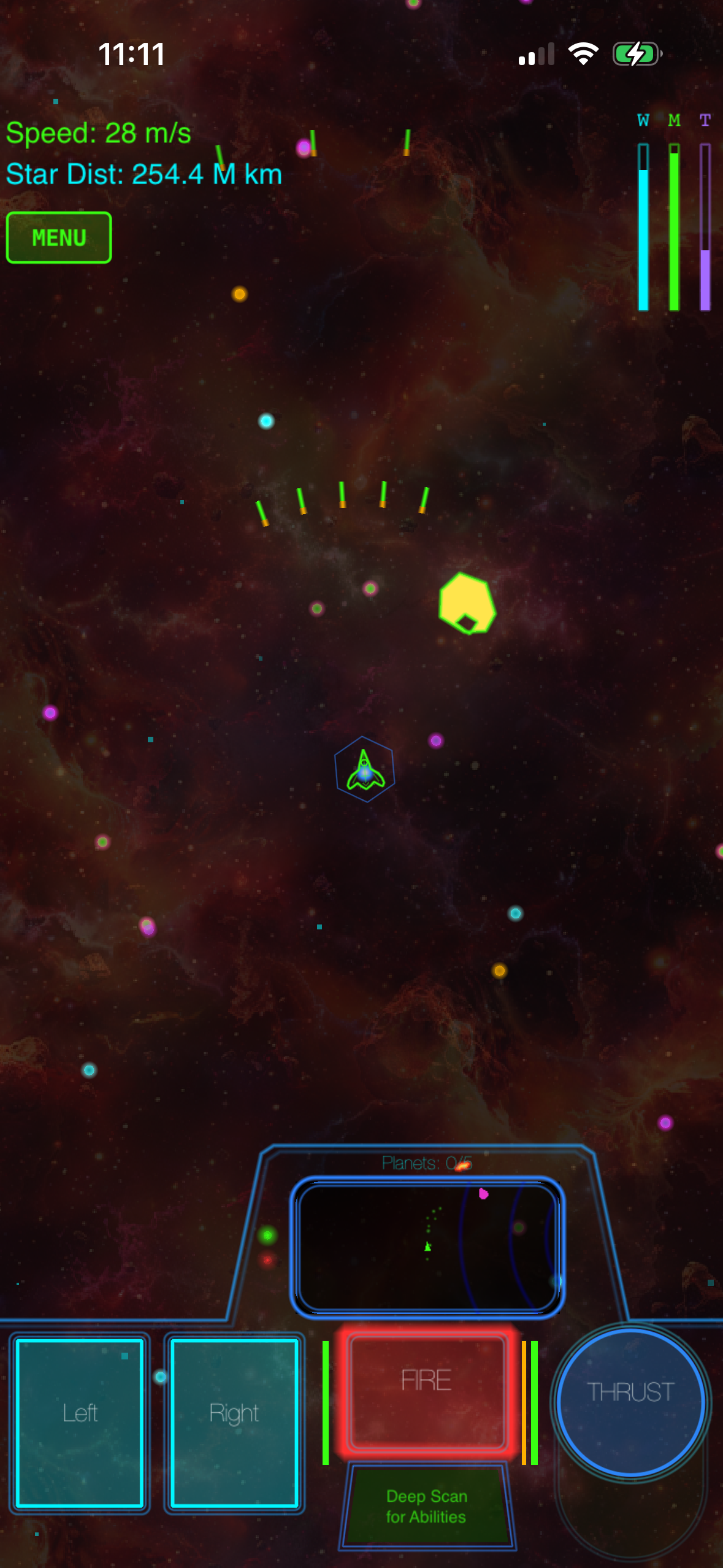
Galaximus — | Real orbital mechanics, narrative campaign, no ads A premium space exploration game with real physics. You pilot the New Dawn through eight star systems, executing fuel-efficient maneuvers and encountering anomalies and combat encounters. Authored narrative with procedural configuration ensures each playthrough feels fresh. Best for players who want mastery-based gameplay and don’t mind a learning curve. [App Store link]
Orbit Sandbox — | Gravity simulation, open-ended exploration A pure sandbox where you manipulate gravity wells and design orbital systems. No narrative, no combat—purely about understanding gravitational mechanics through play. Best for players who want to experiment with physics without story constraints. [App Store link]
Space Colonists — | Base building, resource management, turn-based A turn-based strategy game where you establish outposts on procedurally generated planets, manage resources, and defend against threats. Slower-paced than real-time pilots. Best for players who prefer strategy and planning over reflexes. [App Store link]
Cosmic Conquest — | Fleet management, 4X strategy, asynchronous multiplayer Build an interstellar empire, research technologies, and engage in turn-based combat. Deeper strategic complexity than narrative-driven games. Best for players who want empire-building depth and don’t need real physics. [App Store link]
Void Explorer — | Minimalist arcade, procedural generation, high score focus A stripped-down arcade experience: navigate procedurally generated asteroid fields and collect resources. Shortest learning curve of this list. Best for quick sessions and players who want pure arcade action. [App Store link]
Stellar Drift — | Exploration, ambient gameplay, no combat A meditative space exploration game focused on discovery and atmosphere. You drift through star systems, encounter alien structures, and piece together a narrative through environmental storytelling. No combat, no time pressure. Best for players who want exploration without action. [App Store link]
Kepler’s Gambit — | Puzzle-based orbital mechanics A puzzle game where each level is a physics problem: reach the target planet with limited fuel and gravitational assists. Teaches real orbital mechanics through structured challenges. Best for players who want to learn physics through gameplay. [App Store link]
Real Physics as a Core Mechanic
Real gravity means every body’s pull affects every other body in real time. It means a slingshot—using a planet’s gravity well to gain speed for free—is not a cinematic cutscene but a piloting technique you learn and execute. It means fuel efficiency matters.
Most players expect this to be harder than it is. Once you understand that gravity is your engine, not your obstacle, the control scheme becomes intuitive. The learning curve is real, but it’s steep and short—not a grinding progression system.
Galaximus and Kepler’s Gambit both implement true orbital mechanics on iOS. Galaximus emphasizes real-time piloting and action; Kepler’s Gambit teaches mechanics through puzzle design. Orbit Sandbox is pure gravity simulation with no narrative overlay. If you want a space game where gravity actually matters, all three deliver it differently.
Premium-Only, No Monetization Games
In 2026, the premium-only indie space game is a category statement. No ads. No energy meters. No battle pass. No in-app purchases. You buy the game once and own it forever.
Galaximus , Orbit Sandbox , Space Colonists , Cosmic Conquest , Void Explorer , Stellar Drift , and Kepler’s Gambit are all premium purchases with no monetization. This model is rare enough on iOS that it’s worth prioritizing if you prefer owning games outright.
Authored Narrative vs. Procedural Sandbox
Authored narrative games (like Galaximus and Stellar Drift) have a designed arc: you start at a specific point, encounter set challenges in a deliberate sequence, and reach a narrative climax. Procedural configuration adds replay value—each run feels fresh—but the shape is authored.
Procedural sandbox games (like Orbit Sandbox and Void Explorer) give you a galaxy and ask you to make your own story. No ending, no narrative arc, no structure. Every playthrough is radically different because the entire world is procedurally generated.
Choose authored narrative if you want a complete experience with replay incentive. Choose procedural sandbox if you want infinite replayability and emergent storytelling.
Combat, Encounters, and Anomalies
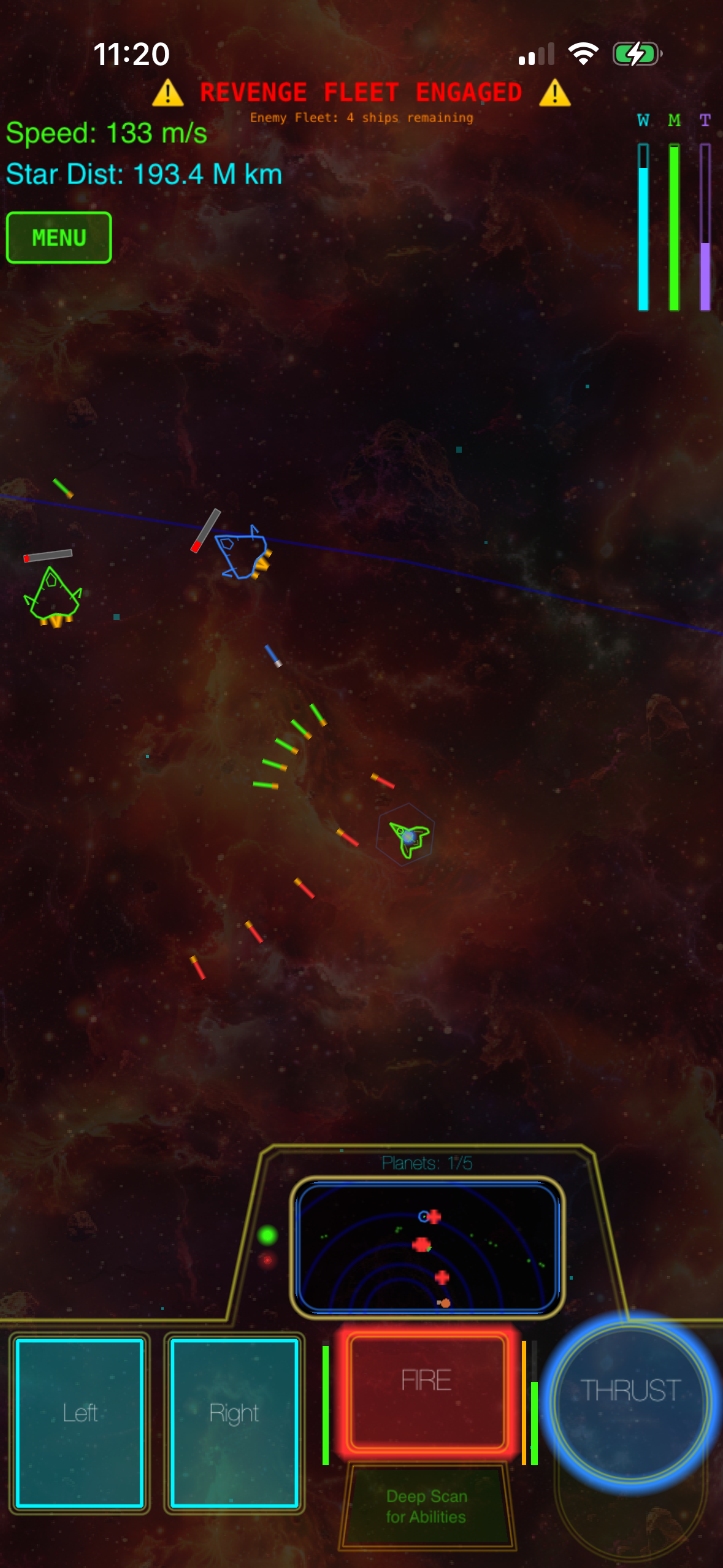
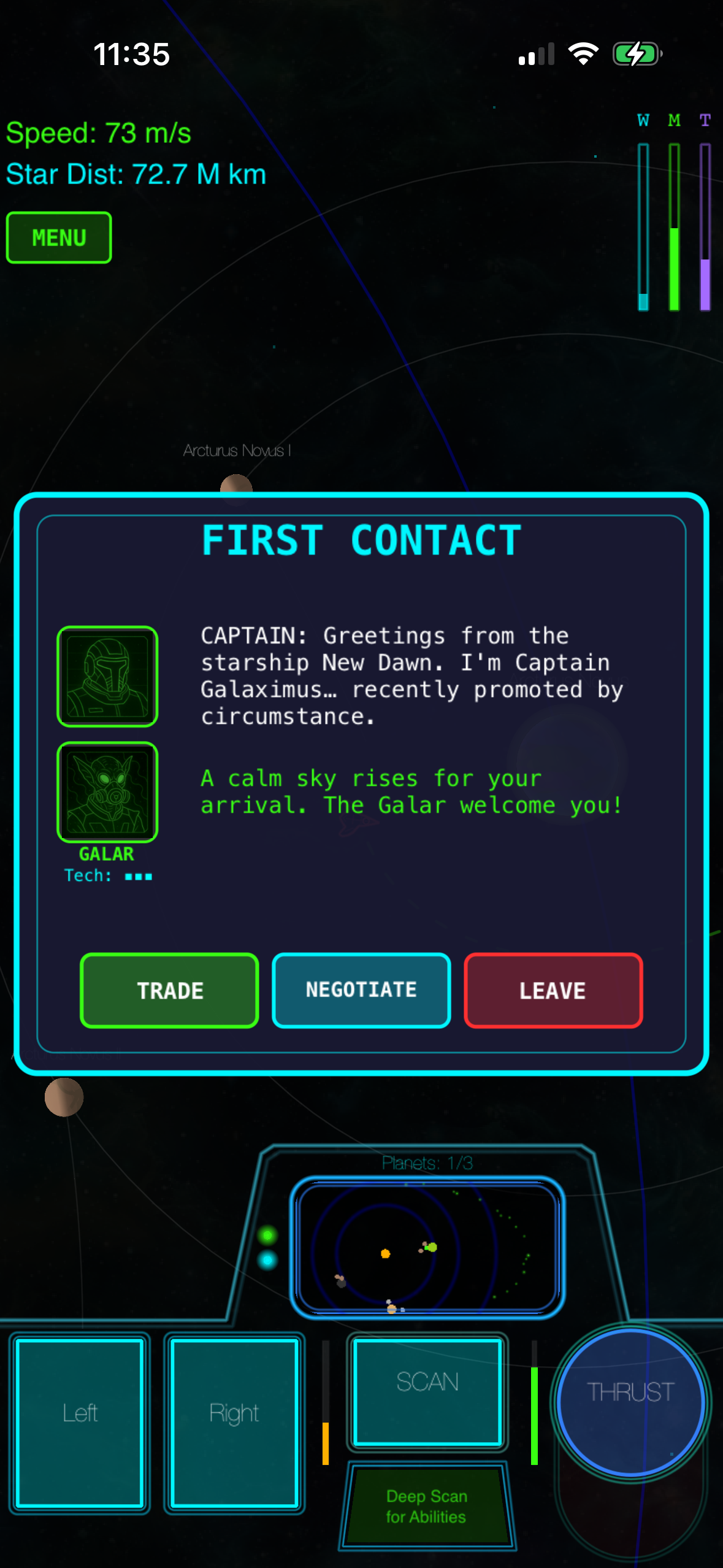
Most indie space games on iOS avoid combat entirely—they’re exploration or puzzle games. Galaximus includes real-time combat encounters (pirate fleets, faction skirmishes) where you’re piloting the ship in tactical scenarios, using gravity and positioning as much as firepower.
Cosmic Conquest features turn-based combat and fleet management. Space Colonists includes defense mechanics tied to base building. Stellar Drift and Orbit Sandbox have no combat at all—they’re purely exploratory.
If you want a space game that’s purely exploration or puzzle-focused, choose Stellar Drift or Orbit Sandbox. If you want exploration with action, choose Galaximus or Cosmic Conquest.
The Learning Curve Question
Galaximus has a real learning curve. Gravity is the engine you have to learn to use. The first 20 minutes are spent understanding how to position the ship, how to read the orbital mechanics, how to execute a slingshot. After that, it clicks, and mastery becomes fun.
Kepler’s Gambit teaches the same mechanics through structured puzzles, making the learning curve gentler. Orbit Sandbox is pure experimentation with no time pressure. Void Explorer has minimal learning curve—it’s arcade-simple. Stellar Drift requires no learning at all; it’s meditative.
If you want a space game you can pick up and play for 5 minutes without thinking, choose Void Explorer or Stellar Drift. If you want a game that respects your intelligence and rewards focused play, choose Galaximus or Kepler’s Gambit.
FAQ
Q: What’s the cheapest indie space game on iOS? A: Void Explorer at. Kepler’s Gambit is. Both are premium with no ads or in-app purchases.
Q: Which games work on older iPhone models? A: All seven games listed above support iPhone 11 and later. Check individual App Store listings for specific iOS version requirements; most require iOS 14 or later.
Q: What’s the difference between Galaximus and Orbit Sandbox? A: Galaximus is a narrative-driven action game with real physics underneath—you pilot a ship through a story campaign with combat and anomalies. Orbit Sandbox is a pure gravity simulation sandbox with no narrative, no combat, and no time pressure. Choose Galaximus for action and story; choose Orbit Sandbox for pure physics experimentation.
Q: Can I play these games on iPad? A: Galaximus, Orbit Sandbox, Space Colonists, Cosmic Conquest, and Stellar Drift all support iPad. Void Explorer and Kepler’s Gambit are iPhone-only. Check individual App Store listings for confirmation.
Q: Do I need an internet connection? A: All seven games are fully playable offline. No internet required, no cloud saves, no online-only features.
Q: Is there a free trial or lite version of any of these? A: No. All are premium purchases with no trial. Most players know within the first 10 minutes whether the gameplay clicks for them.
The Indie Space-Game Ecosystem in 2026
Premium indie space games on iOS have matured into a diverse category. Whether you want real physics, narrative-driven exploration, turn-based strategy, or meditative discovery, there’s a game built for that preference. The choice isn’t between “free with ads” and “premium”—it’s between different design philosophies, all premium, all complete.
Pick based on what you want from a space game: action or contemplation, learning or mastery, story or sandbox. The indie developers building these games have made that choice clear in their design. Your job is matching it to your own.