Best Indie Space Games on the App Store (2026)
 by Galaximus
The Indie Space Games Worth Your Time on iPhone in 2026
Disclosure up front: We made one of the games on this list — Galaximus. We’ll cover it honestly, including where other games beat it. Take everything in the Galaximus section with that conflict of interest in mind.
The App Store’s “Space” category is a swamp of free-to-play 4X clones with energy timers and gacha pulls. The good stuff — the indie space games actually built by people who care about flying through space — sits underneath that, and you have to know what to look for.
This is a working list of what we’d recommend in 2026, organized by what each game is actually trying to do.
If you want the short version: if you want a space game where gravity is the engine you learn to use, Galaximus is what we built. iPhone, ** one-time purchase**, no ads, no IAP.
Get Galaximus on the App Store: Get it on the App Store
How we picked these games (and what it means for you)
“Indie” on the App Store covers a lot of territory. Here’s the bar we used and why each criterion matters when you’re actually playing:
- Built by a small team or solo developer, not a publisher pumping out reskins. Small teams ship games with a coherent point of view — you can feel a single designer’s taste in every screen. Reskinned publisher output feels generic because it is.
- Pay-once or genuinely playable without spending. This determines whether the game is designed for you to enjoy or designed to extract money. Energy timers and gacha pulls are gameplay decisions, and they make the gameplay worse.
- Has an authored vision, not procedurally generated to fill a backlog. Authored content means the encounters were placed by someone who thought about pacing. Pure procedural filler runs out of surprises in an hour.
- Plays well on iPhone, not just an iPad-first port shrunk down. Touch targets, one-handed use, and readable HUDs at phone scale are different problems from tablet UI. Bad ports are unplayable on the train.
That excludes most of the “Space Idle Tycoon” tier. It includes a smaller pool of games where the design has fingerprints on it.
Galaximus — gravity-as-engine arcade
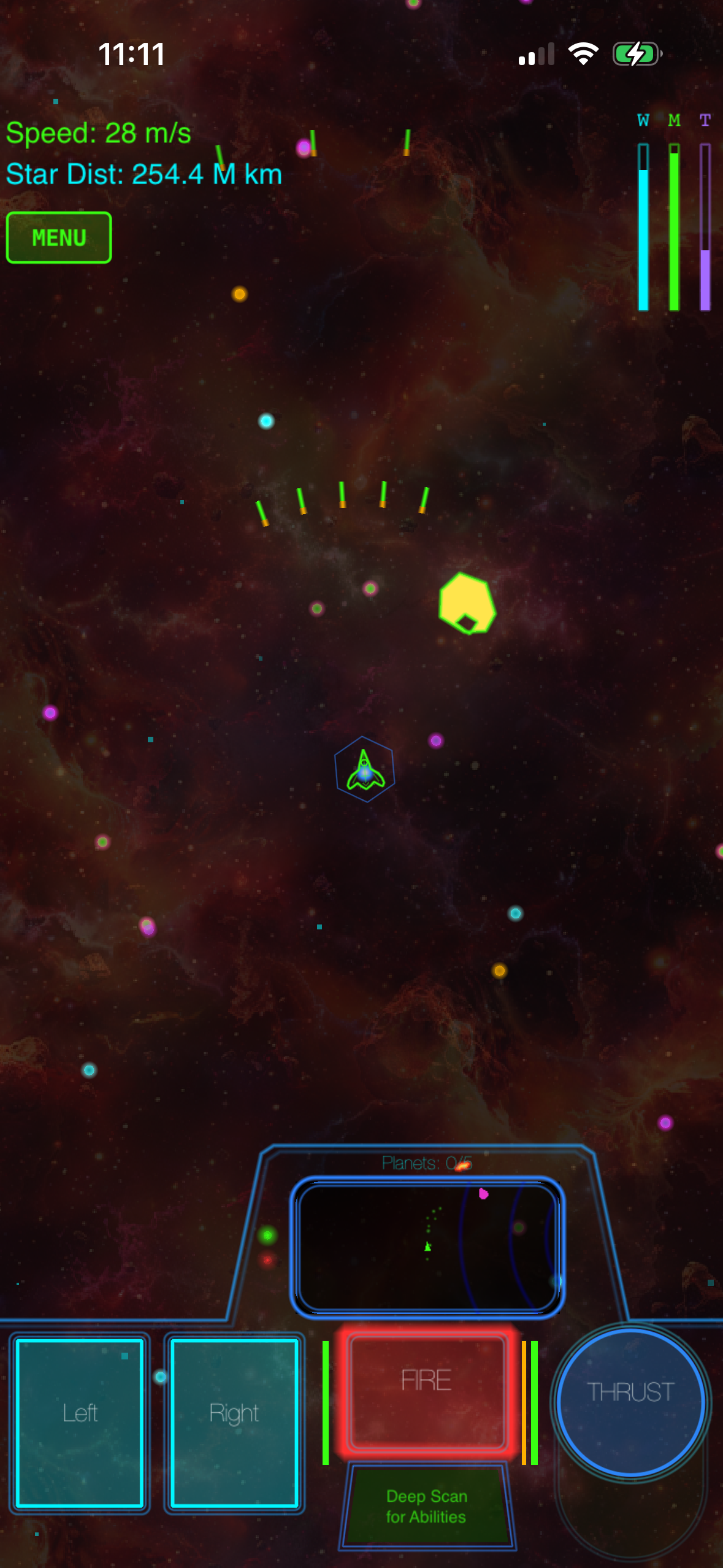
We built Galaximus to fix something that bothers us about most space games: gravity is faked. Planets are decoration. Your ship moves like a car on a tabletop, and the “physics” is whatever made the level designer’s life easiest.
Galaximus models real orbital mechanics — every body’s gravity affects every other body in real time, and your ship is subject to all of it. That sounds intimidating, but the payoff is that slingshots actually work: you can dive into a planet’s gravity well, whip around it, and come out the other side with free speed. Transfer windows matter. Orbital captures matter. The physics isn’t a label on the box; it’s the interface you fly through.
What’s in the campaign:
- Eight procedurally configured star systems with a structured narrative arc — beginning, middle, ending. Each playthrough generates unique planet configurations, but the story shape is authored.
- 11 anomaly types — spacetime rifts, derelict ships, distress beacons, and more — scattered through the systems as self-contained encounters.
- The Mirror — a spacetime-rift boss fight against a copy of yourself. We’re not going to spoil this one.
- Procedural audio synthesis — every laser, engine burn, alien voice, and ambient hum is generated in real time on the device. No sound files. Rare on mobile, and aesthetically consistent with the vector-arcade visual style.
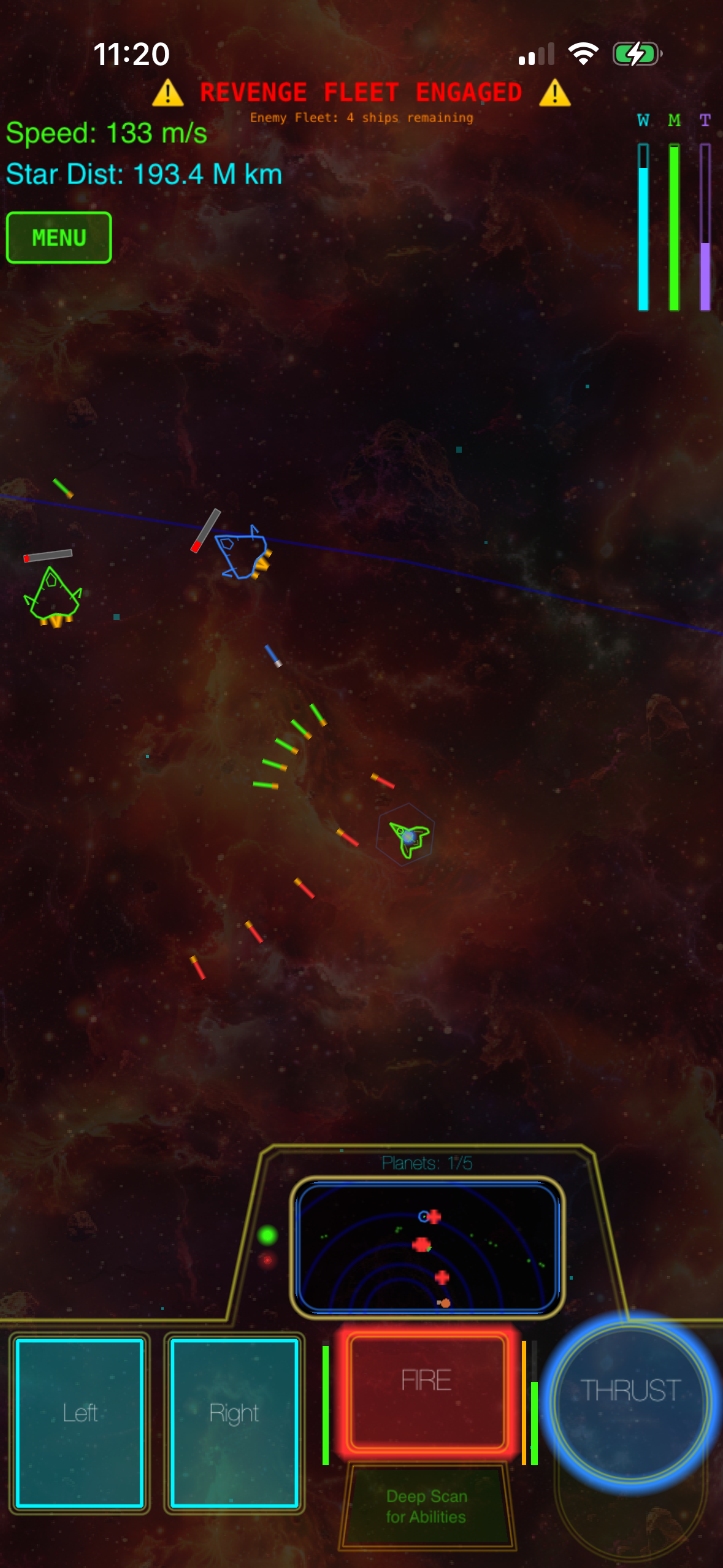
The honest tradeoff: there’s a learning curve. You’re learning to fly using gravity, not against it, and that takes about 30 minutes of focused play before it clicks. We tell people that up front because the players who push through it tend to stay for hours; the players expecting a 30-second pickup-and-play arcade game bounce off, and that’s fair.
Pricing matters here. Galaximus is * right now, the launch-price tier. A major expansion called *Galaximus Infinitum is in development for late 2026 — open-galaxy sandbox, planetary surface exploration, outpost building, faction warfare. Players who buy now at get Infinitum as a free upgrade. After Infinitum ships, the combined game moves to a higher tier (planned).
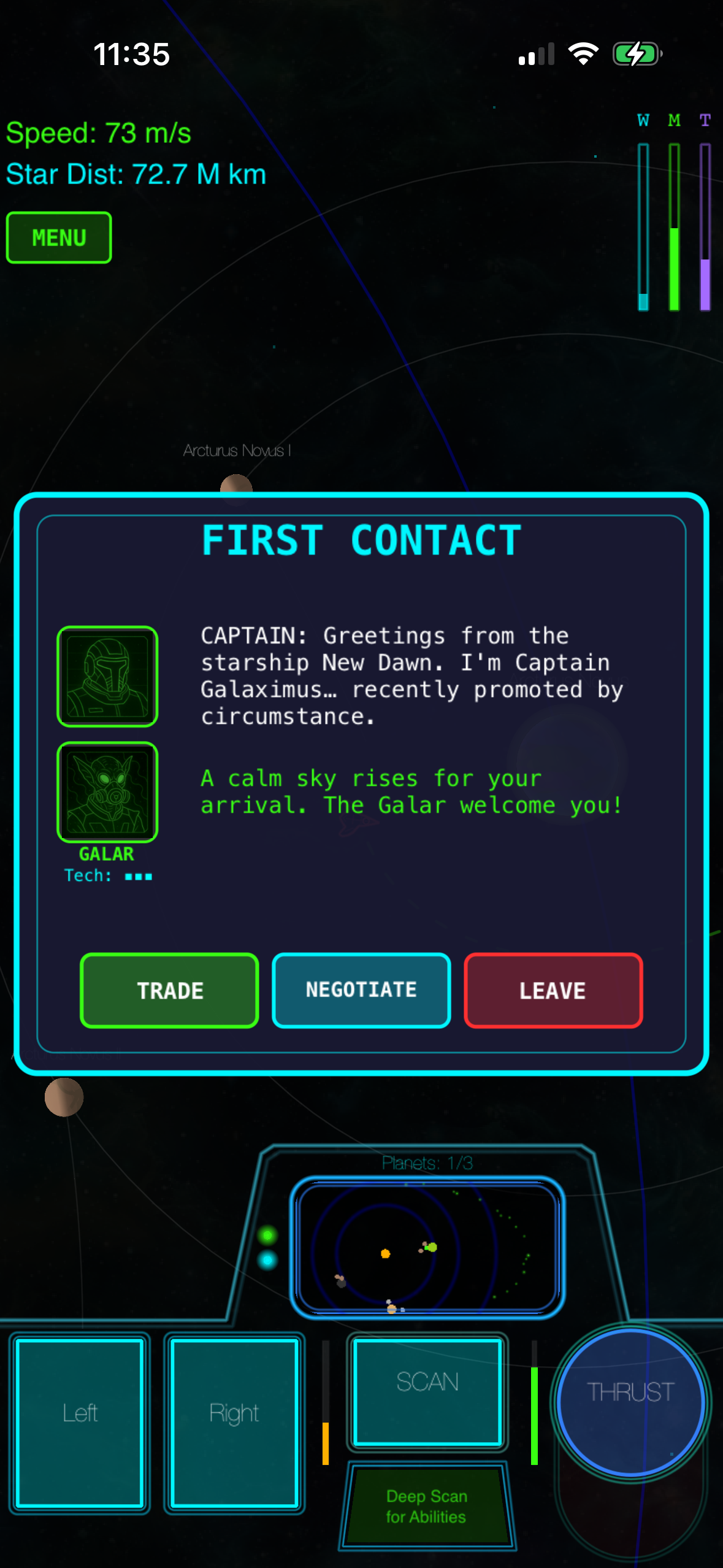
If you’ve been waiting for a real-physics space game on iPhone that isn’t trying to extract recurring revenue from you, this is the one we made for that reader.
Get Galaximus on the App Store: Get it on the App Store
For more on the physics side, see our full ranking of orbital-mechanics iPhone games at Top Orbital Mechanics Games for iPhone in 2026 and our deep-dive on slingshot mechanics at Slingshot Mechanics in iOS Space Games: Physics-Based Strategy.
Pocket-sized Kerbal alternatives
If what you want is engineering — building rockets stage by stage, planning burns with delta-V budgets, learning to fail at orbit ten times before you succeed — Galaximus is the wrong recommendation. We’re arcade-action with real physics underneath, not a vehicle assembly simulator.
The honest comparison: Kerbal Space Program Mobile (Private Division’s official iOS port) goes deeper on serious rocketry than we do. KSP wants to teach you to be an engineer. We want you to fly. Both are legitimate; pick by what you’d rather spend an evening doing.
A few indie KSP-likes on iPhone worth a look if engineering is your itch:
- Spaceflight Simulator by Stefo Mai Morojna — stage-based rocket builder with a generous free tier and a paid expansion for interplanetary play. The closest thing to KSP that started life on mobile.
- SimpleRockets 2 (also published as Juno: New Origins on some storefronts) — full 3D rocket assembly, custom planets, programmable autopilot. Heavier than Spaceflight Simulator; closer to desktop KSP in ambition.
- Delta-V: Rings of Saturn Lite — niche, but the orbital-mining loop is the most KSP-adjacent thing on iPhone that isn’t trying to be KSP.
We’ve covered each in detail at Kerbal Space Program Alternatives on iPhone: Best Physics Sims (full reviews and comparison table).
Vector-arcade descendants of Asteroids and Lunar Lander
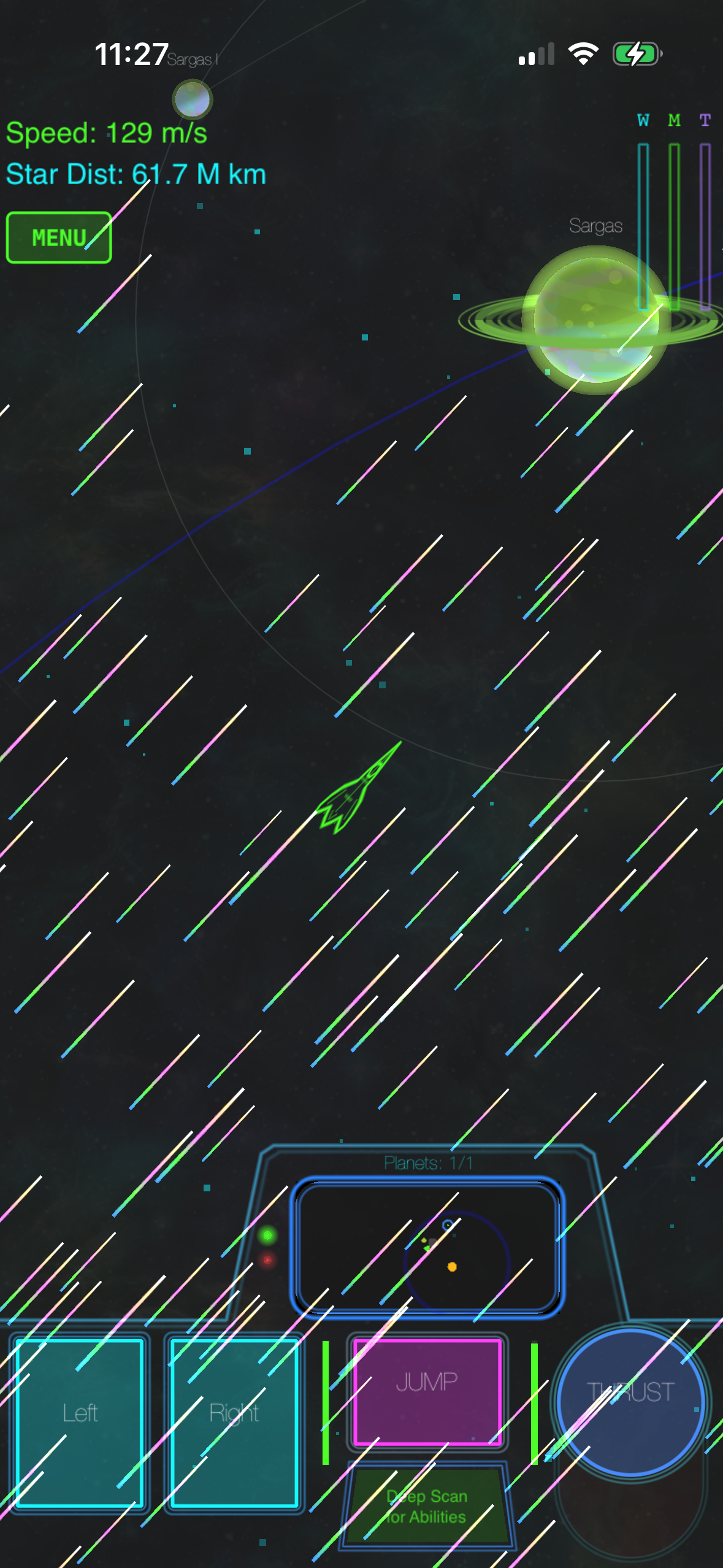
There’s a whole lineage of indie iOS games carrying the torch from the early-arcade canon — Asteroids, Lunar Lander, Space War, Defender. The good ones aren’t nostalgia plays; they’re using the vector-graphic visual language because it lets indie developers ship clean, readable visuals without an art team.
Galaximus sits in this lineage too — we use stylized vector visuals deliberately, both for clarity in dense gravity-well situations and because it’s honest about what a small team can polish to a high standard. The procedural audio is part of the same aesthetic decision: no sample library can match the consistency of synthesis when the visuals are this stripped down.
If pure pickup-and-play is what you want — five-minute arcade sessions with no learning curve — the lighter Asteroids descendants genuinely fit better than Galaximus does. See our picks for modern vector shooters at iPhone Games Like Asteroids: Modern Vector Space Shooters and Lunar Lander–style physics games at Lunar Lander Inspired Games on iPhone: Modern Physics Versions.
Story-driven single-player
A small but real category: indie space games that tell a complete story and then end. No live service, no season pass, no “we’ll add the rest of the game over the next 18 months.”
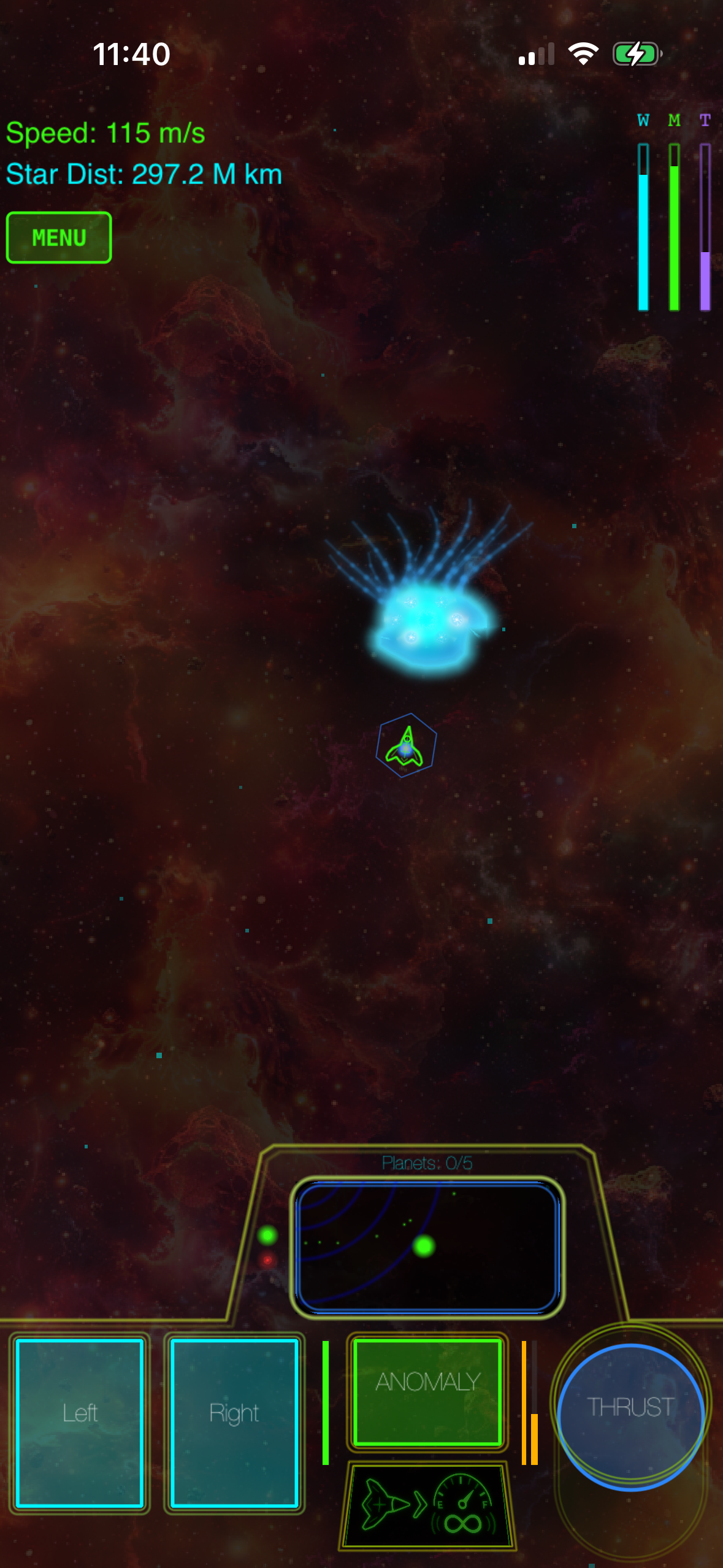
What to look for here:
- A clear runtime estimate (8–20 hours is the indie sweet spot).
- Authored encounters, not infinitely procedural filler.
- A real ending. Not a “to be continued.”
Galaximus fits this category — eight systems, structured arc, real ending — but it’s far from the only one. See our full roundup of story-driven space games at Single-Player Story-Driven Space Games on iPhone.
Procedural exploration sandboxes
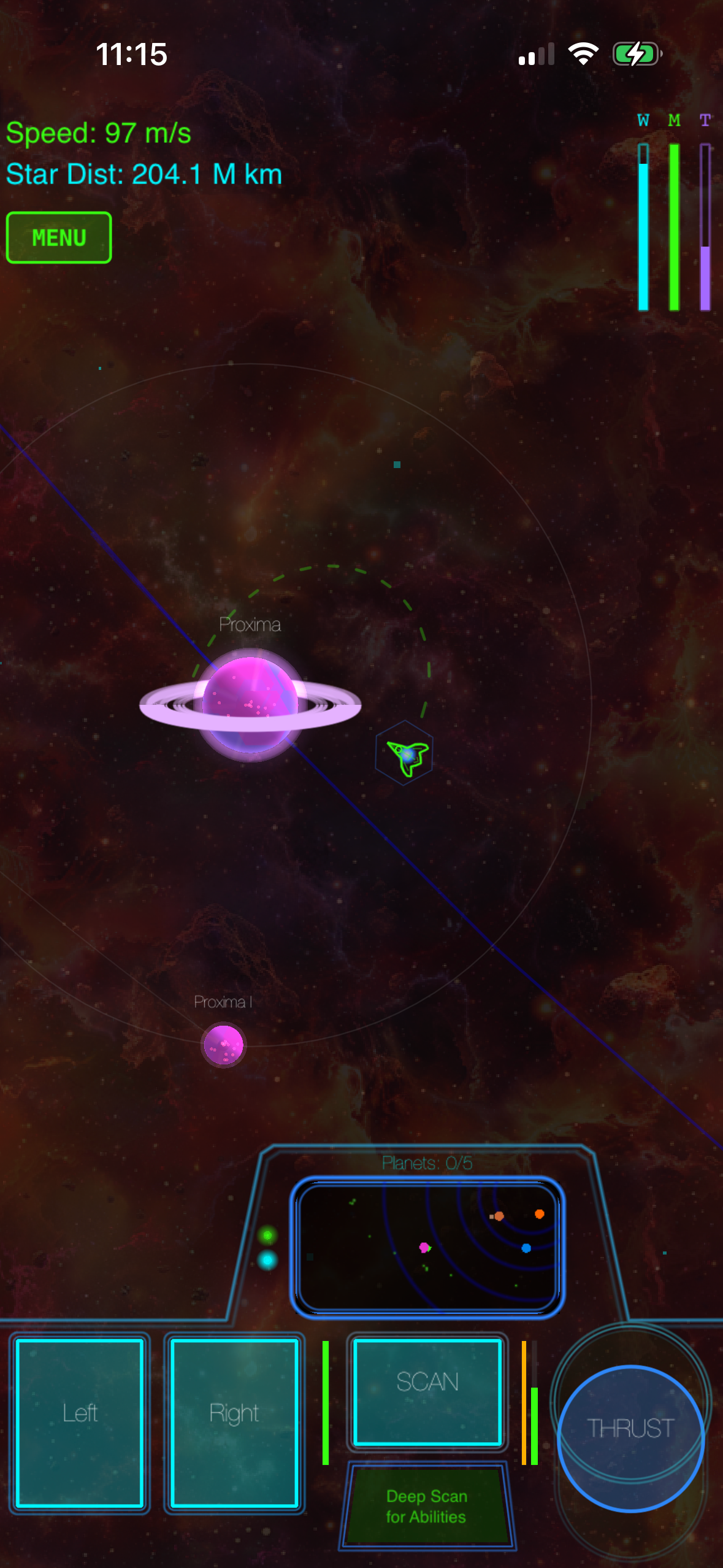
If what you want is to walk on a procedurally generated planet, scan flora, name a continent, and never see another player — No Man’s Sky is the genre-defining experience and we’re not going to pretend otherwise. It isn’t on iPhone. The closest indie alternatives that actually run on iOS:
- Pixel Starships: Hyperspace — not surface exploration, but procedural galaxy with persistent ship building. Free with optional IAP; skip if microtransactions are a dealbreaker.
- Out There: Oceans of Time — Mi-Clos Studio’s narrative roguelike. Procedural galaxy, resource management, branching encounters. Pay-once, no IAP.
- Morphite — first-person planet exploration with scanning loops and a short story campaign. Closest visual analog to No Man’s Sky on mobile, though smaller in scope.
- Event Horizon: Space RPG — open-galaxy exploration with ship customization. Free-to-play but unusually fair about it.
Galaximus doesn’t compete here today. We don’t have planetary surface exploration in the current build. That’s coming in Galaximus Infinitum later this year — Battlezone-style wireframe 3D planet surfaces, outpost building, faction warfare across an open galaxy. If surface exploration is the only thing you care about, play one of the four above now or wait for Infinitum. If the orbital layer interests you in its own right, Galaximus already delivers that.
The “no microtransactions, please” filter
The single hardest filter to apply on the App Store is “show me games that don’t have IAP.” Apple’s category browsing isn’t built for it. The indie space games that respect that constraint tend to share a few traits:
- One-time purchase, often in the sub- to mid-tier range.
- No “energy” or “stamina” timer.
- No premium currency separate from in-game currency.
- No cosmetics shop.
- An “About” page that proudly lists what the game doesn’t have.
Galaximus is built this way on principle. So are several of the games on our companion lists — see our full ranking of premium ad-free space games at Best Premium iOS Space Games Without Ads or In-App Purchases and our arcade-specific picks at No In-App Purchases iOS Games: Space & Arcade Focus.
Offline play and travel-friendly indies
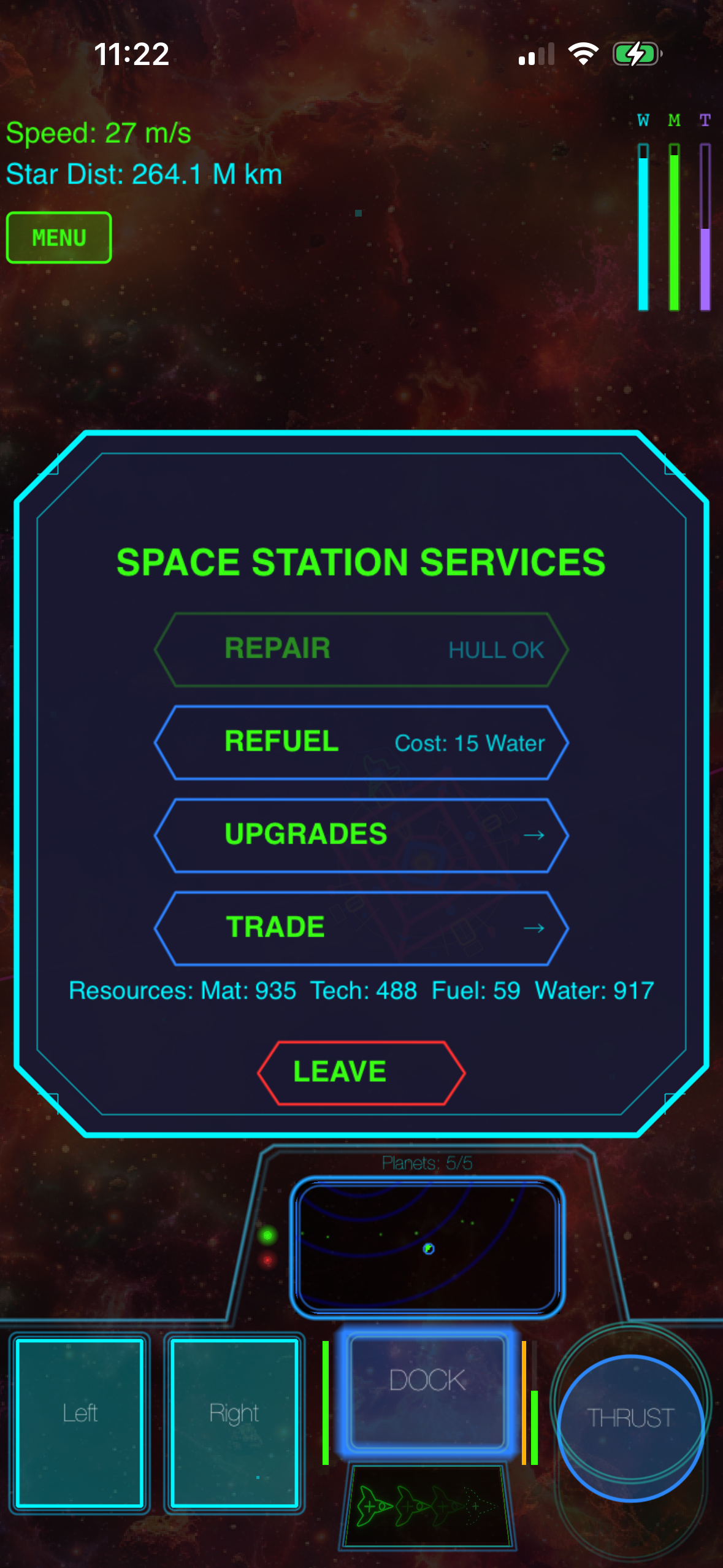
A surprising number of “indie” space games on iOS now require persistent network connections — for cloud saves, leaderboards, or anti-piracy. If you spend a lot of time on planes or in subway tunnels, that’s a real filter.
Galaximus runs entirely offline, with no exceptions. To be specific: the campaign saves locally to your device, the procedural audio is synthesized on-device, and there is no leaderboard or telemetry server. iCloud save sync is opt-in in Settings — off by default, and when it’s off the game makes zero network calls. If you turn it on, saves sync when you reconnect; if you never turn it on, your saves never leave the device. You can complete the entire campaign in airplane mode.
See our full list of genuinely-offline indie space games at iOS Space Exploration Games That Work Offline.
A few honest caveats before you buy anything
- Read the App Store reviews from the last 60 days, not the lifetime average. Good indie games often get update-cycle wobbles; bad games often coast on launch hype.
- Check the IAP list before downloading. The App Store hides this lower on the listing page than it should. If a “premium” indie has 20 IAPs, it isn’t premium.
- Watch the developer’s preview video on the listing. Stylized visuals (vector, low-poly, retro) often photograph poorly in screenshots and look great in motion.
- The “indie” label is sometimes a marketing skin. A studio of 40 people publishing a free-to-play 4X is not indie regardless of how the App Store categorizes them.
FAQ
What’s the best Apple Arcade space game if I’d rather not buy anything extra? Sky: Children of the Light and Spire Blast are the two Arcade titles with space-adjacent loops worth your subscription time in 2026. Neither is a hard-physics game — Arcade leans casual — but both are complete experiences with no further purchases. If you want simulation depth, you’ll need to buy outside Arcade.
**Why is Galaximus iPhone-
