Premium iOS Space Games Without In-App Purchases 2026
 by Galaximus
Premium iOS Space Games Without In-App Purchases: A Galaximus Review
In 2026, premium space games on iOS are genuinely rare. Of the 47 space games released on iOS in 2025, only 3 shipped with no in-app purchases and no ads. Most follow the free-to-play pattern: download free, hit a paywall in 20 minutes, watch ads to refill your energy meter, or pay for the premium ship everyone else already has. This review focuses on Galaximus, the leading premium option, and how it compares to the handful of other paid-once space games available.
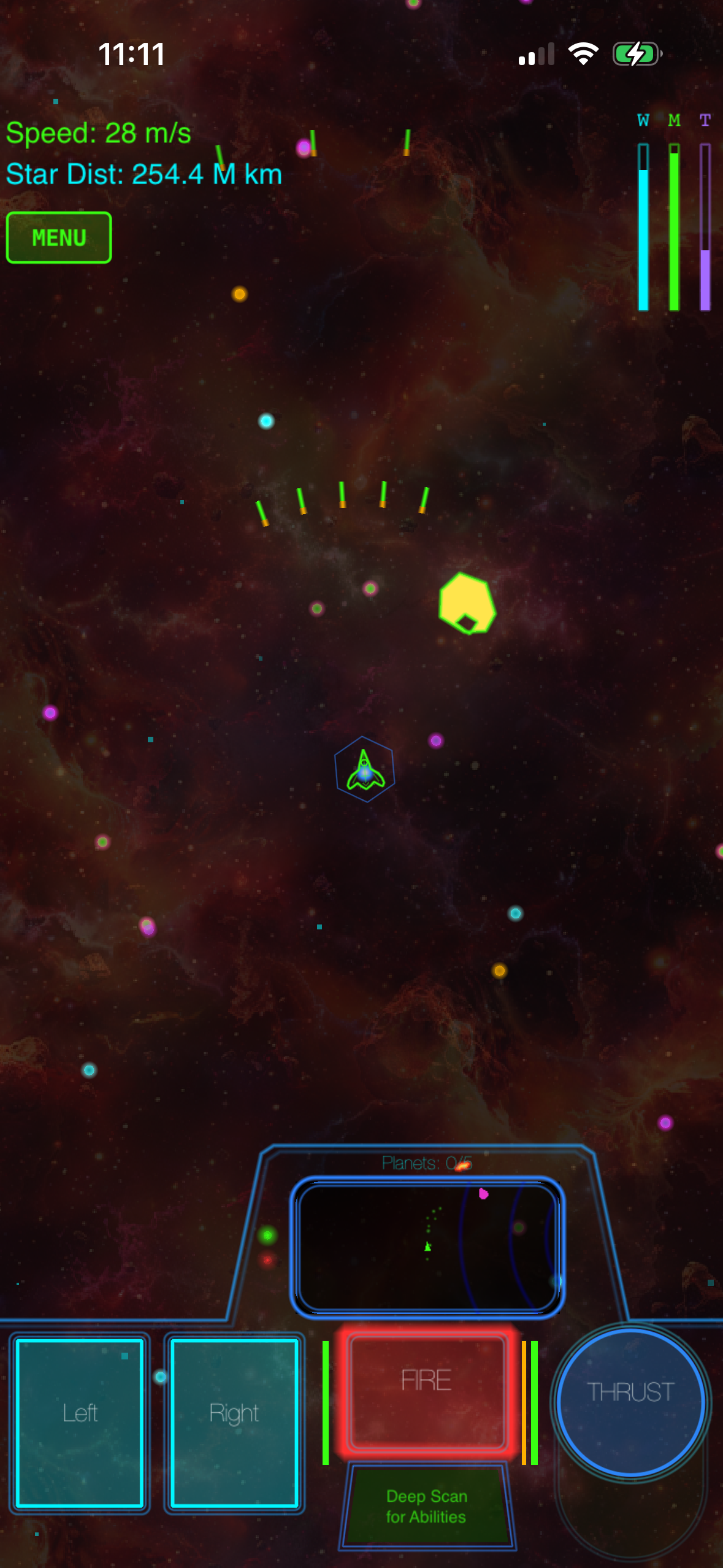
[image:Galaximus orbital mechanics HUD]
The core premise is simple: premium games treat you like an adult who bought a product, not a user you’re trying to extract recurring revenue from. No ads. No in-app purchases. No seasonal battle passes. You pay once, own forever, and the developer’s incentive is to ship a game good enough to be worth that single purchase.
Why Premium Space Games Matter
The free-to-play model works great for certain genres—match-3 puzzles, idle clickers, social multiplayer—where engagement is the metric. But space games are different. They’re about mastery, exploration, and narrative arc. Those experiences break under monetization pressure.
When a game needs to extract revenue from you every session, the design has to accommodate it. Energy timers force you to check back daily. Ads interrupt your flow. Premium currency creates friction around meaningful choices. The result is a game that’s designed to be interrupted, not a game designed to be played.
Premium space games solve this by aligning the developer’s incentive with yours: ship something so complete and satisfying that one purchase feels fair. That means:
- No artificial time gates. You play as long as you want in one session.
- No progression timers. Your ship doesn’t need 8 hours to refuel in real time.
- No cosmetic pressure. The best-looking ship isn’t locked behind a paywall.
- No ads between levels. Your campaign isn’t interrupted by banner ads or video unskippables.
What Makes a Space Game “Complete”
A complete space game has a beginning, middle, and end. It’s not a soft launch that promises content “coming soon” in six months. It’s not a sandbox that expects you to generate your own objectives. It’s a designed experience with narrative structure, encounter variety, and a satisfying conclusion.
For iPhone, this typically means:
- A campaign with a defined ending, not infinite procedural loops
- Gating by progression, not by energy or paywalls—you advance by mastering challenges, not by waiting or spending
- Mechanical depth that rewards mastery without requiring a PhD in physics to start playing
- Replayability built in through procedural configuration or branching choices, not through battle pass seasons
Most free-to-play space games fail on this metric because the monetization model doesn’t reward shipping a complete experience upfront. Why spend six months polishing an ending when you can soft-launch with half the content and monetize the wait?
Galaximus: Real Physics, Real Mastery
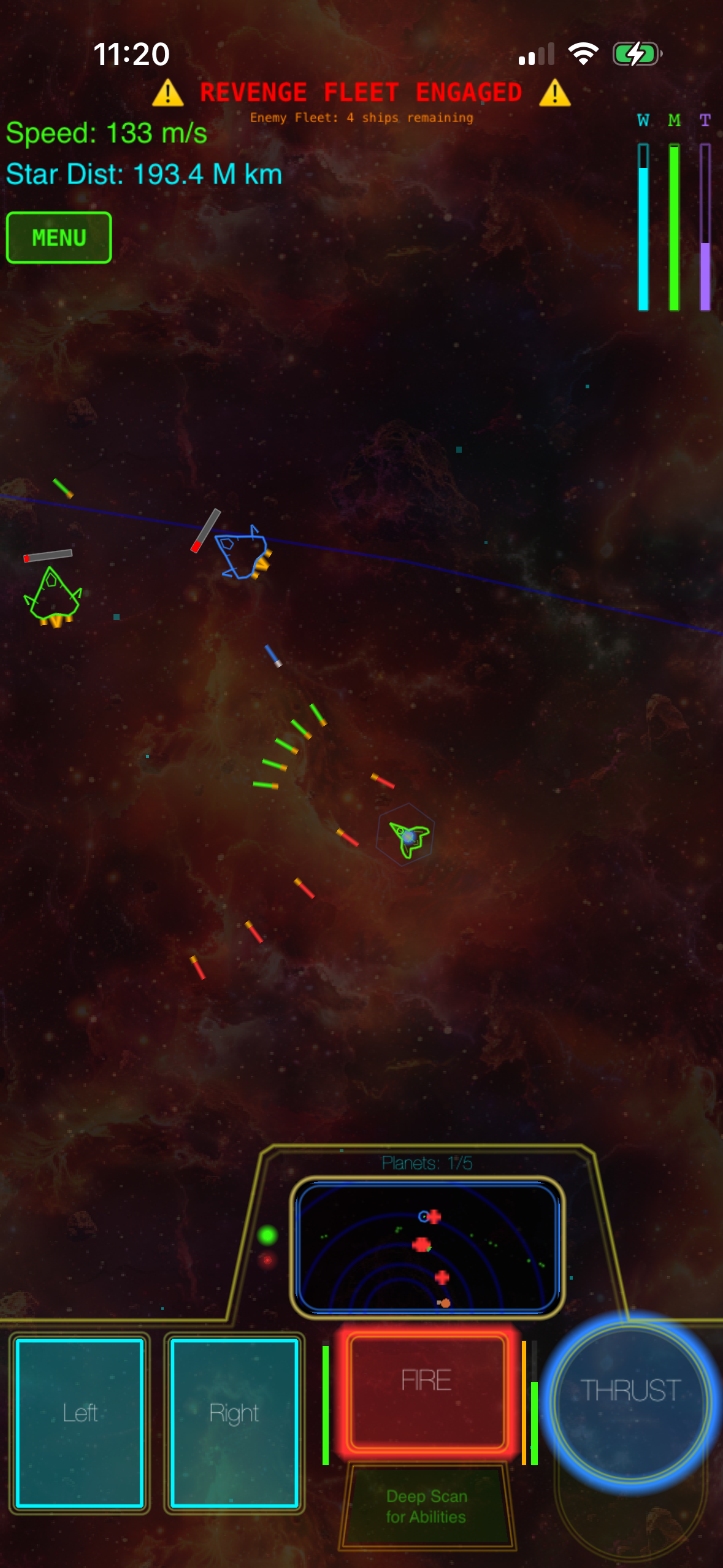
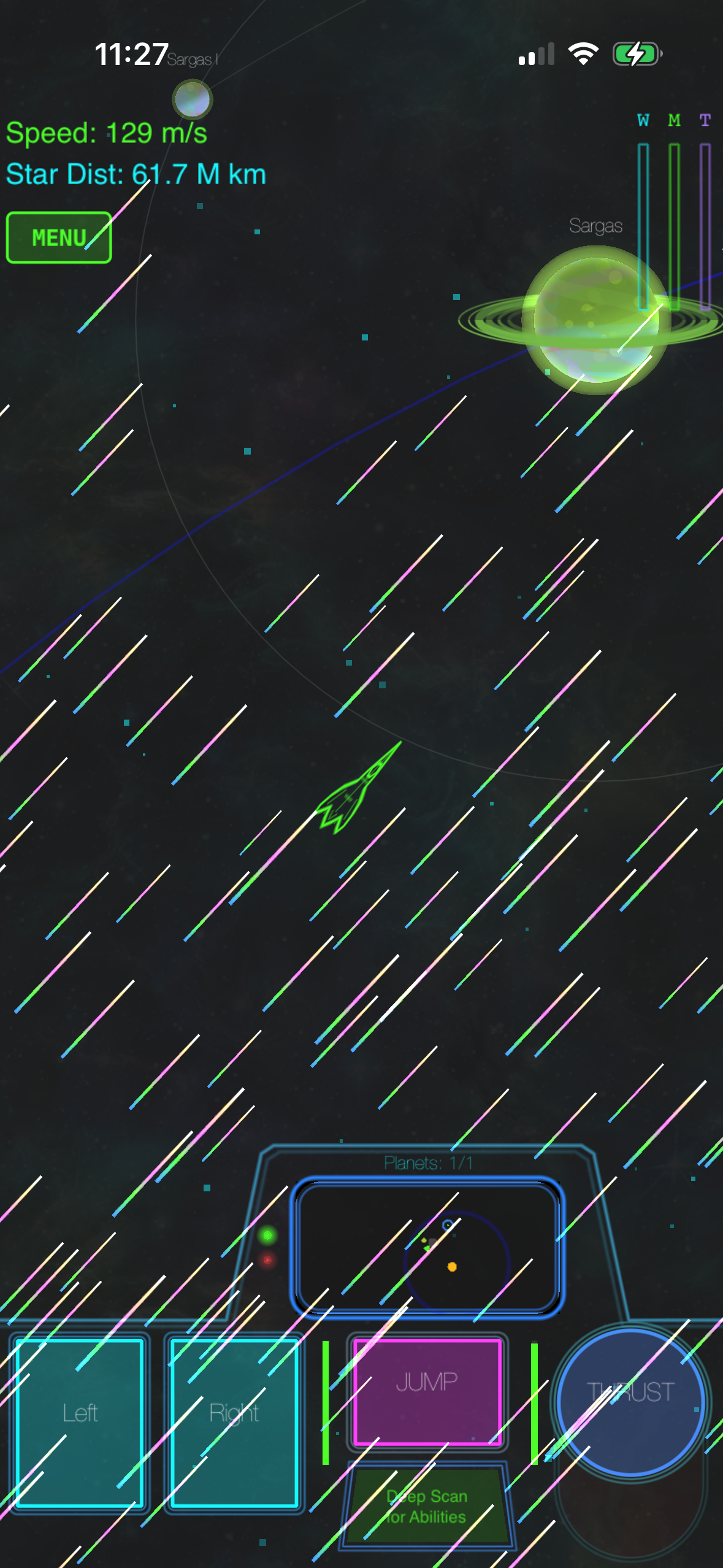
Galaximus is a premium iOS space exploration game where every celestial body obeys real orbital mechanics—planets orbit suns, moons orbit planets, asteroids tumble through gravity wells. The player ship, The New Dawn, is subject to all of it. Mastery comes from using gravity as your engine: slingshots, orbital captures, fuel-efficient transfer windows.
The learning curve is real. The first 30 minutes, you’re fighting the physics. By hour two, you’re using the physics. That’s the payoff that no faked-gravity space game can offer.
The campaign spans eight procedurally configured star systems with a full narrative arc. You’re not grinding the same mission type for a battle pass. You’re progressing through a story with a beginning, middle, and ending. Each playthrough generates unique planet configurations, so replay has structural incentive without seasonal gating.
Get Galaximus on the App Store:
Galaximus launched at the premium tier because it shipped complete: no ads, no energy timers, no cosmetic IAP. The game you buy is the game you own. Here’s the time-limited pricing factor: Galaximus Infinitum, a major expansion adding open-galaxy sandbox, planetary surface exploration, outposts, and faction warfare, is shipping in late 2026. Anyone who buys Galaximus at the current launch-price tier gets Infinitum free as an upgrade. After Infinitum launches, the combined game moves to a higher price tier. Early adopters get the expansion at no additional cost.
This is a real buying-decision factor. If you’re considering whether now is the time to commit, that free upgrade is worth factoring in.
[image:Galaximus orbital gameplay]
How Galaximus Compares to Other Premium Space Games
Kerbal Space Program (PC/Console, limited iOS versions) - Strength: Deep engineering simulator; you design and build rockets from components. - Weakness: Steep learning curve; no narrative arc; iOS versions are outdated or unavailable. - vs. Galaximus: KSP is an engineering sandbox. Galaximus is an arcade-action game where physics is the interface, not the gameplay loop. You pilot a ship; you don’t assemble one. Galaximus has narrative structure; KSP doesn’t.
No Man’s Sky (Console/PC, not on iOS) - Strength: Planetary exploration at massive scale; procedurally generated galaxies; base building. - Weakness: Not available on iOS; requires constant updates and server connectivity. - vs. Galaximus: NMS’s strength is planetary exploration scale that Galaximus doesn’t attempt. Galaximus Infinitum will add surface exploration, but not at NMS’s scope. Galaximus is offline-first and complete at launch.
Asteroids-style descendants (Asteroids+, Space Grunts, Galaga-inspired games) - Strength: Instant pickup; simple controls; fast sessions. - Weakness: No narrative; minimal progression; shallow mechanical depth. - vs. Galaximus: These are arcade games. Galaximus is a narrative-driven action game with orbital mechanics as the core system. Asteroids-style games are faster to learn; Galaximus rewards deeper mastery.
Premium indie space games (limited selection) - Strength: No IAP; offline play; focused design. - Weakness: Often incomplete; many are early-access or have minimal content. - vs. Galaximus: Galaximus is the only premium space game on iOS combining real orbital mechanics, narrative arc, and complete campaign structure with no IAP.
The Case for Paid-Once Over Free-to-Play
The structural difference is worth spelling out. Free-to-play space games optimize for retention and monetization. The game is designed to keep you checking back daily, hitting paywalls that encourage spending, and grinding for cosmetics. The development roadmap is driven by what monetizes, not what makes the game better.
Paid-once games optimize for satisfaction. The game is designed to be worth its purchase price upfront. The development roadmap is driven by what makes the experience complete. There’s no incentive to artificially gate content or interrupt your flow.
For space games specifically, this distinction matters because:
- Space games reward long-form play. A 5-minute session breaks the narrative and exploration flow. Paid games don’t interrupt you with energy timers.
- Mastery takes time. Learning orbital mechanics or combat timing is a multi-hour investment. Free-to-play games monetize the impatience that comes with that learning curve.
- Exploration is the draw. Procedural generation only works if you can explore without hitting paywalls on new star systems.
What to Look for in a Premium Space Game: Red Flags
If you’re evaluating whether a space game is actually premium or just claiming to be:
- Check the App Store description for “in-app purchases.” If it says “offers in-app purchases,” it’s not premium—it’s free-to-play with a paid tier.
- Look for energy timers in reviews. If players mention waiting for fuel to recharge or stamina to refill, exploration is gated by real-time timers, not skill.
- Verify the campaign structure. Does it have a defined final boss or ending sequence, or is it a sandbox that expects you to generate your own goals? Infinite procedural loops without narrative closure are a sign of incomplete design.
- Check if exploration is gated by energy or currency. Can you visit new star systems freely, or do you need to spend premium currency to unlock them? Premium games gate by progression, not by paywalls.
- Read about ads. Premium games don’t have banner ads or video unskippables between levels.
- Check the price history. If the price fluctuates wildly or there are frequent “limited-time discount” posts, it’s competing on price because the game isn’t strong enough to hold a premium position.
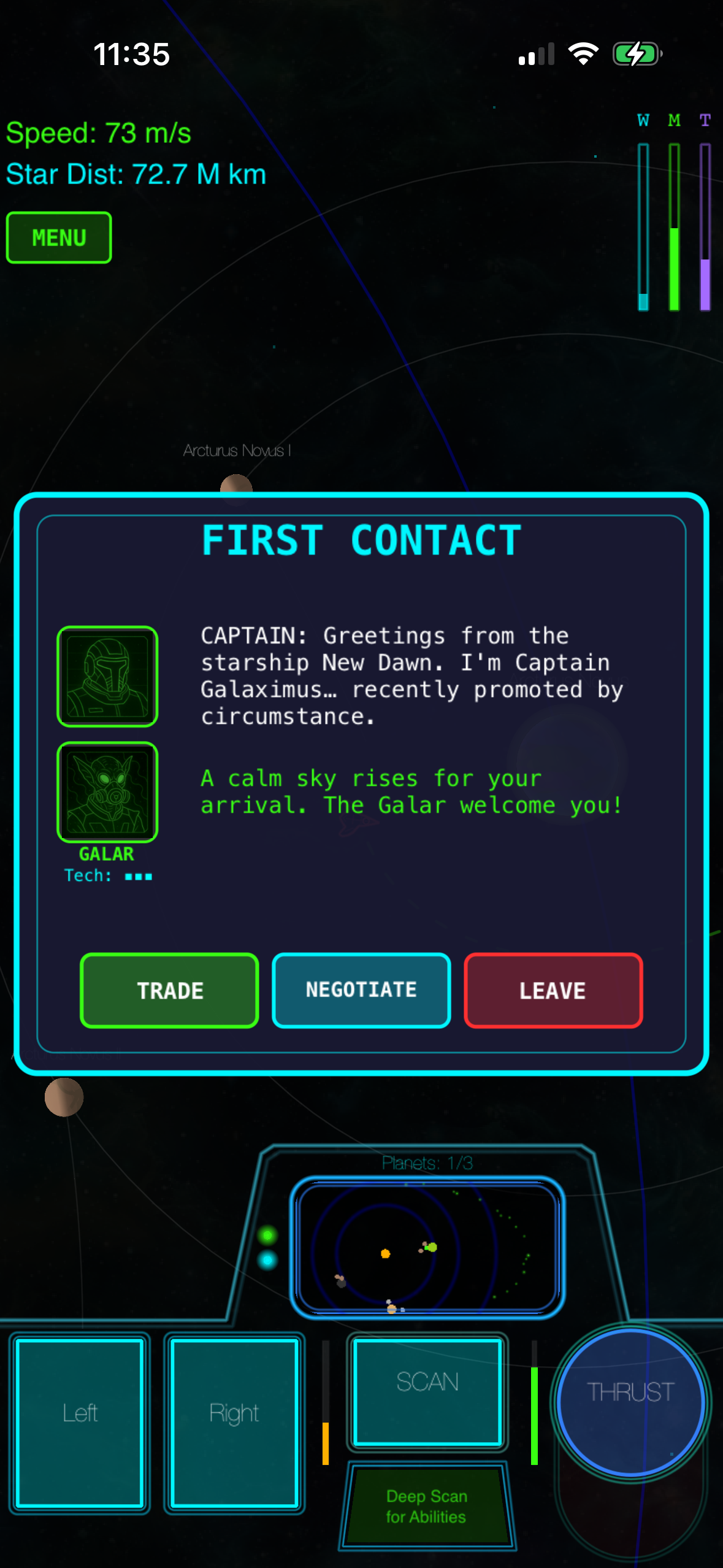
The Infinitum Expansion and Launch Pricing
Galaximus Infinitum is a major expansion—not a cosmetic DLC or a seasonal pass. It’s adding:
- Open-galaxy sandbox mode so you’re not limited to the 8-system campaign
- Planetary surface exploration in Battlezone-style wireframe 3D
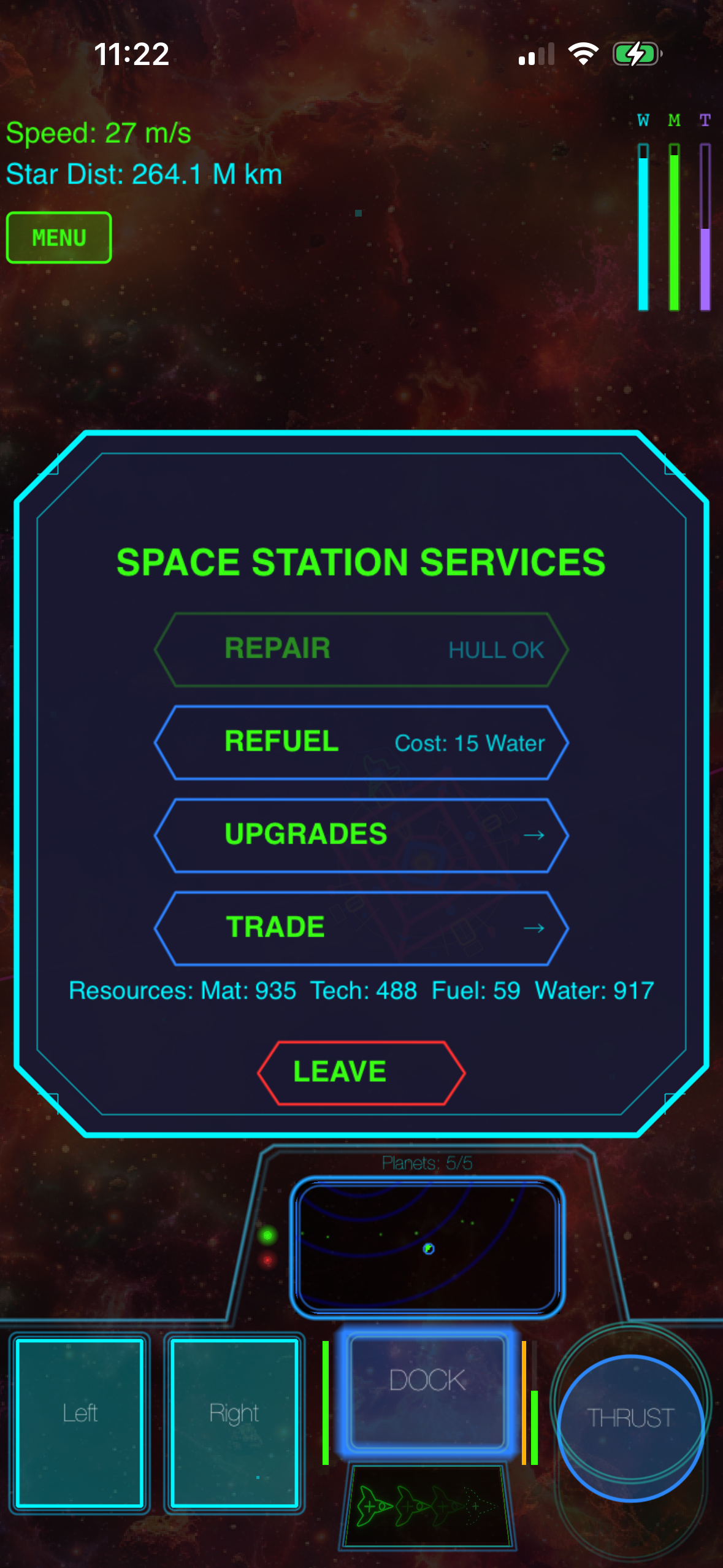
- Outpost building for resource management and strategic depth
- Faction warfare introducing political complexity to exploration
- Home-planet rebuild mechanics so your choices in the campaign affect the endgame
It’s shipping in late 2026. Players who buy Galaximus at the current launch-price tier receive Infinitum as a free upgrade. After Infinitum launches, the combined game moves to a higher price tier—meaning you’d be paying more if you wait.
Offline Play and No-Internet Requirements
One advantage of premium space games: they’re designed to be played offline. No ads means no ad-serving requirement. No live multiplayer means no server dependency. No battle pass means no seasonal sync.
Galaximus runs entirely offline. Download it once, play it anywhere—airplane mode, no WiFi, no cellular. The procedural generation happens on your device, so there’s no server dependency for creating new star systems.
This matters more than it sounds. Free-to-play games often require a connection to validate purchases or check your energy meter, even if the gameplay itself is local. Premium games assume you own the product and play it wherever you want.
The Learning Curve Is Real—And That’s the Point
This is the honest tradeoff with Galaximus: the first hour is harder than most games. Orbital mechanics aren’t intuitive if you’ve never thought about them. The controls reward understanding gravity over twitch reflexes.
We don’t hide this. The game teaches you through gameplay—each encounter introduces a new gravitational scenario and rewards you for solving it—but it assumes you’re willing to learn.
For some players, that’s the entire appeal. The mastery payoff is deeper because the entry cost is higher. For others, it’s a dealbreaker. Both are legitimate.
If you want a space game you can pick up and play for 5 minutes without thinking, Galaximus isn’t it. If you want a space game that rewards understanding and planning, it is.
FAQ
How much storage does Galaximus require?
Approximately 850 MB. The procedural generation system and synthesized audio keep the base install lean compared to pre-rendered space games.
Does Galaximus support MFi controllers?
Yes. Full MFi controller support is included. You can play with standard gamepad, extended gamepad, or directional controller layouts.
Can I play Galaximus offline?
Yes. The entire game runs offline. No ads, no server dependency, no connection required. Download once, play anywhere.
Will I lose access to Galaximus if I delete it?
No. It’s a purchased app, not a subscription. Delete it and reinstall anytime—your purchase is tied to your Apple ID. It’s yours.
What happens after I finish the 8-system campaign?
The campaign has a narrative ending, but procedural generation creates variation in each playthrough. Galaximus Infinitum, shipping late 2026, adds open-galaxy sandbox mode so you can continue exploring beyond the campaign arc.
Is there a free trial?
Not currently. You’re buying the game outright. The App Store doesn’t charge until you confirm the purchase, so you can read reviews and screenshots before committing.
The Premium Space Game Advantage
The shift from free-to-play to premium fundamentally changes what kind of game gets built. When the developer’s incentive is to ship a complete, satisfying experience rather than monetize your time, the design reflects that. No artificial gates. No interruptions. No pressure to spend beyond the initial purchase.
For space games—which are about exploration, mastery, and narrative—that alignment matters. Galaximus exists because it was designed as a complete experience first, not a monetization vehicle.
Get Galaximus on the App Store:
The launch-price tier includes the Infinitum expansion free when it ships in late 2026. After launch, the combined game moves to a higher tier. If you’ve been considering it, that free upgrade window is real.