Paid vs Free Space Games iOS: Why Premium Wins
 by Galaximus
Paid vs Free Space Games on iOS: Why Premium Wins
Per Sensor Tower, the free-to-play model has dominated mobile gaming for over a decade. But in 2026, a counter-movement is gaining traction: premium iOS games that charge upfront and never ask for another dollar. For space games specifically, the difference between paid and free isn’t just about price — it’s about design philosophy, gameplay depth, and what the developer optimizes for.
Disclosure: The author built Galaximus, a paid space game available on iOS. This article compares paid and free models, and Galaximus is used as a case study. Readers should note this financial stake when evaluating recommendations.
The Free-to-Play Space Game: What You’re Really Paying For
Free-to-play space games on iOS don’t cost nothing — they cost your attention, your time, and often your patience. The monetization model is built into the game design from the start, which means every system is optimized to encourage spending.
Energy systems and time gates. Most free space games use energy meters that regenerate slowly. You get five actions, then wait 30 minutes for the next five. The game isn’t designed to be played for 30 uninterrupted minutes; it’s designed to be checked three times a day. Each check is a touchpoint where the app can show you an ad or a “speed up with premium currency” offer. The gameplay loop is secondary to the monetization loop.
Premium currency friction. Free games introduce a currency (crystals, credits, tokens) that you earn slowly through play but can buy instantly with real money. The progression curve is tuned so that the free-earn rate feels just slow enough to tempt spending. You’re not buying a game; you’re paying to remove the friction the game deliberately added.
Battle passes and seasonal content. The game releases new cosmetics, ships, or story chapters behind a seasonal paywall. Miss the window, and that content is gone (or locked behind a premium currency). This creates artificial urgency and FOMO (fear of missing out) — a psychological lever that costs the developer nothing to deploy but works reliably on players.
Ad integration. Many free space games include banner ads, interstitial ads between sessions, or offer rewards for watching 30-second video ads. Some let you remove ads by paying a subscription. Others keep ads permanently and layer them on top of a premium currency system. Either way, the ad network is a revenue stream, and your attention is the product being sold.
None of this is inherently evil — free games have to make money somehow. But the design philosophy is clear: maximize time-in-app and monetization opportunities, even if it means fragmenting the gameplay experience.
The Paid Space Game: Design for Completion, Not Engagement Metrics
A premium space game (buy once, own forever, no ads, no IAP) has a completely different design constraint. The developer makes money when you buy the game, and that’s it. There’s no incentive to keep you logging in tomorrow or to frustrate you into spending more. The incentive is to make a game you want to finish and replay.
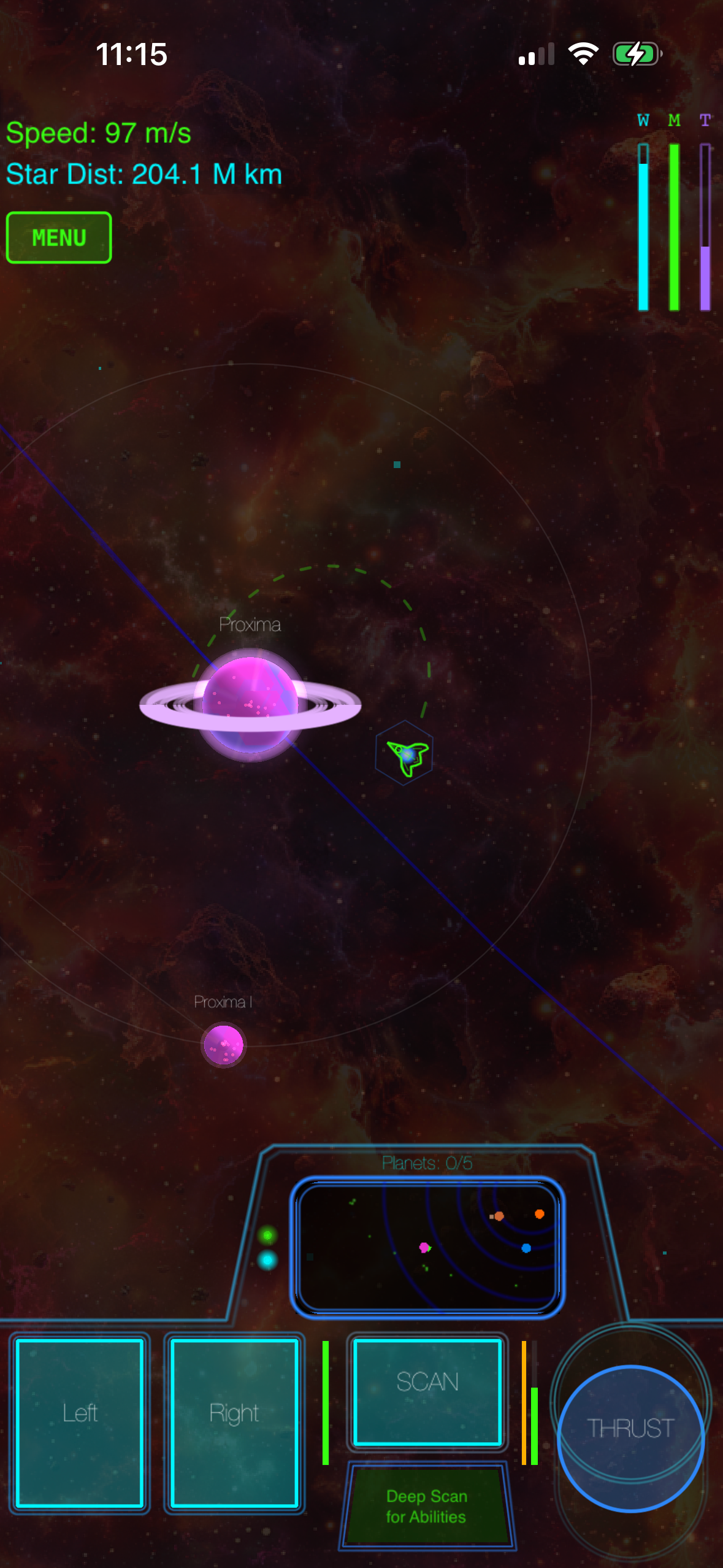
Uninterrupted play sessions. Without energy meters or time gates, you can play for as long as you want. If you want to spend 90 minutes exploring a star system, you can. The game doesn’t interrupt you with ads or force you to wait. This sounds simple, but it fundamentally changes how you engage with the world. You’re not managing time between sessions; you’re immersed in one continuous experience.
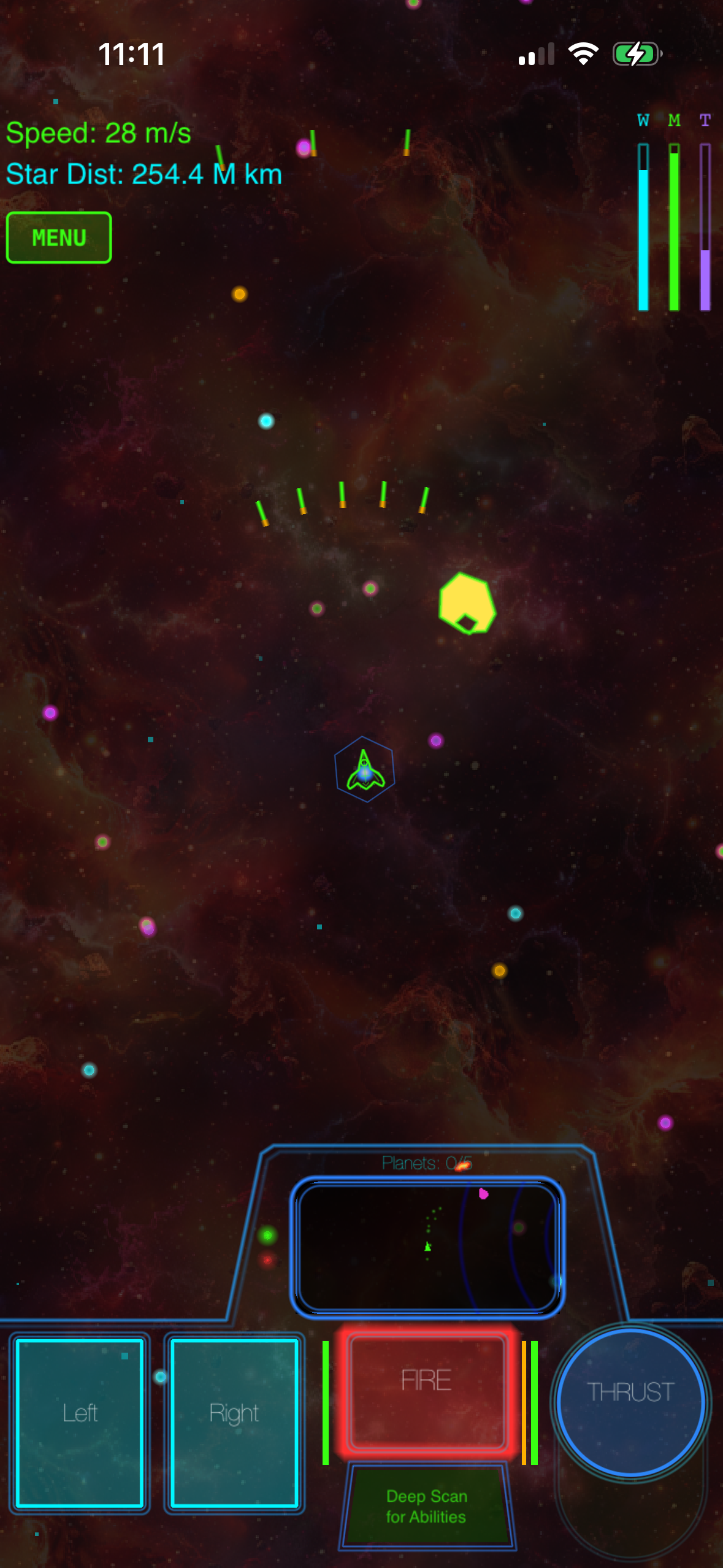
Progression that respects your skill. In a paid game, progression is tied to player mastery, not to time or money spent. You advance by learning the mechanics, by getting better at the controls, by understanding the physics or tactics. Galaximus rewards patience and positioning over reflexes — the physics simulation is the interface, and learning to use gravity as your engine is the progression path. You don’t “unlock” better ships by grinding; you master the one you have.
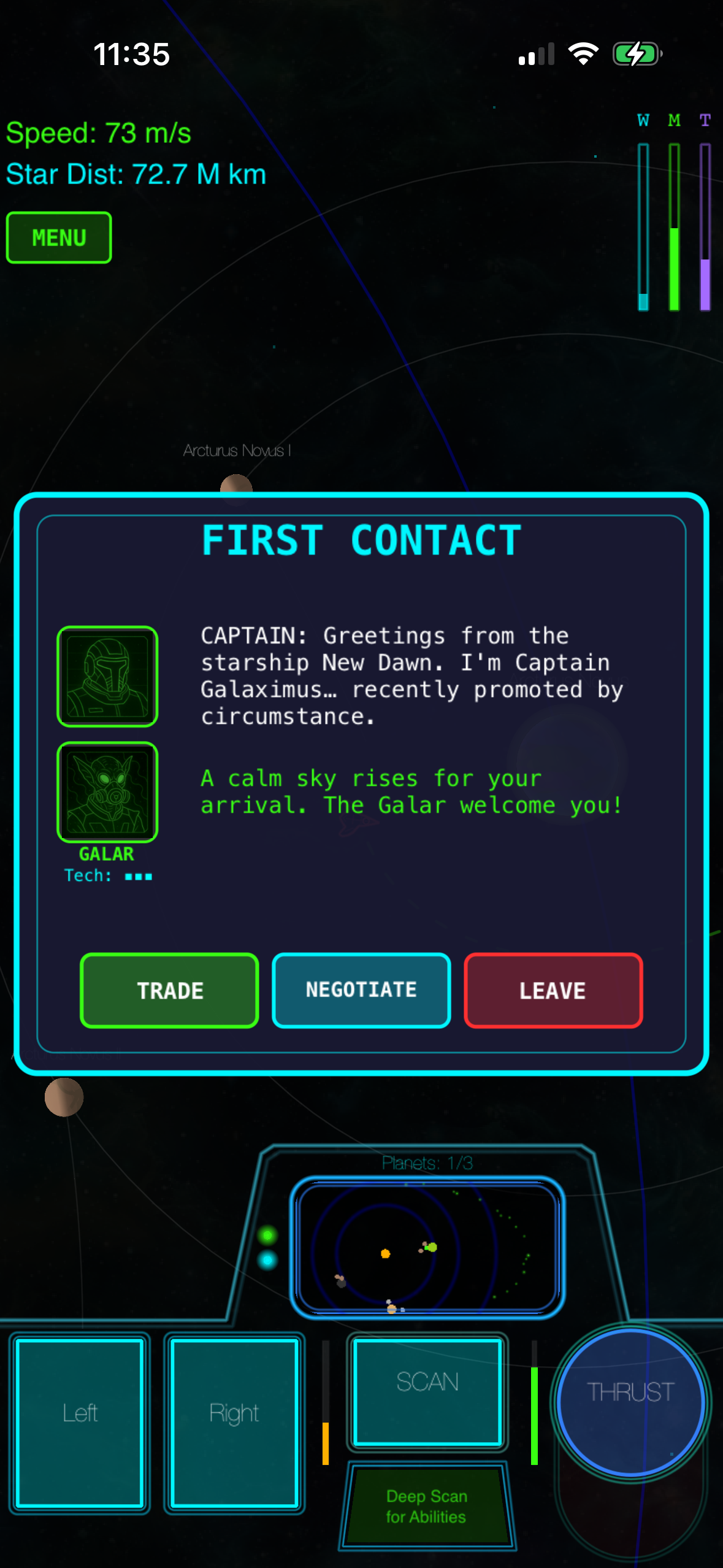
A complete narrative arc. Free games often launch in “early access” and add story chapters over months or years. Paid games typically ship complete: beginning, middle, end. Galaximus includes 8 procedurally configured star systems with a full story arc. You can finish the game. That finality is rare in free-to-play, where the goal is to keep you playing indefinitely.
Honest difficulty and learning curve. Free games often hide difficulty behind paywalls — the hard content is gated behind premium currency or energy. Paid games can afford to be honest about their learning curve because they’re not trying to keep you engaged through frustration. Galaximus has a real learning curve (gravity is not intuitive on first contact), but we tell you that upfront. The payoff is mastery, not a paywall.
The Economics: Why Free Looks Cheaper But Costs More
A free space game might show a price tag, but the economics tell a different story.
Acquisition cost vs. lifetime value. Free games need massive player counts to generate revenue — even with 10% monetization rates, you need millions of installs to hit revenue targets. They spend heavily on ads to acquire those players. You’re the product being acquired and sold to advertisers and publishers. Paid games need far fewer sales to be sustainable. One developer, one premium space game, 10,000 sales at — that’s a viable business. The economics are simpler and more honest.
The real cost of “free.” Consider two scenarios: A free space game with 5% monetization converts 1 in 20 players to paying users. The average paying user spends over 20 hours of play, generating per hour of average player engagement. A paid game at played for 20 hours per hour. The paid game is cheaper per hour of entertainment, and you own the complete experience upfront with no surprises.
Hidden monetization in “free” games. The free game doesn’t just take your money — it takes your data. Your play patterns, your spending thresholds, your engagement metrics are logged and sold to analytics companies. Your attention is harvested and sold to advertisers. The paid game doesn’t need to do that. You paid; the transaction is complete.
When Free-to-Play Actually Makes Sense
Paid games aren’t universally better — there are legitimate reasons to play free-to-play space games.
Lower initial commitment. If you’re unsure whether you like space games, a free title costs nothing to try. You can uninstall after 10 minutes with zero regret. A paid game requires you to commit upfront. That’s a real barrier for some players, and it’s fair to acknowledge it.
Multiplayer and live services. If a space game is built around PvP combat, cooperative missions, or seasonal content that requires live servers, the free-to-play model often makes sense. The developer needs ongoing revenue to maintain servers. Galaximus is single-player, so that doesn’t apply — but a multiplayer space game would be a different calculation.
Casual, low-commitment play. Some players want to check a game for 5 minutes three times a day and move on. Free games with energy systems are optimized for that use case. Paid games assume longer, deeper engagement. Neither is wrong; they’re different products for different audiences.
Subscription services. If you’re already paying for Apple Arcade or a similar subscription, adding another purchase feels like a second bill. Free games feel “included” even though you’re already paying the subscription. That’s a legitimate friction point for subscription users.
The Paid Model in 2026: A Shift Worth Noticing
In 2026, premium games are making a comeback on iOS, particularly among players aged 25–50 who remember when games shipped complete. The shift reflects growing player fatigue with ads, energy meters, and constant monetization pressure.
Part of this is that indie developers can now ship premium games profitably because the barrier to entry (development tools, distribution) has dropped. And part of it is that players have learned to value their time and attention.
Feature Comparison: Paid vs Free Space Games
| Feature | Paid Space Games | Free Space Games |
|---|---|---|
| Ads | None | Banner, interstitial, or video ads (sometimes removable for a fee) |
| In-app purchases | None | Energy, cosmetics, battle pass, premium currency |
| Gameplay interruptions | None; play as long as you want | Energy meters, time gates, daily login incentives |
| Story completion | Full narrative arc included | Often incomplete at launch; chapters added over months |
| Progression model | Skill-based; mastery unlocks content | Grind-based or pay-to-skip; time-gated or paywalled |
| Offline play | Fully supported | Often requires internet for ads and monetization tracking |
| Price transparency | One upfront cost; no surprises | Free to download, but real costs accumulate through spending |
| Developer incentive | Make the best game possible | Keep you engaged and spending as long as possible |
Why We Built Galaximus as a Paid Game
We made a deliberate choice to build Galaximus as premium rather than free-to-play. The alternative would have required compromising on core experience. Real orbital mechanics are beautiful and satisfying, but they’re not intuitive — they require a learning curve and uninterrupted play to master. Energy systems would have fragmented that learning. Ads would have broken immersion. A battle pass would have created artificial urgency that contradicts the meditative, exploratory tone we wanted.
The launch-price tier we’re offering now is an opportunity: buy at the current price and you’ll get the Infinitum expansion (coming late 2026) as a free upgrade. After Infinitum launches, the combined game moves to a higher price tier. Early adopters get the sandbox expansion at no extra cost. That’s the opposite of free-to-play incentive design — we’re rewarding players who commit early, not punishing them for not spending more later.
Honest Trade-offs: What Paid Games Don’t Offer
Premium games aren’t perfect. There are real trade-offs worth acknowledging.
Upfront cost barrier. You have to decide to buy before you play. That’s friction. Some players won’t take the chance, and that’s reasonable. A free game lets you try before you commit.
Smaller player communities (sometimes). Free games reach millions; paid games reach thousands. If you’re looking for a multiplayer space game with a massive community, free-to-play has the advantage. Galaximus is single-player, so this doesn’t matter for us, but it’s a real factor for multiplayer titles.
Less frequent content updates. Free games release new content constantly (seasonal passes, new ships, new events) because that’s how they retain players and drive spending. Paid games often ship complete and then move on. Galaximus is an exception — Infinitum is a major expansion — but many premium games don’t add content post-launch.
No “try before you buy” safety net. The App Store has a 14-day refund window, but it’s not as frictionless as downloading a free game. If you buy a paid game and hate it, you have to go through a refund process. Free games let you quit instantly.
These are real limitations. The paid model isn’t universally superior — it’s different, and it optimizes for different player values.
FAQ
Q: Can I refund a paid iOS game? A: Yes. The App Store allows refunds within 14 days of purchase. Go to Settings > [Your Name] > iTunes & App Stores > Tap your profile icon > Purchase history > Find the game > Report a Problem > Request a refund. Apple typically processes refunds within 5–10 business days.
Q: Do paid games ever go on sale? A: Occasionally, but less frequently than free games. Premium games sometimes discount during holidays or major sales events, but many developers keep prices stable. Galaximus launched at the current price tier and will increase after the Infinitum expansion launches. There’s no discount planned before that.
Q: What’s the difference between premium and subscription games? A: Premium games charge a one-time upfront cost and you own the game forever. Subscription games (like Apple Arcade titles) require a recurring monthly or annual fee to access. Premium games are cheaper if you play long-term; subscriptions are better if you want access to a large library without individual purchases.
Q: Can I play paid space games offline? A: Yes, most premium space games work completely offline. Galaximus does — no internet required. Free games often require internet to serve ads and track spending, so offline play is less common.
Q: How much do free space games actually cost if you play long-term? A: It varies wildly. Some players spend nothing and tolerate ads. Others spend + over months chasing cosmetics or battle pass content. The design is deliberately opaque — you don’t know the total cost until you’re already invested in the game. Paid games show you the cost upfront.
The Choice Is Yours
The free-to-play vs. paid question isn’t about which model is objectively better — it’s about which one aligns with how you want to spend your time and money. Free games offer low commitment and broad accessibility. Paid games offer uninterrupted experiences and honest pricing.
If you’re looking for a space game that respects your time, doesn’t interrupt you with ads or energy meters, and rewards mastery over grinding, Galaximus is built for that. You buy it once at the launch-price tier, and when Infinitum launches later this year, the expansion is included free. That’s the premium model in action: one transparent transaction, complete game, no surprises.
Get Galaximus on the App Store: Get it on the App Store
For more on premium space gaming without monetization, check out Best Paid iOS Games for Space Fans: No Monetization, Premium iPhone Games No Ads No In-App Purchases: Complete List 2026, and Offline iOS Space Games: Best Single-Player Titles 2026.