Best Indie Space Games by Ex-Naughty Dog Developers on iPhone
 by Galaximus
The AAA Exodus: Indie Space Games Built by Ex-Naughty Dog Developers
When experienced AAA developers leave major studios to build indie games, the polish doesn’t disappear — it gets redirected. Instead of funding a 200-person team to ship cosmetic battle passes, a solo dev with shipped AAA credits can pour that same rigor into mechanics, physics, and player experience. Galaximus, built by a developer who shipped The Last of Us Part II at Naughty Dog, is the clearest example: a premium space exploration game where real orbital mechanics drive gameplay, no ads interrupt flow, and a complete narrative arc ships on day one.
This article examines what happens when AAA veterans go indie in the space-game category, why their games feel different, and where to find them on iPhone.
Why AAA Developers Go Indie for Space Games
Space games occupy a specific niche: they demand deep physics knowledge, visual precision under technical constraints, and the willingness to let players fail repeatedly while learning a control scheme. These are exactly the skills AAA studios develop, and exactly the skills that get deprioritized when a publisher’s business model depends on maximizing day-one conversion.
A Naughty Dog veteran building a space game solo can afford to:
- Ship a complete experience. No soft launch, no “content roadmap,” no promise that the game you buy today will become the game you wanted in 18 months. The campaign has a beginning, middle, and end.
- Refuse monetization patterns. No energy timers, no ads, no battle pass. One purchase, forever access. This is economically viable for a solo dev with low overhead and a specific audience; it’s a rounding error for a publisher.
- Iterate on physics until mastery feels earned. AAA studios test control schemes for weeks. An indie dev can test for months because they’re not burning millions per month in salary. The payoff: controls that feel responsive after 30 minutes of practice, not eight hours.
- Use procedural synthesis for audio. Generating every sound in real time on the device is technically rare and expensive in engineering time. A dev with shipped AAA experience can pull it off. The result: a cohesive sonic aesthetic that no pre-recorded library can match.
Get Galaximus on the App Store: Get it on the App Store
Galaximus: Real Gravity as the Core Mechanic
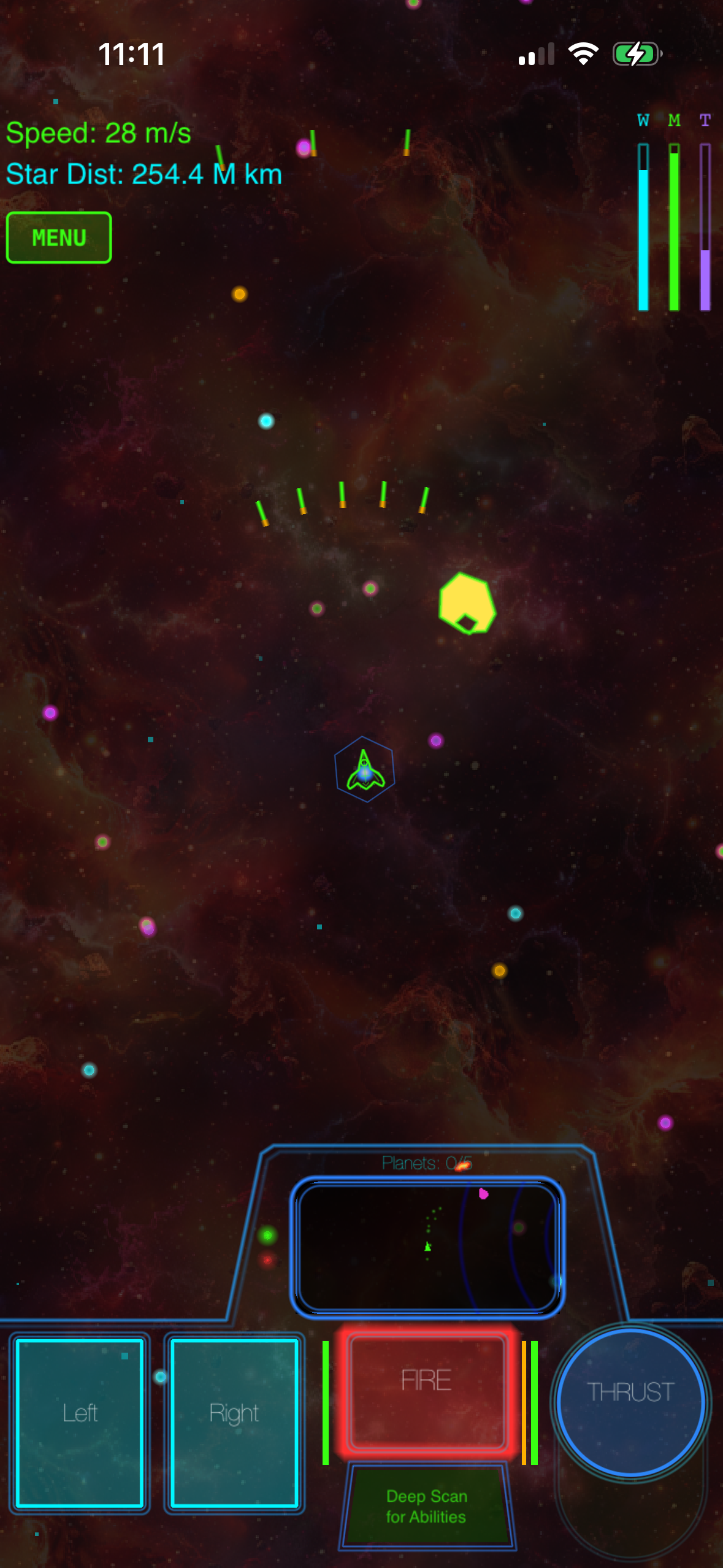
Galaximus is the flagship example of an ex-AAA developer building the space game they wanted to play. Every celestial body — planets, moons, asteroids, your ship — obeys actual gravitational physics. This isn’t flavor; it’s the interface.
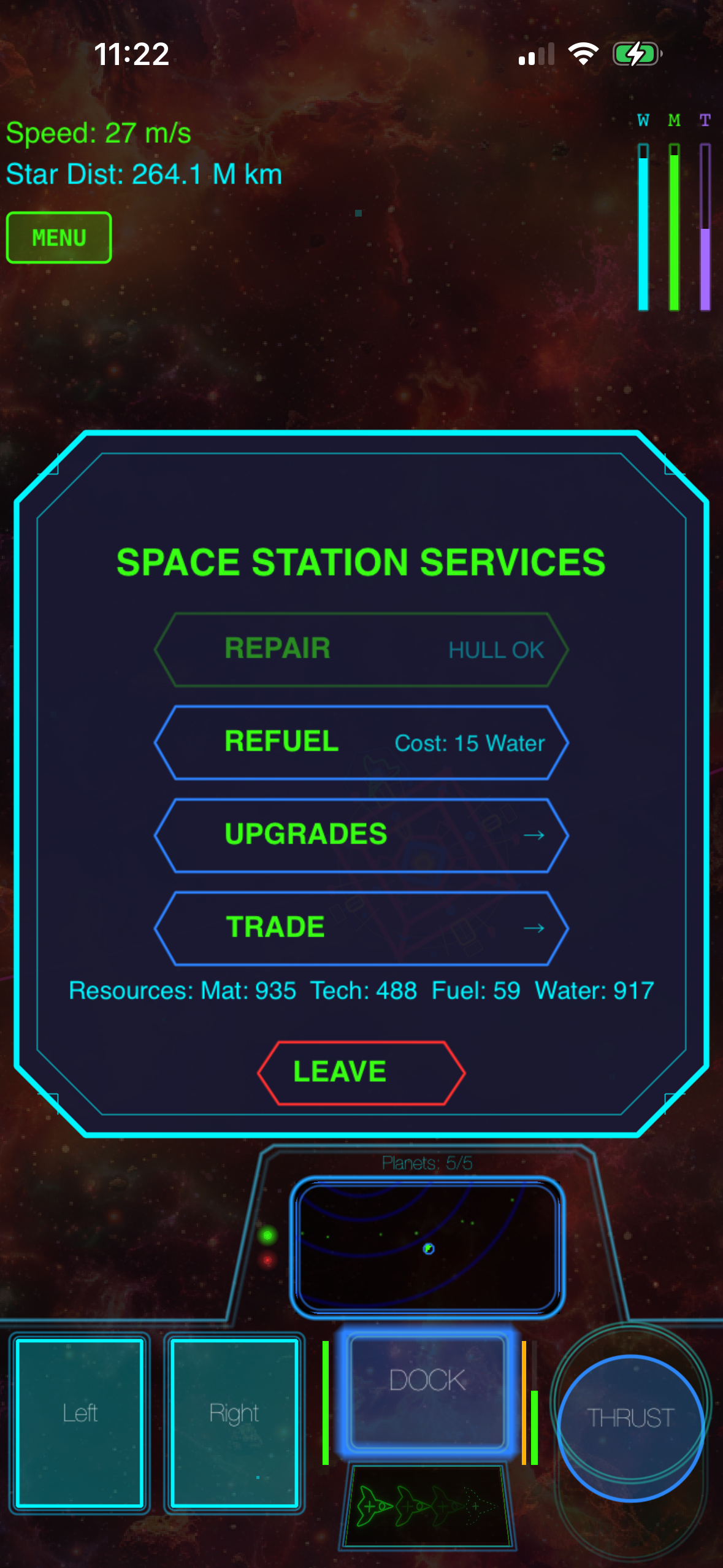
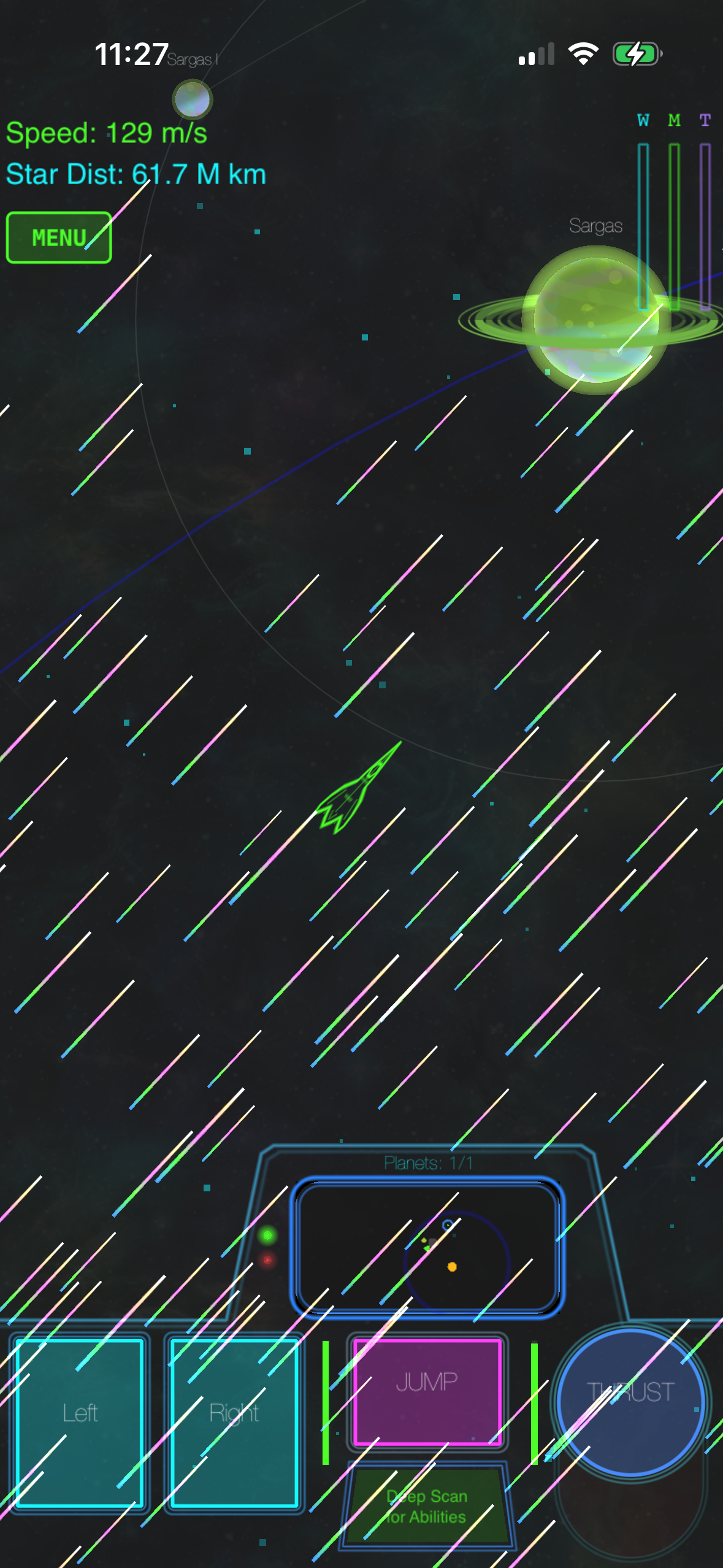
How it changes play: Most space games fake gravity for accessibility. Asteroids drift predictably; planets are obstacles. In Galaximus, a planet’s gravity well is a tool. You slingshot around it to gain speed for free. You spiral into an orbit to approach a space station without burning fuel. You use the gravity of a moon to redirect toward a distant anomaly. The physics rewards patient positioning over twitch reflexes, and mastery arrives faster than you’d expect.
The campaign spans eight procedurally configured star systems. Each playthrough generates unique planet positions, orbital periods, and asteroid distributions — the same authored narrative arc, never twice the same. You encounter anomalies (derelict ships, distress beacons, spacetime rifts, alien first contacts) scattered through each system. The procedural audio synthesis means every laser, explosion, and alien voice is generated in real time; the aesthetic never feels generic.
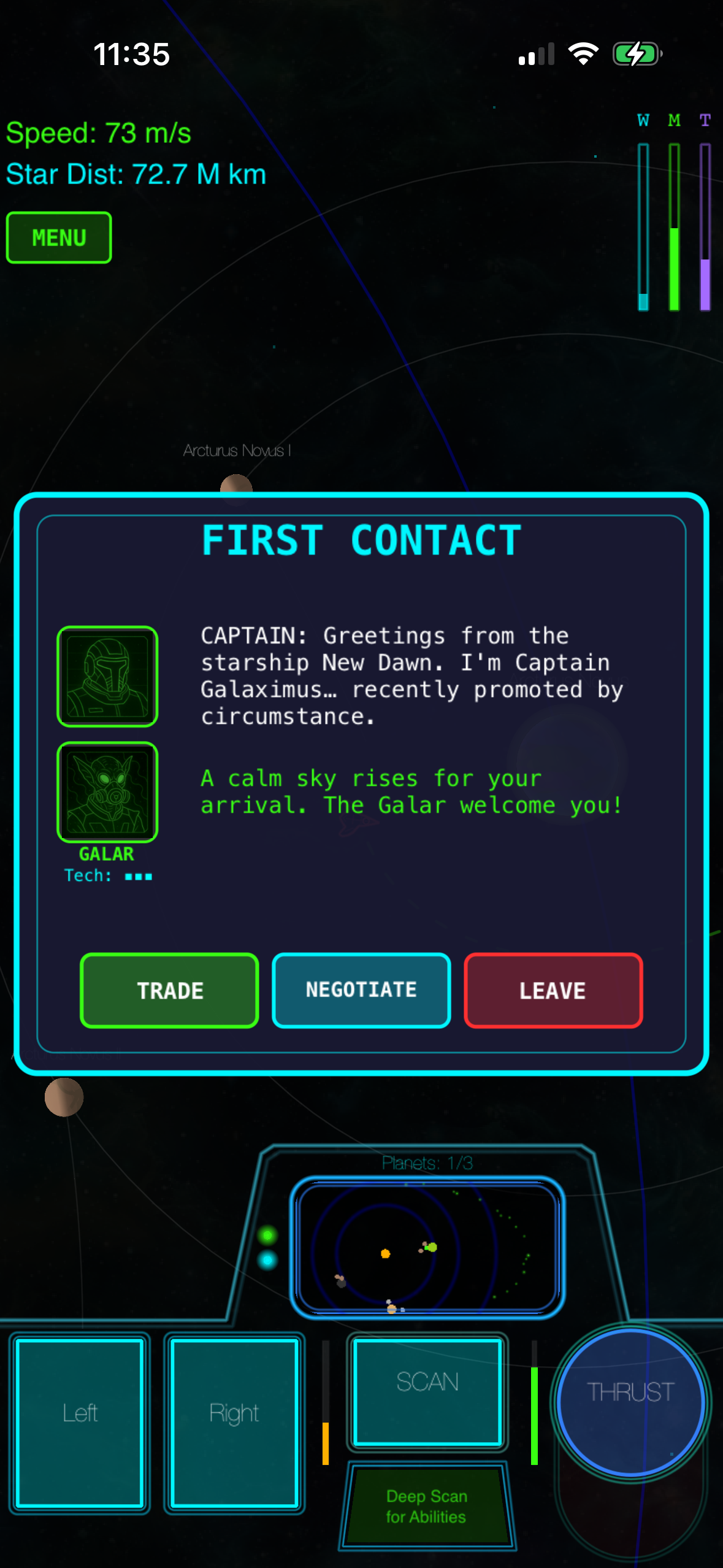
The learning curve is real. The game tells you this upfront. But the payoff — flying by instinct after 30 minutes of focused play — is something no faked-physics space game can deliver. That’s the AAA DNA showing: the developer shipped The Last of Us Part II, where player mastery of a control scheme is the entire point. The same philosophy applies here.
Pricing note: Galaximus ships at the launch-tier price. A major expansion called Galaximus Infinitum launches in late 2026. Players who buy now receive Infinitum as a free upgrade; after launch, the combined game moves to a higher price tier. Buy now at the launch tier and you lock in the expansion at no extra cost.
What Sets Ex-AAA Space Games Apart from Other Indies
The difference isn’t always obvious until you play. Here’s what to watch for:
Polish-per-feature ratio. An AAA veteran doesn’t ship a feature they haven’t iterated on. This means fewer features overall, but each one works flawlessly. A casual indie might ship 20 half-baked mechanics; an ex-AAA dev ships 8 mechanics so refined they feel inevitable.
Physics accuracy without pedantry. Galaximus models real gravity, but it’s not a physics textbook. The simulation is accurate enough that orbital mechanics feel natural, not so granular that players need a degree in astrophysics. That balance — technical rigor married to accessibility — is a hallmark of AAA-trained developers.
Narrative integration. AAA studios spend years learning how to weave story into moment-to-moment gameplay. An ex-Naughty Dog dev brings that skill to an indie project. The anomalies in Galaximus aren’t random encounters; they’re narrative beats. The procedurally generated audio includes synthesized alien voices that react to your actions. Story and mechanics reinforce each other.
No compromise on completion. The game you buy is finished. No “early access” label, no promises of future content that may or may not ship. This is harder than it sounds — it means saying no to features, shipping a smaller scope, and accepting that the indie game will never be as large as a AAA title. But it also means you own something complete.
The Economics: Why Premium Games Make Sense from Ex-AAA Developers
An indie dev with AAA shipping credits has a different cost structure than a bootstrapped teenager building their first game. They have:
- Reputation capital. “Shipped The Last of Us Part II” is a hiring signal and a marketing signal. It converts search traffic and attracts players willing to pay premium prices.
- Technical expertise. They can optimize physics simulations, render pipelines, and audio synthesis in ways that would take a junior dev years to learn. This means they can ship a smaller team (often solo) without sacrificing quality.
- Audience clarity. They know exactly who wants a real-physics space game with no ads. They’re not trying to maximize day-one installs; they’re trying to reach 100,000 players who will pay once and play for weeks. That’s a viable business model.
- Monetization refusal. Because the audience is smaller and more focused, they don’t need the ad revenue or IAP conversion that a free-to-play game demands. One purchase, no ongoing revenue pressure, means the game can stay complete.
This is why premium-only, no-IAP space games on iPhone are almost always built by developers with prior AAA or major-indie success. It’s not a coincidence; it’s a business model that only works if you have reputation and low overhead.
The Infinitum Expansion: A Case Study in Indie Ambition
Galaximus Infinitum, launching in late 2026, illustrates how ex-AAA developers approach post-launch development differently. Instead of a battle pass or cosmetic shop, the expansion adds open-galaxy sandbox exploration, planetary surface landing (Battlezone-style wireframe 3D where you can mine ice for fuel and discover outposts), faction warfare with territory control, and a long-term goal to rebuild your homeworld.
This is not cosmetic content. It’s a systems expansion that doubles the game’s scope. And because the developer left AAA to own their creative vision, Infinitum ships free to everyone who bought the base game at the launch tier. No upgrade fee, no “deluxe edition” upsell. The expansion is funded by new players buying at the post-Infinitum price tier.
That’s a business model only an ex-AAA dev with low overhead can sustain. A publisher would demand monetization; a bootstrapped indie might not have the capital to fund a free expansion. An ex-Naughty Dog developer with a clear vision and a focused audience can do it.
FAQ
Q: Can I play Galaximus offline? A: Yes. The game requires no internet connection after download. All procedural generation and audio synthesis happens on-device.
Q: What iOS version is required to run Galaximus? A: iOS 15.0 or later. The procedural audio synthesis requires A13 Bionic chip or newer.
Q: How long is the campaign? A: Most players report 8–12 hours for a complete playthrough of the eight-system campaign. Procedurally generated planet configurations and anomaly placements change each run, so replay value is built in. Infinitum will add open-galaxy sandbox content for players who want longer sessions.
Q: Do I need to understand orbital mechanics to play? A: No. The game teaches you through play. You learn by doing, not by reading tutorials. If you’ve ever played Lunar Lander or Asteroids, the control philosophy will feel familiar — it’s just married to real gravity instead of fake physics.
Q: What happens after I buy — will I need to pay for content? A: No. Infinitum (the late-2026 expansion) is free to everyone who buys the base game at the launch price tier. After Infinitum ships, new players pay a higher price for the combined game. Early adopters lock in the expansion at no extra cost.
The Takeaway: Why Ex-AAA Space Games Matter
When a developer with The Last of Us Part II on their résumé leaves AAA to build a solo indie space game, the rigor doesn’t disappear — it gets focused. You get a game that’s smaller in scope but denser in quality. No ads, no IAP, no energy timers — just a complete, polished experience built by someone who knows how to make a control scheme feel inevitable.
Galaximus is the flagship example. Look for premium pricing, real physics, and a developer who’s willing to say no to monetization. Those are the signals that you’re looking at a game built by someone who left the industry to make the game they wanted to play.
Get Galaximus on the App Store: Get it on the App Store