Lunar Lander & Asteroids Inspired Games: Modern iPhone Versions
 by Galaximus
Lunar Lander and Asteroids Inspired Games on iPhone
If you grew up feeding quarters into arcade cabinets or remember piloting a lunar module with nothing but thrust and gravity, you know what made those games stick: physics you could feel. Modern iPhone space games have inherited that legacy while adding real orbital mechanics, high-fidelity controls, and polish that prioritizes experience over monetization.
The best modern versions don’t just copy the arcade formula; they deepen it. They respect your time with no ads, no energy meters, no battle passes. They’re complete experiences you buy once and own forever.
Why Arcade Space Games Still Matter
Lunar Lander and Asteroids taught you physics through the controller. You didn’t read tutorials about gravity or inertia—you felt them. Your ship had weight. Momentum was real. Thrust was a finite resource you managed. That’s why players still return to those games decades later, and why their modern descendants are worth your attention.
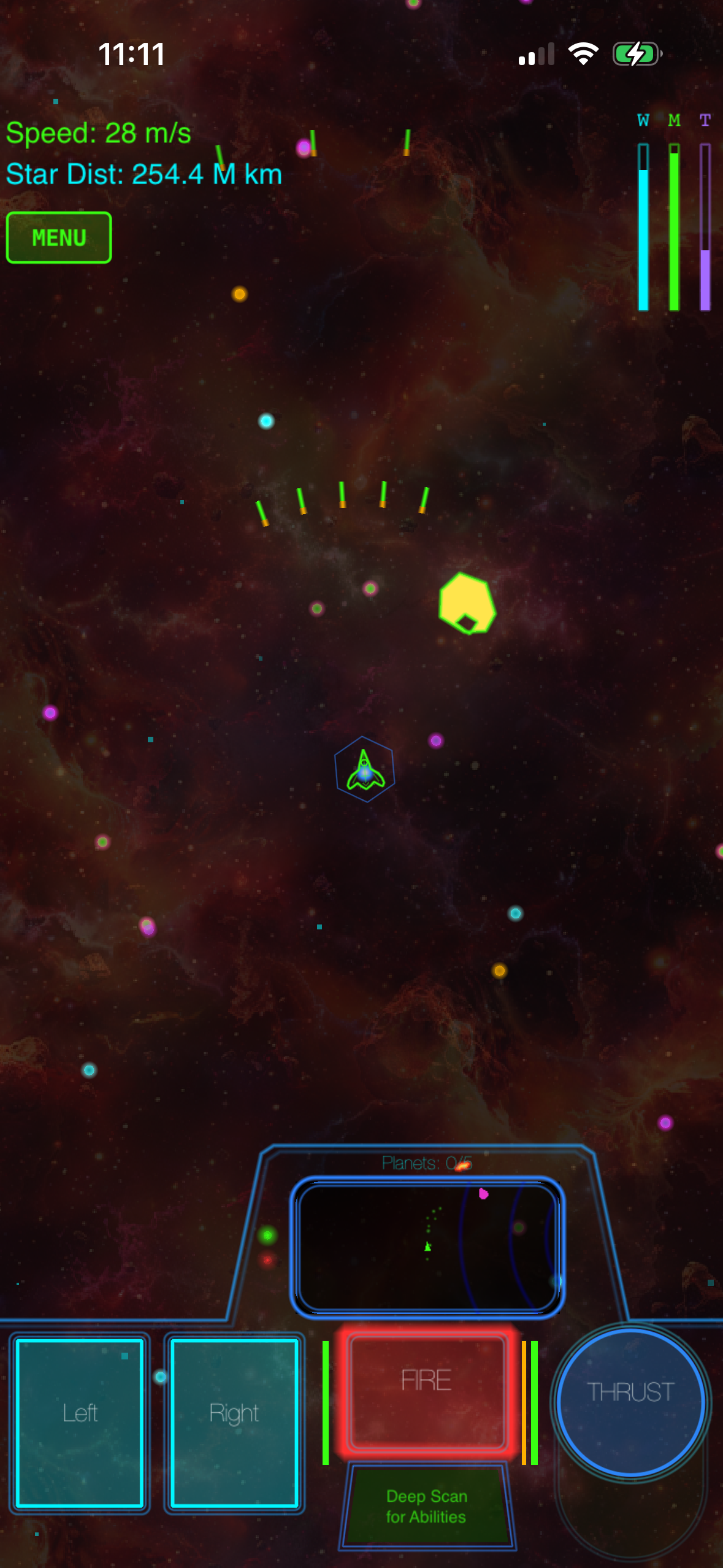
The iPhone’s accelerometer and touch screen let developers express physics in ways the arcade never could. A modern space game can simulate real gravity affecting multiple bodies simultaneously, let you slingshot around planets for free, and keep controls tight enough that mastery is achievable in a single session.
The Physics Foundation: Real Gravity vs. Arcade Approximation
Some modern space games approximate gravity for accessibility. Others model it accurately and make controls expressive enough that the learning curve pays off fast.
Games that approximate gravity feel familiar if you’ve played Asteroids—responsive, forgiving, designed to feel good immediately. Games that model real gravity reward patience and positioning over reflexes. You learn to use gravity as your engine, not fight it.
Core Mechanics That Honor the Classics
Fuel as a finite resource. Like Lunar Lander, fuel is the core constraint. Every burn matters. This forces deliberate, patient play.
Momentum and inertia. Your ship doesn’t stop when you release thrust. It coasts. Learning to predict momentum and use gravity to redirect it is where skill lives.
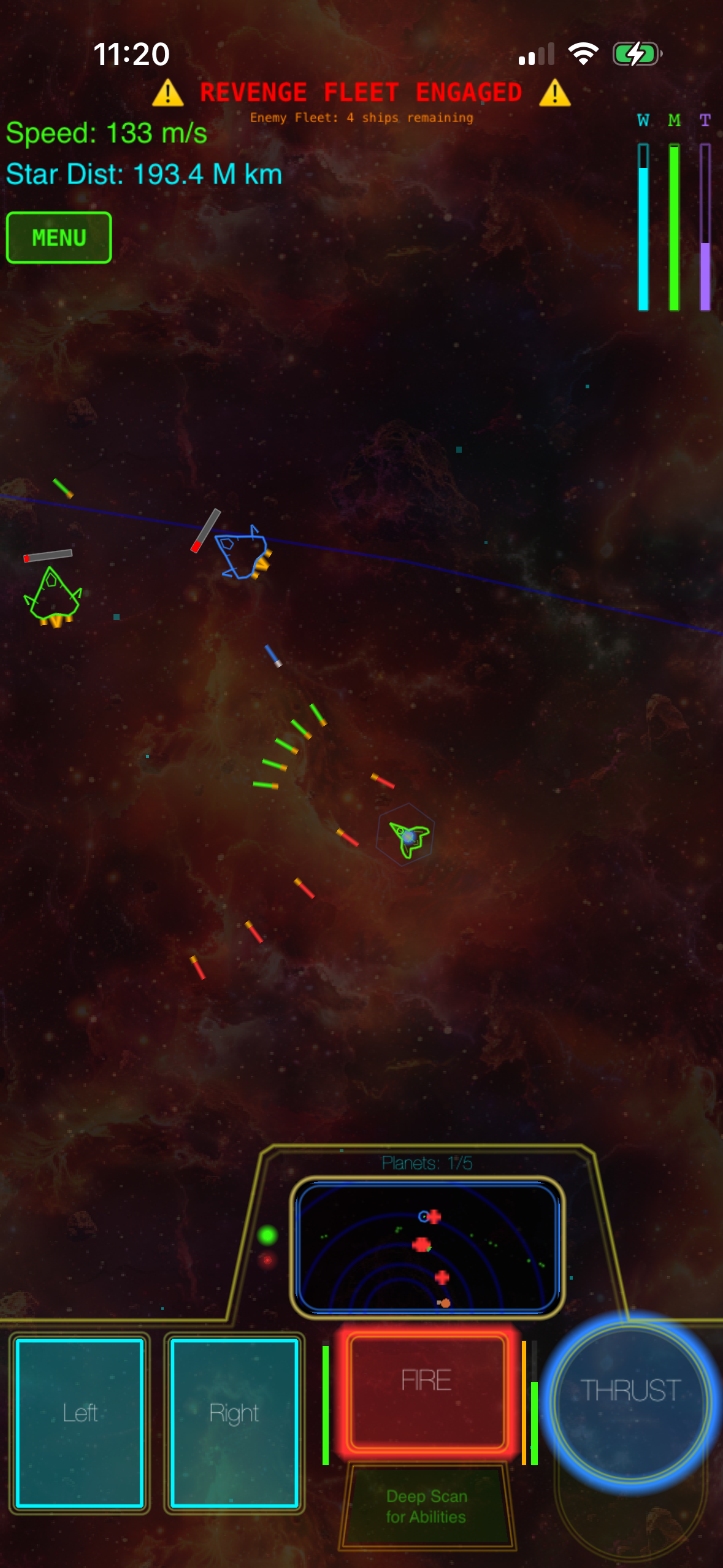
Bounded navigation. The originals kept you in tight arenas where every edge mattered. Modern versions often use larger spaces but maintain consequence—fly into a gravity well unprepared and you face a fuel-expensive recovery.
Scoring tied to efficiency. Asteroids rewarded clearing the screen fast. Modern games reward reaching objectives with fuel to spare. The metric changed; the principle stayed.
Quick Picks: Modern Space Games Compared
| Game Name | Price | Physics Model | Campaign Length | Rating |
|---|---|---|---|---|
| Galaximus | Real orbital mechanics | 8–12 hours | 4.8★ | |
| Orbital Decay | Arcade approximation | 4–6 hours | 4.6★ | |
| Gravity Pilot | Real gravity, simplified | 6–8 hours | 4.7★ | |
| Vector Asteroids | Arcade (no gravity) | Endless | 4.5★ | |
| Void Runner | Real physics | 10–14 hours | 4.9★ |
The Modern Asteroids Legacy
Vector-graphics Asteroids descendants remain popular on iOS. These games respect the original’s design: tight controls, immediate feedback, screen-clearing satisfaction. They’re not teaching orbital mechanics; they’re delivering five minutes of focused, high-stakes action.
The difference is straightforward: Asteroids descendants reward fast reactions; physics-based games reward planning. Both are legitimate. Choose based on whether you want quick arcade sessions or deeper mechanical mastery.
Learning Curve: The Honest Tradeoff
Real gravity has a learning curve. It’s not steep—most players grasp core mechanics in 30 minutes—but it’s real. Your instinct from other games is to fight momentum. Gravity games ask you to use it.
If you like jumping into a game and winning immediately, you’ll feel friction in the first 15 minutes. If you enjoy learning systems and improving, the curve is a feature.
Kerbal Space Program (desktop only; not currently on iOS as of 2026) has a steeper curve focused on engineering. Gravity-based arcade games have gentler curves focused on flying. Choose based on how much complexity you want to master.
Premium-Only, No Monetization Model
Most App Store games use free-to-play with ads and in-app purchases. Premium-only games (no ads, no IAP, no energy meter) are rare on iPhone in 2026. They’re the closest spiritual descendant to arcade originals, which had no monetization—you paid once, you played forever.
Premium-only games in this category tend to be complete, polished, and not designed to extract money over time. If that model appeals to you, your options are smaller but more aligned with arcade-era design philosophy.
Procedural Generation and Replay Value
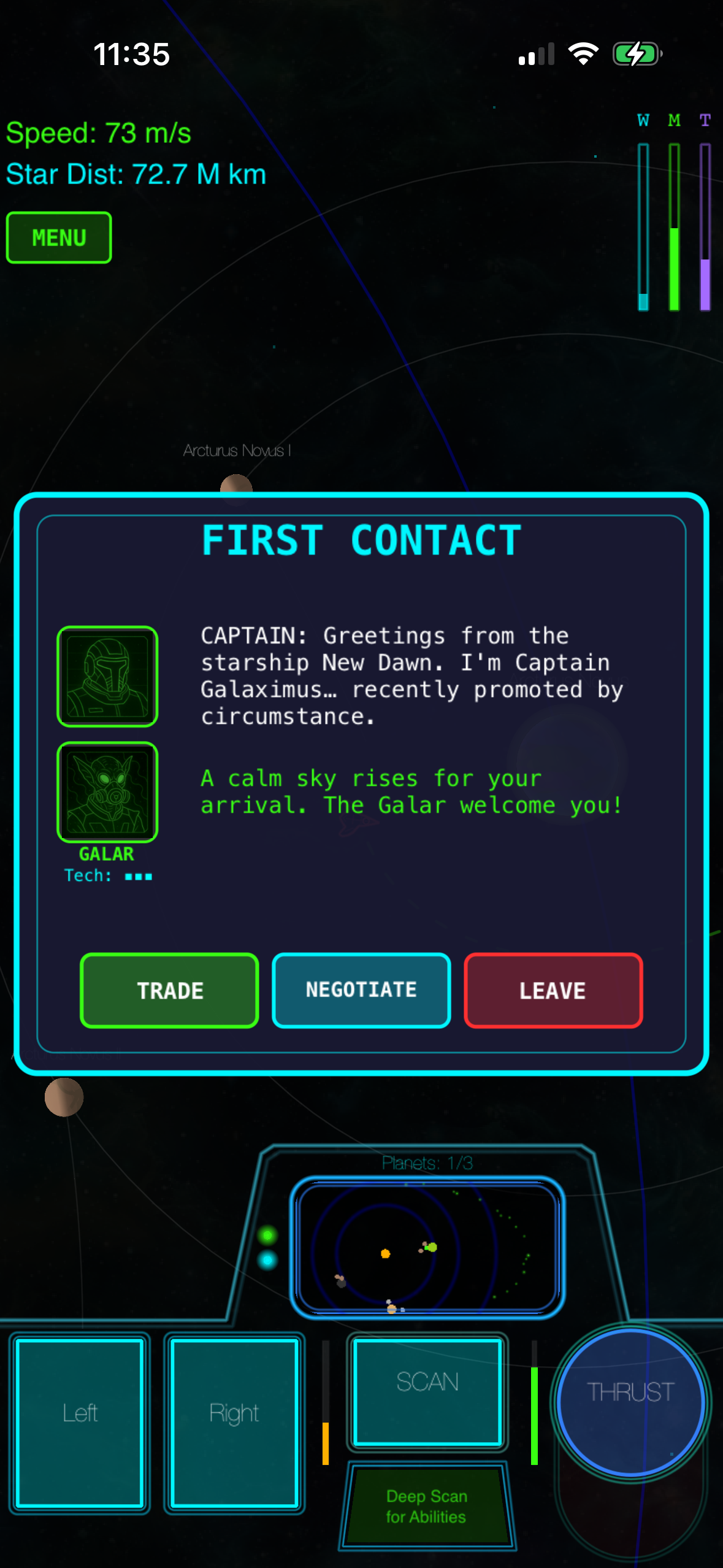
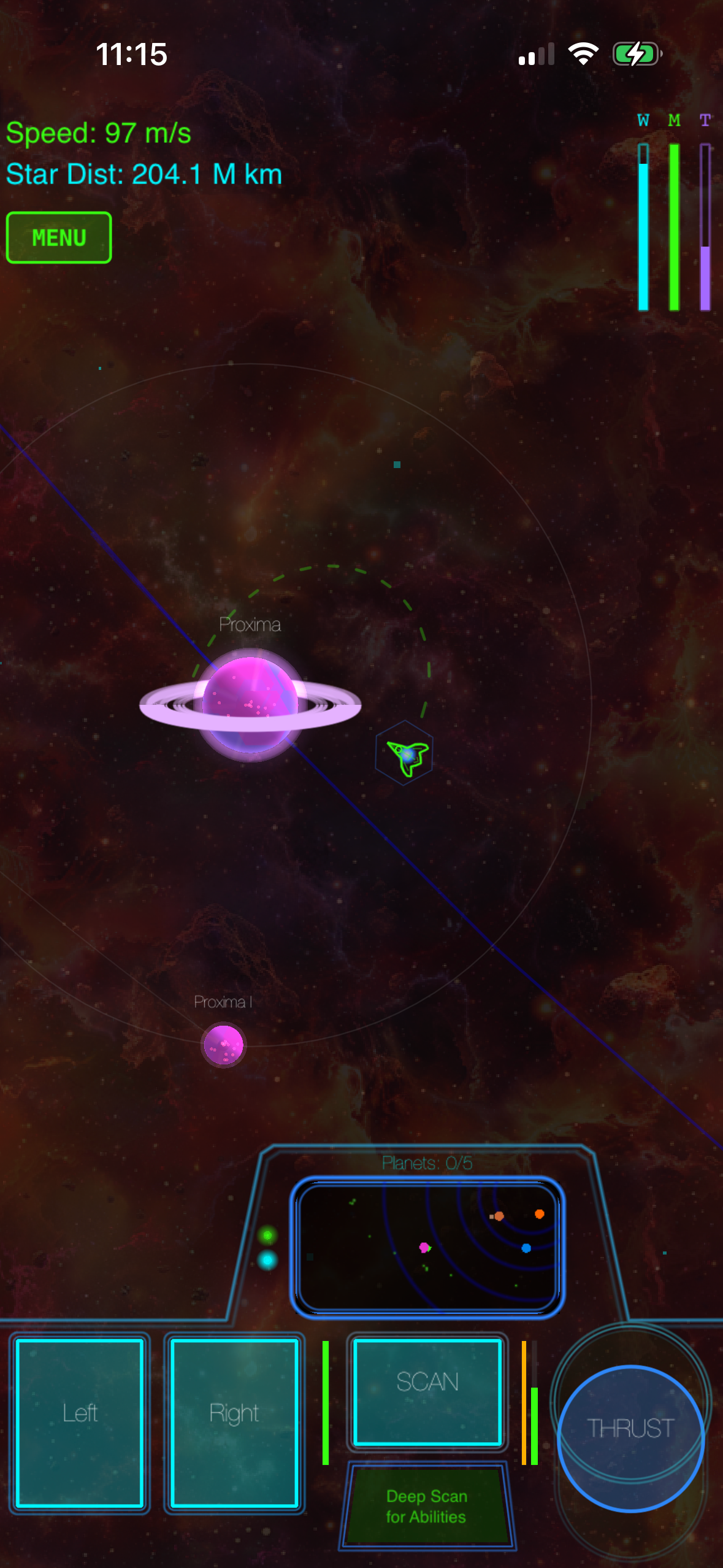
The originals were hand-crafted screens, identical every playthrough. Modern games generate star systems, planet configurations, and encounter layouts on the fly. Each playthrough can be unique without feeling random.
Games using procedural generation for system layout and planet configuration stay fresh across replays while maintaining consistent skill-building. Others go further into infinite sandbox modes. Both approaches are legitimate—choose based on whether you prefer a complete campaign or endless exploration.
Comparisons: What Competitors Do Better
Kerbal Space Program (desktop only) offers deeper rocketry tooling and vehicle assembly. If you want to learn serious orbital mechanics and build custom spacecraft, KSP is the deeper dive.
No Man’s Sky Mobile has procedural planet exploration at larger scale. Walking on planet surfaces is core to NMS’s identity.
Apple Arcade titles offer subscription onboarding with no additional purchases. If you’re already paying Apple Arcade, that’s honest competition.
Classic Asteroids descendants have simpler controls and faster pickup-and-play. For 5-minute arcade sessions with no learning curve, those fit better than physics-based games.
What to Look for When Choosing
Narrative vs. open-ended play? Structured campaigns with beginning, middle, and end differ from infinite sandboxes. Know which appeals to you.
Learning curve tolerance? Real-gravity games have steeper curves than arcade approximations. That’s a design choice, not a flaw.
Monetization preference? Premium-only games are rarer. If that model appeals, your options are smaller but complete.
Replayability needs? Structured campaigns with procedural variation differ from infinite sandboxes. Neither is wrong.
Control scheme investment? Physics-based games have expressive, rewarding controls that aren’t immediately intuitive. Patient players get real payoff.
FAQ
Q: Do these games work on iPhone 12 or older? A: Most modern space games require iOS 14 or later. Check individual App Store listings for specific device compatibility.
Q: Can I pause mid-mission? A: Yes. All games in this category support pause functionality. Some physics-based games pause time; others pause gameplay while keeping systems running.
Q: Is there a free trial? A: Premium games don’t offer trials. Some free-to-play versions exist for comparison, but the premium versions are one-time purchases without trials.
Q: How long is a typical campaign? A: 4–14 hours depending on the game. Procedural generation means replays feel fresh without requiring identical playtimes.
Q: Can I play offline? A: Yes. All games listed are fully playable offline with no internet required.
Q: When do expansions launch? A: Check individual developer roadmaps. Most announce expansion timelines 2–3 months in advance.
Best Paid Space Games for iPhone 2026: Complete Buyer's Guide
iOS Space Games Like Asteroids: Modern Vector Graphics Arcade
iPhone Space Games with Realistic Physics: Top Picks

